Your Cart is Empty

| Yarn Weight Symbol & Category Names |  |
 |
 |
 |
 |
 |
 |
|---|---|---|---|---|---|---|---|
| Type of Yarns in Category | Fingering 10-count crochet thread | Sock, Fingering, Baby | Sport, Baby | DK, Light Worsted | Worsted, Afghan, Aran | Chunky, Craft, Rug | Bulky, Roving |
| Knit Gauge Range* in Stockinette Stitch to 4 inches | 33–40** sts | 27–32 sts | 23–26 sts | 21–24 st | 16–20 sts | 12–15 sts | 6–11 sts |
| Recommended Needle in Metric Size Range | 1.5–2.25 mm | 2.25— 3.25 mm | 3.25— 3.75 mm | 3.75— 4.5 mm | 4.5— 5.5 mm | 5.5— 8 mm | 8 mm and larger |
| Recommended Needle U.S. Size Range | 000–1 | 1 to 3 | 3 to 5 | 5 to 7 | 7 to 9 | 9 to 11 | 11 and larger |
| Crochet Gauge* Ranges in Single Crochet to 4 inch | 32–42 double crochets** | 21–32 sts | 16–20 sts | 12–17 sts | 11–14 sts | 8–11 sts | 5–9 sts |
| Recommended Hook in Metric Size Range | Steel*** 1.6–1.4 mm | 2.25— 3.5 mm | 3.5— 4.5 mm | 4.5— 5.5 mm | 5.5— 6.5 mm | 6.5— 9 mm | 9 mm and larger |
| Recommended Hook U.S. Size Range | Steel*** 6, 7, 8 Regular hook B–1 | B–1 to E–4 | E–4 to 7 | 7 to I–9 | I–9 to K–10 1⁄2 | K–10 1⁄2 to M–13 | M–13 and larger |
| 1. GUIDELINES ONLY: The above reflect the most commonly used gauges and needle or hook sizes for specific yarn categories. 2. Lace weight yarns are usually knitted or crocheted on larger needles and hooks to create lacy, openwork patterns. Accordingly, a gauge range is difficult to determine. Always follow the gauge stated in your pattern. 3. Steel crochet hooks are sized differently from regular hooks—the higher the number, the smaller the hook, which is the reverse of regular hook sizing. Try our handy needle and hook gauge to choose the proper sized needle. | |||||||
Print out this handy guide out and tuck it into your pocketbook. You will always be able to figure out what yarn you need or want based on the information here, even if it isn't marked with the standardized system.
Alpaca Direct has incorporated the Standard Yarn Weight System into our website; what a great resource when shopping for yarn.
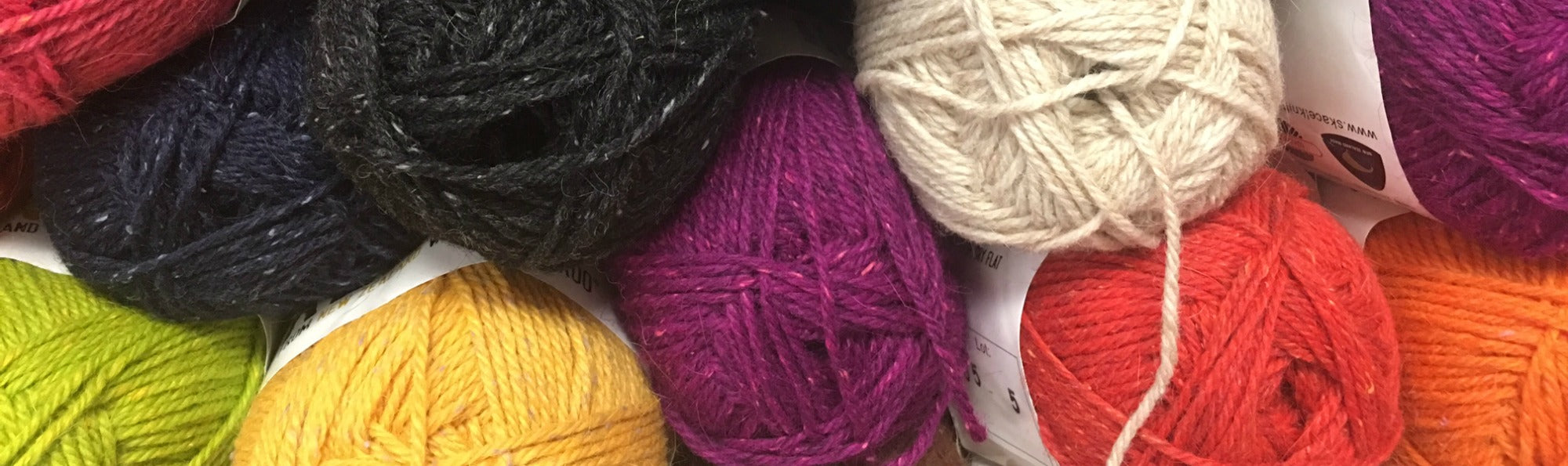
We have a large selection of worsted weight yarn in a variety of brands and colors.
If you are just getting started with knitting, this video on how to knit a scarf for beginners using worsted weight yarn will help!
Happy Knitting!

Comments will be approved before showing up.






Mary Wade
October 05, 2016
I started crocheting as a child. I started with cookies, then migrated Afghanis. When I get sleepless at night, I find a piece to work on to get me back to sleep. I usually give them as gifts.