Your Cart is Empty


Alpaca fiber offers a winning combination for knitters: softness, warmth, durability, and eco-friendliness. Unlike sheep's wool, it’s lanolin-free, hypoallergenic, and gentle on sensitive skin. Its hollow-core structure provides superior insulation, keeping you warm in the winter and cool in the summer. Plus, alpaca fiber is naturally water-resistant, long-lasting, and available in a stunning range of 22 natural shades. Whether crafting scarves, sweaters, or shawls, alpaca yarn delivers lightweight comfort and an elegant drape, making it a top choice for all-season wear.
Key Highlights:
Alpaca fiber combines comfort, practicality, and style, making it a standout choice for knitting projects. Dive into its benefits and discover why this fiber is a favorite among crafters.
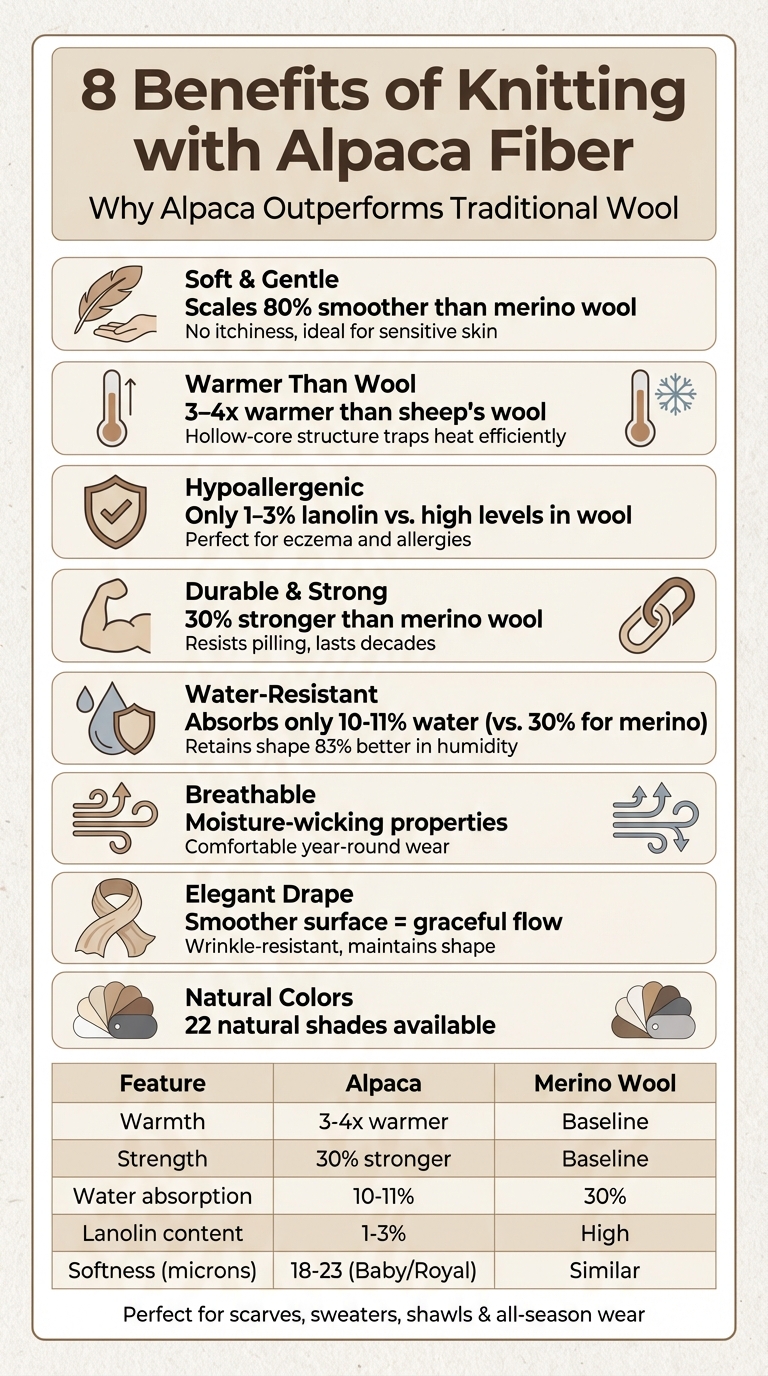
Alpaca Fiber vs Wool: Performance Comparison Chart
Alpaca fiber is celebrated for its smooth texture, making it a fantastic choice for clothing. Unlike sheep’s wool, which has tiny barbs that can cause itchiness, alpaca fibers have smaller, flatter scales that create a silky surface. This flat structure ensures a non-prickly feel, making it gentle even for those with sensitive skin.
"Alpaca fibre scales lie flatter to the fibre shaft than other wools, making it feel less prickly to the touch." - Rebecca Udall
When it comes to softness, the quality of alpaca fiber is unmatched. The finest grades, such as Royal Alpaca (under 19 microns) and Baby Alpaca (typically under 22 microns), offer exceptional comfort. Micron measurements are a key indicator of softness - lower numbers mean a softer, more luxurious feel.
A touching story from Lilymoore Farm illustrates this well. A mother bought an alpaca baby hat for her daughter, who struggled with eczema. Weeks later, she shared that it was the first "wool-like" product her child could wear without irritation or a rash. This highlights alpaca's gentle nature and its suitability for sensitive skin.
For projects requiring the ultimate in softness, Baby Alpaca and Royal Alpaca are excellent choices. These premium fibers not only rival cashmere in softness but also offer better durability and resistance to pilling.
Alpaca fiber offers impressive warmth without the heaviness, making it perfect for cold-weather clothing. Its secret lies in its hollow core structure. These fibers are partially hollow (medullated) and packed with microscopic air pockets that trap heat efficiently. This natural insulation keeps body heat in and cold air out, giving alpaca fiber a clear edge over solid fibers when it comes to thermal performance [5, 10, 16].
Alpaca fiber is up to 3–4 times warmer than sheep's wool, and it provides about 30% better thermal insulation than merino wool [15, 16]. This incredible warmth is no accident - it’s the result of alpacas adapting to the extreme conditions of the Andean highlands, where temperatures can range from -4°F to over 70°F. Plus, alpaca fiber absorbs less water (around 10% of its weight, compared to 16–20% for sheep's wool). This low absorbency helps it stay warm even in damp conditions by wicking moisture away and allowing it to evaporate [3, 10, 15].
"Alpaca fiber is 20% more thermally insulating than merino wool, thanks to the fibers' evolutionary construction allowing them to trap heat efficiently while remaining lightweight and breathable, ensuring optimal comfort and insulation in cold weather conditions." – PAKA®
For knitters, alpaca fiber is a dream material thanks to its high warmth-to-weight ratio. Those air pockets in the fibers mean your finished projects - whether sweaters, scarves, or shawls - feel much lighter while still delivering excellent insulation [2, 16].
Alpaca fiber is known for being naturally hypoallergenic, thanks to its low lanolin content and smooth fiber structure. To put it into perspective, Huacaya alpaca fleece typically contains only 1% to 3% grease or wax, a stark contrast to the much higher lanolin levels found in sheep wool. Additionally, the scales on alpaca fibers project just 0.3 to 0.4 microns, compared to the 0.8 to 1.0 microns seen in sheep wool. This results in alpaca fibers being 80% smoother than merino wool. In fact, blind touch tests revealed that 94% of participants couldn't tell the difference between royal alpaca and cashmere.
"Alpaca wool is lanolin-free, and the fibers are naturally smoother. No sharp edges, no irritation - just warmth you can actually enjoy wearing." – American Made Alpaca
These qualities make alpaca fiber an excellent choice for garments designed for sensitive skin.
Alpaca’s hypoallergenic nature makes it perfect for knitting projects intended for infants or individuals with conditions like eczema or asthma. It’s an ideal option for those who have avoided natural fibers in the past due to skin sensitivities.
For maximum softness and gentleness, opt for Baby Alpaca (under 23 microns) or Royal Alpaca (under 18 microns). If you’re knitting for someone prone to allergies, stick to 100% alpaca yarn, as blends with sheep’s wool may still contain lanolin, which could cause irritation.
Alpaca fiber stands out for its impressive strength - it's 30% stronger than merino wool in terms of tensile strength. This added durability means your finished pieces, whether it's a warm scarf or a detailed sweater, are more resistant to wear and tear compared to those made from sheep's wool or cashmere. The secret lies in its unique fiber structure.
One of the reasons alpaca garments last so long is their smoother surface and fewer microscopic scales compared to sheep's wool. This reduces friction, which helps prevent pilling over time. Unlike cashmere, which tends to pill more easily, alpaca retains its fresh, polished appearance for years.
"This delicate balance between fineness and durability gives baby alpaca its unique feel – buttery soft against the skin but resilient enough to last for decades." – Alpaca Passion
Another key feature is the natural crimp and elasticity of high-quality Huacaya alpaca fiber. This gives the material a kind of "memory", allowing knitted garments to stretch during wear and then return to their original shape. Plus, alpaca fiber lacks the lanolin found in sheep's wool, which means it doesn't attract dust and dirt - common culprits that can break down fibers over time.
With the right care, alpaca garments can remain in excellent condition for years, even decades. Simple steps like storing items flat and hand-washing them in cool water (no warmer than 85°F) help preserve their durability and ensure they stay heirloom-worthy for generations.
Alpaca fiber has a built-in ability to repel moisture, unlike many other fibers that tend to soak it up. It absorbs only about 10–11% of its weight in water, while merino wool can take in up to 30%. Even with this low absorption rate, alpaca fiber stays dry to the touch until it reaches its limit. This means your alpaca knits, like scarves or mittens, remain lighter and drier when faced with light rain or snow.
"Alpaca's unique fiber structure sheds moisture like a duck's back." – Hollywool
This moisture-repelling ability comes from alpaca's semi-hollow core and smooth surface, which cause water to bead up and roll off rather than soaking in. These qualities make alpaca fiber perfect for outdoor accessories, such as hats, gloves, and scarves.
Another advantage is its low grease content - around 5%, compared to merino wool's 30% - which helps keep the fiber drier and fresher over time. In fact, lab tests show that alpaca hats hold their shape 83% better than wool hats in humid conditions. This means your carefully crafted pieces won’t sag or lose their form when exposed to moisture. It’s a practical choice for knitters aiming to create durable, weather-resistant garments.
For outdoor wear, this water-resistant property ensures your finished items retain their insulating abilities even when damp. It’s just one more reason alpaca fiber stands out as an excellent choice for functional and stylish knitting projects.
Alpaca fiber isn't just about keeping you warm - its hollow-core structure also makes it an excellent choice for year-round comfort. Each fiber features a central core, known as a medulla, which creates tiny air pockets. These pockets work double-duty: they trap body heat when it's cold and shield you from external heat in warmer weather. This ingenious natural design evolved to protect alpacas in the Andean highlands, where temperatures can range from a frigid -4°F at night to over 70°F during the day.
When it comes to moisture management, alpaca fiber stands apart from wool. Instead of soaking up sweat, alpaca fibers push moisture away from your skin to the surface of the garment, where it evaporates quickly. This means you won't get that sticky, damp feeling you might experience with other materials.
"The fiber's unique structure helps it regulate body temperature while wicking moisture away from your skin. That means no clammy sleeves or overheating under layers." - American Made Alpaca
This moisture-wicking ability also improves airflow. The smooth scales on alpaca fibers allow air to circulate freely, keeping you comfortable whether you're sitting still or on the move. Plus, the fiber's natural resistance to solar radiation helps keep you cool even in direct sunlight.
These features make alpaca garments a reliable choice for all kinds of weather. Whether you're layering up in the winter or braving summer heat, alpaca's adaptability ensures comfort across the seasons.
Alpaca fiber creates fabric with a beautiful, flowing quality. Thanks to its smooth surface and fewer scales, the fibers move effortlessly against one another, resulting in a fabric that drapes gracefully. This quality pairs perfectly with alpaca's signature softness and warmth, producing garments that hang naturally rather than appearing stiff or bunched.
The specific type of alpaca fiber plays a role in its draping ability. Suri alpaca, which makes up less than 10% of the alpaca population, stands out for its straight, silky texture without any natural crimp or waviness. This unique quality has caught the attention of top designers like Giorgio Armani, who has chosen Suri alpaca for high-end suits due to its drape, often compared to natural silk. For knitters, Suri yarn is ideal for projects like shawls, lightweight cardigans, or anything that benefits from a flowing, luxurious feel.
"The lower amount of scales on the outside of the alpaca fiber means that it drapes so elegantly. It's a great choice for shawls, scarves, and other accessories that don't need elasticity." - Lauren Rad, Owner & Designer, A Bee in the Bonnet
One feature that sets alpaca apart is its wrinkle resistance. Unlike cashmere, which creases easily, alpaca maintains a polished appearance throughout the day. Whether it's a cardigan or a wrap, your garment stays smooth and refined. Plus, its high tensile strength ensures that pieces won't stretch out of shape, even under their own weight - an essential quality for flowing designs like floor-length wraps or ponchos.
Alpaca's lightweight nature also contributes to its appeal. A full-length alpaca cardigan offers warmth and fluid movement without feeling heavy or bulky. This balance between warmth and lightness allows garments to drape naturally while maintaining their shape, wear after wear. Up next, explore the naturally diverse color palette of alpaca fiber.
Alpaca fiber doesn’t just drape beautifully - it also boasts an impressive natural color palette that adds sophistication to any project.
According to the Alpaca Owners Association, Inc., alpaca fiber is available in 16–22 recognized shades and over 300 variations. This range includes white, beige, fawn, brown, gray, black, and the unique "rose gray", which blends brown, white, and gray fibers for a subtle, multi-toned effect. Among these, true black is especially rare and sought after for its cool, sleek finish, while natural grays span from light silver to deep graphite. These earthy hues create a "quiet luxury" aesthetic, offering depth and a soft, natural sheen that’s hard to replicate with synthetic dyes.
"The beauty of natural, undyed alpaca is a testament to the creativity found in Mother Nature's dyepot, but without the environmental downside that can come with the dyeing process." – Jacqueline Harp, Multimedia Fiber Artist
Opting for undyed alpaca fiber is also an eco-friendly choice. Skipping synthetic dyes reduces toxic runoff and conserves water. Plus, alpaca fiber doesn’t contain lanolin, so it doesn’t require the harsh chemical treatments used to scour sheep’s wool. This helps preserve the fiber’s integrity and ensures it remains hypoallergenic. However, because natural shades can vary slightly between batches, it’s wise to purchase enough fiber from the same lot to maintain color consistency throughout your project.
This wide range of natural hues not only enhances creative possibilities but also highlights alpaca fiber’s sustainable and artisanal qualities.
Alpaca fiber blends softness, warmth, and durability in a way that sets it apart from many other materials. Its hypoallergenic, lanolin-free composition and natural water resistance make it a fantastic choice for all your knitting projects. Plus, the fiber's microscopic air pockets provide excellent thermal regulation, keeping you warm on cold days while preventing overheating indoors - perfect for scarves, sweaters, or blankets.
Beyond comfort, alpaca fiber stands out for its durability. Its resilience helps your creations maintain their shape over time. And since alpaca contains little to no lanolin, it requires minimal processing and is easy to clean, making it as practical as it is luxurious.
If you're planning your next knitting project, Huacaya alpaca yarn offers natural crimp and elasticity, which makes stitching a joy. Its elegant drape and subtle sheen elevate even the simplest designs, giving your work a refined, polished look.
Looking to get started? Alpaca Direct has you covered with a wide range of premium alpaca yarns, knitting tools, and patterns. They also provide educational resources, including tutorials, project ideas, and a weekly show packed with techniques and inspiration. Want more tips and visual guides? Check out their YouTube channel at https://www.youtube.com/@AlpacaDirect. Dive in today and experience the luxurious feel and practical benefits of alpaca fiber for yourself!
Suri alpaca is a fantastic option for anyone with sensitive skin. Its fibers are finer and silkier, offering a soft texture that feels gentle against the skin. This unique texture creates a beautiful halo effect, much like mohair, making it an excellent alternative to mohair yarn. Plus, its comfort and softness make it a top choice for those prone to skin sensitivities.
To keep alpaca knits from stretching, proper care is key. Start by blocking your finished piece - shape it to the size you want and let it dry flat to set the fibers in place. When knitting, use a slightly tighter tension to help maintain its structure. For storage, fold your items instead of hanging them to avoid unnecessary stretching. When it comes to cleaning, hand wash in cold water and always lay the item flat to dry. This gentle approach helps preserve the fibers and keeps your alpaca knits looking great.
The ideal method for cleaning alpaca yarn items is hand washing in cool or lukewarm water with a gentle detergent, baby shampoo, or conditioner. Be careful not to wring, rub, or twist the fabric, as this can damage it. For drying, lay the item flat between two towels to help it retain its shape. Avoid hanging or using a tumble dryer. Additionally, spot cleaning and freezing can be effective for minimizing wear and prolonging the life of the item.

Comments will be approved before showing up.