
Alpaca vs Merino Wool: Which Yarn Is Better?

Choosing between alpaca and merino wool depends on your project’s needs. Alpaca is often described as warmer and silkier, making it a popular choice for scarves and shawls. Merino is more elastic and moisture-absorbing, perfect for socks, fitted garments, and activewear. Alpaca usually costs more but offers a luxurious finish, while merino is widely available and often more budget-friendly.
Quick Overview:
- Warmth: Alpaca has a hollow fiber core that traps air.
- Softness: Alpaca feels smoother; merino can be soft but prickly for some.
- Elasticity: Merino retains shape better; alpaca may stretch over time.
- Moisture Management: Merino absorbs more; alpaca dries faster.
- Cost: Alpaca is pricier; merino is more affordable.
Quick Comparison:
| Feature | Alpaca Wool | Merino Wool |
|---|---|---|
| Warmth | Hollow fibers trap air | Crimped fibers trap air between strands |
| Softness | Silky | Soft; can feel prickly to some |
| Elasticity | Low; drapes well | High; retains shape |
| Moisture Handling | Absorbs less moisture, dries more quickly | Absorbs more moisture, dries more slowly |
| Cost | Usually higher | Usually lower |
For flowing designs, alpaca is a standout choice. For fitted, durable items, merino excels. Blends combine the best of both. Explore your options based on warmth, drape, and elasticity.
Fiber Structure and Warmth
Alpaca: Hollow Fiber Warmth
Alpaca fibers stand out because of their hollow core, which traps air and creates tiny pockets of warmth - all without adding extra weight.
This unique structure helps alpaca wool retain heat. For projects like scarves, blankets, or winter coats, alpaca is an excellent choice - it keeps you warm without feeling heavy.
Merino: Crimped Fiber Insulation
Merino wool takes a different approach to insulation. Its fibers are mostly solid but have a natural crimp, which forms air pockets between strands when spun into yarn. These air pockets create an effective insulating layer.
The crimp also gives merino wool elasticity, making it perfect for stretchable items like hats, cuffs, or athletic socks. While it provides good warmth, merino typically needs more bulk to match alpaca’s insulation. This is why merino is often preferred for activewear and activities in changing temperatures - it regulates heat well during movement and helps prevent overheating during physical exertion.
Comparison Table: Warmth and Insulation
| Feature | Alpaca Wool | Merino Wool |
|---|---|---|
| Fiber Structure | Hollow or semi-hollow core | Crimped, mostly solid fiber |
| Insulation Method | Traps air inside the fiber core | Traps air in pockets between fibers |
| Warmth-to-Weight Ratio | Superior; lighter for the same warmth | Good, but requires more weight for equal warmth |
| Best Use Case | Extreme cold, static activities | Variable weather, active use |
| Moisture Absorption | Lower | Higher |
Softness and Comfort
Alpaca: Silky Smoothness
Alpaca fibers are known for their smooth and flat scale structure, giving them a luxurious, silky texture that feels amazing against the skin. Unlike traditional wool, alpaca's flatter scales don't catch on the skin as much, which can make it feel less itchy.
This makes alpaca an excellent option for scarves, cowls, and other items worn directly on the neck or face. Plus, alpaca is lanolin-free, meaning it does not contain the natural wax found in sheep’s wool.
Merino: Fine and Soft
Merino wool brings its own kind of softness to the table, thanks to its fine fiber diameter. The finer the micron count, the softer the yarn feels, which is why extra fine merino is highly sought after for clothing that touches the skin.
Merino also has a natural crimp, giving it a cozy, slightly springy texture. This crimp enhances its elasticity, making it a go-to choice for fitted sweaters, hats, and ribbed cuffs that need to maintain their shape. Unlike alpaca, it does contain lanolin.
For garments that sit close to the skin, Baby Alpaca or Extra Fine Merino are good choices for comfort.
Comparison Table: Softness
| Feature | Alpaca Yarn | Merino Yarn |
|---|---|---|
| Fiber Surface | Smooth, flat scales; silky feel | Pronounced, overlapping scales; uniform feel |
| Skin Sensation | Silky smoothness, low "prickle" | Soft but can be "prickly" if microns are high |
| Best For | Luxury accessories | Performance wear, elastic garments |
Durability and Elasticity
Alpaca: Strength and Pill Resistance
Alpaca fibers are known for their strength and resilience.
Another standout feature of alpaca is its smooth, low-scale surface, which significantly reduces pilling. This means your alpaca garments - whether sweaters, scarves, or blankets - can keep looking fresh and polished for years.
However, alpaca fibers fall short in elasticity. While their strength ensures durability, alpaca lacks the ability to bounce back to its original shape. Over time, alpaca garments may lose their form, especially in fitted designs. To counter this, blends with nylon or silk can enhance stretch and improve shape retention.
Merino: Elasticity and Shape Retention
Where alpaca shines in strength, merino wool takes the lead in elasticity. Thanks to its natural crimp - a corkscrew-like structure - merino fibers act like tiny springs, allowing the yarn to stretch and then snap back into place. This makes merino an excellent choice for fitted garments like ribbed cuffs, sweaters, and other form-fitting designs.
The table below highlights the key differences between alpaca and merino in terms of durability and elasticity.
Comparison Table: Durability and Elasticity
| Feature | Alpaca Yarn | Merino Yarn |
|---|---|---|
| Fiber Strength | Very high; stronger and more resilient | High; fine fibers can be more delicate |
| Pill Resistance | High; smooth fiber structure minimizes pilling | Lower; prone to pilling in high-friction areas |
| Elasticity | Low; may stretch out over time | High; excellent "memory" and snap-back |
| Shape Retention | May lose shape in fitted garments | Maintains shape through natural crimp |
| Best For | Drapey sweaters, scarves, blankets, coats | Fitted garments, base layers, socks, activewear |
These characteristics can help you decide which yarn weight and fiber is better suited for your next knitting or crochet project, depending on your priorities for durability and shape retention.
Moisture Management
Alpaca: Fast-Drying
Alpaca fibers absorb less moisture than merino and tend to dry more quickly. Because of their hollow core, moisture may evaporate faster, keeping garments lightweight and comfortable.
Another advantage? Alpaca is lanolin-free and has a smoother, flatter scale structure, which many people find comfortable against the skin.
On the other hand, merino wool handles moisture in a completely different way.
Merino: High Moisture Absorption
Merino wool stands out for its ability to absorb moisture. This feature helps regulate body temperature during intense activities by pulling moisture away from the skin.
However, this high moisture retention means it takes longer to dry.
These differences in how the two fibers handle moisture are summarized in the table below.
Comparison Table: Moisture Management
| Feature | Alpaca Yarn | Merino Yarn |
|---|---|---|
| Moisture Absorption | Lower | Higher |
| Drying Speed | Fast; hollow fibers aid evaporation | Slow; retains water longer |
| Lanolin Content | None (lanolin-free) | Contains lanolin |
| Best For | Humid, damp, or rainy conditions | High-intensity activities with heavy sweating |
| Skin Feel | Silky and smooth; flat scales | Soft but can be prickly to some |
If you're planning a rainy hike or spending time in damp conditions, alpaca's quicker drying can help keep you comfortable. On the flip side, for high-energy workouts where you're sweating a lot, merino wool's ability to manage vapor can help keep your skin feeling drier - just know it might take longer to dry afterward.
Best Knitting and Crochet Projects for Each Yarn
Projects for Alpaca Yarn
Alpaca yarn is perfect for creating pieces that offer warmth and a flowing drape. Its silky texture makes it ideal for scarves and shawls, especially when intricate lacework is involved. Thanks to its hollow-core fibers, alpaca provides excellent insulation without added bulk, making it a go-to for winter coats, thick sweaters, and cozy accessories like hats and mittens.
Another bonus? Alpaca contains no lanolin. If your project needs a bit of stretch, consider an alpaca-nylon blend for added flexibility.
Projects for Merino Yarn
Merino yarn stands out in projects that demand elasticity, durability, and moisture management. Socks, for example, benefit greatly from merino's natural crimp, which helps them stay snug while wicking away moisture for added comfort. Fitted sweaters, ribbed hats, and cuffs also showcase merino's ability to retain shape and "bounce."
Merino is also a favorite for activewear and base layers. Its breathability makes it a popular choice for activities like hiking or trail running. For baby clothes and children's items, machine-washable "superwash" merino is a practical choice. Plus, its ability to regulate temperature makes it a great option for garments meant for variable weather conditions.
Use these ideas as inspiration when matching your yarn to your project.
How to Choose Yarn for Your Project
When deciding between alpaca and merino, think about the specific needs of your project. Consider factors like warmth, drape, elasticity, and how the yarn feels against the skin to make the best choice.
For luxurious, flowing pieces such as lace shawls or oversized wraps, alpaca's silky texture and elegant drape make it a standout option. On the other hand, for structured garments like fitted hats, socks, or sweaters that need to hold their shape, merino's elasticity is hard to beat.
Climate also plays a role. Alpaca's quick-drying qualities make it a good fit for damp or rainy weather, while merino's ability to absorb moisture shines during high-intensity activities. If you're crafting for someone who finds wool itchy, alpaca may feel more comfortable. For a balance of softness and durability, consider blending alpaca and merino.
For more project ideas and tutorials, check out our YouTube channel: https://www.youtube.com/@AlpacaDirect.
Cost and Availability at Alpaca Direct
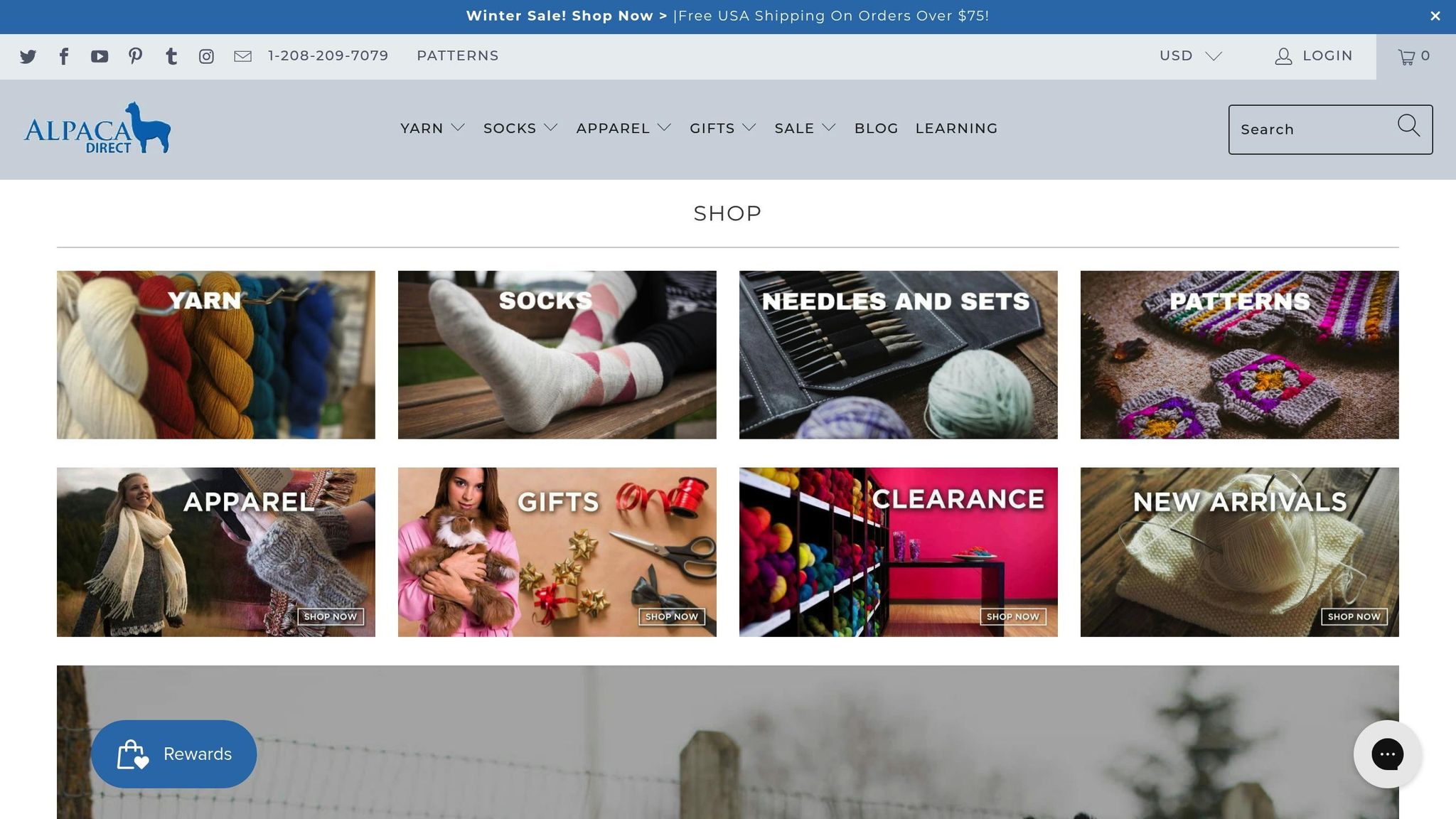
Alpaca Yarn Options and Pricing
Alpaca Direct carries both alpaca and merino yarns, so you can find options for your next crafting project.
The store offers alpaca yarns across a range of prices. For beginners or those on a tighter budget, Bravo Alpaca Petites from Coeur d'Alene Yarns are priced at $7.98. Mid-range options include Berroco Ultra Alpaca Light at $8.45 and Berroco Ultra Alpaca (worsted weight) at $14.45. Cascade Eco Alpaca is another alpaca yarn option at $18.95 per skein.
The variety of weights means you can tackle anything from lightweight shawls to cozy winter sweaters.
Merino Yarn Selection and Cost
Alpaca Direct also carries merino yarns from brands like Malabrigo, Cascade, and Lang. For worsted-weight yarns, Malabrigo Rios (a superwash merino) is priced at $16.00, while Malabrigo Sock yarn is available for $20.00 per skein. Meanwhile, the versatile Cascade 220 Wool costs $11.95 and comes in an array of colors.
The store also provides specialty merino options, such as superwash treatments for easy care and hand-dyed colorways for unique projects.
Why Shop at Alpaca Direct
The site is organized so you can browse by fiber type, weight, or brand.
Beyond yarn, Alpaca Direct offers a wealth of resources to elevate your crafting experience. From books and DVDs to free patterns, you'll find plenty of inspiration. They also stock high-quality tools like Addi and Chiaogoo needles to complement your yarn purchases. For even more ideas and tutorials, check out their YouTube channel at Alpaca Direct YouTube, where you can learn new techniques and discover exciting project ideas for both alpaca and merino yarns.
Alpaca Vs Merino Clothing - What's Better For The Outdoors?
Conclusion
The choice between alpaca and merino wool ultimately depends on the specific needs of your project. Alpaca wool, with its hollow fiber structure, offers exceptional warmth and a silky-smooth texture, making it perfect for cozy accessories like scarves and shawls. It is also lanolin-free. However, alpaca's lower elasticity might make it less ideal for fitted garments such as socks or ribbed sweaters.
On the other hand, merino wool shines in projects requiring structure and moisture management. It absorbs more moisture than alpaca, making it a great choice for activewear and base layers. Its natural crimp helps garments maintain their shape, but it can be more prone to pilling in high-friction areas and takes longer to dry compared to alpaca.
For the best of both worlds, consider blending alpaca's warmth and drape with merino's elasticity and durability. Whether you prefer alpaca's luxurious feel or merino's dependable performance, understanding their differences ensures you select the right fiber for your creative vision.
To explore your options, Alpaca Direct offers a wide range of alpaca and merino yarns. They also provide free patterns, care guides, and project tutorials (including a checklist for storing alpaca knits safely) on their YouTube channel to guide you through every step of your crafting journey.
FAQs
Can I blend alpaca and merino in one project?
Blending alpaca and merino wool is a fantastic choice for crafting cozy, high-quality fabrics. Alpaca contributes silky softness and exceptional warmth, while merino brings elasticity and breathability to the mix. Together, they form a fabric that's not only soft and durable but also provides excellent insulation and resilience.
This combination is ideal for a wide range of projects, from scarves to sweaters, delivering a perfect balance of warmth, comfort, and softness. Plus, it's a versatile option for everyday wear.
How do I stop alpaca garments from stretching out?
To keep your alpaca garments in great shape and prevent stretching, it’s all about gentle care. Start by washing them in lukewarm water using a mild detergent, and avoid any vigorous scrubbing or agitation. When it’s time to dry, skip the hanger - lay your garment flat on a clean towel instead. Hanging can pull on the fibers and cause stretching.
Even during wear and storage, handle your alpaca pieces with care to help them keep their original shape. Want more advice? Head over to the Alpaca Direct YouTube channel for helpful videos.
Which yarn is better for baby items?
Many knitters like alpaca yarn for baby items because it is soft and lanolin-free. Its fibers are naturally smooth, giving it a soft feel that is less likely to itch. Merino wool is also known for being soft, and machine-washable superwash merino is a practical choice for baby clothes and children's items.