Your Cart is Empty



You can cut most alpaca pilling by lowering friction at every step. In plain terms: wash less, use cool water, dry flat, rotate wear, and store items folded in a dry, breathable spot.
I’d keep the routine this simple:
A few facts matter here. Alpaca fiber is smoother than sheep’s wool, so it often pills less. But it can still pill where rubbing happens again and again. And after washing, drying can take about 24 to 48 hours, depending on thickness and airflow.
If I had to sum up the whole care plan in one line, it would be this: <u>less rubbing = fewer pills and longer wear</u>.
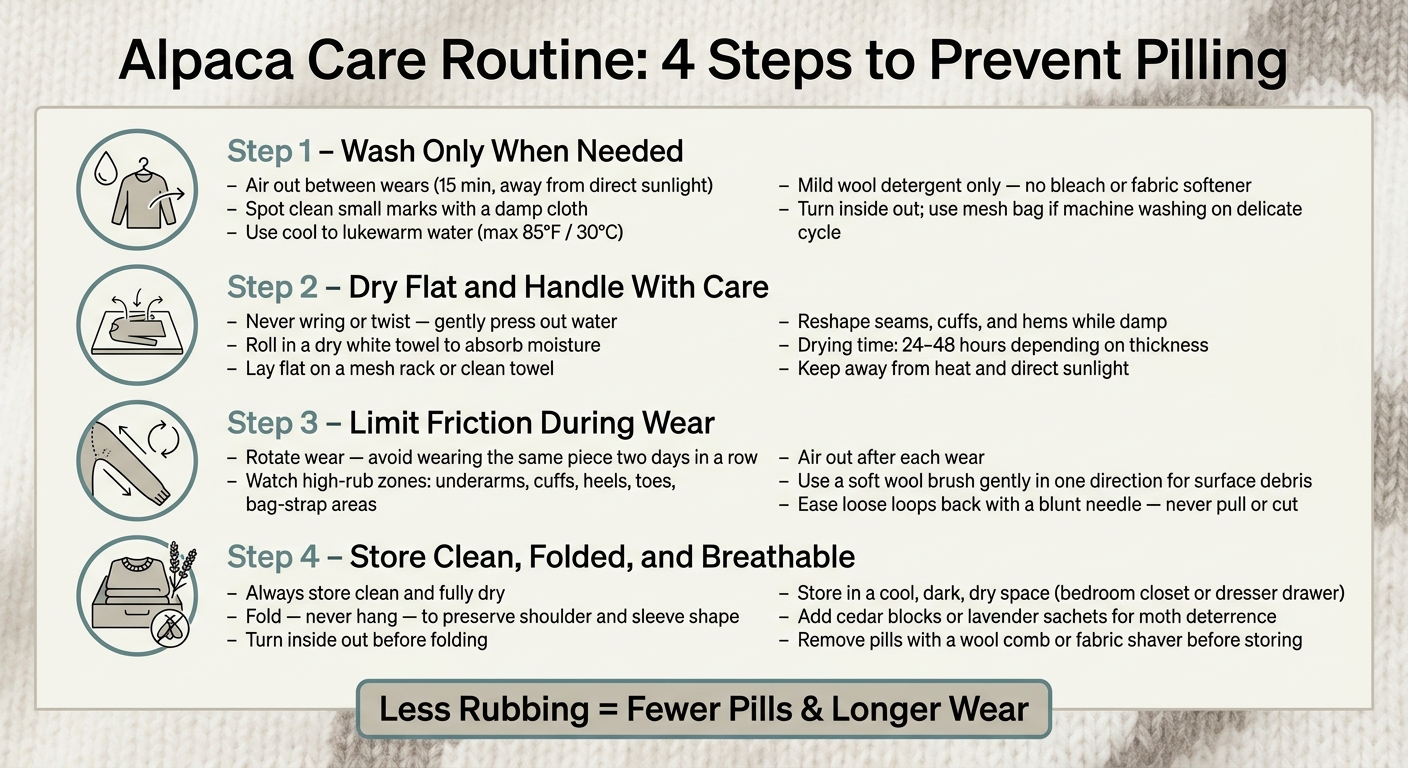
Alpaca Care Routine: 4 Steps to Prevent Pilling
Start with washing, because this is where a lot of avoidable wear happens.
Only wash alpaca when it looks dirty or starts to smell. Every wash adds friction, and that friction can lead to pilling over time. Before you reach for soap and water, air the piece out in a well-ventilated spot away from direct sunlight for about 15 minutes. For small marks, spot clean with a damp cloth and a small amount of mild wool detergent or baby shampoo, blotting from the outside of the stain inward.
When the garment needs a full wash, use cool to lukewarm water and never go above 85°F (30°C). Stick with a mild wool detergent, and skip standard detergents, bleach, and fabric softeners.
Submerge the garment and gently press the soapy water through the fibers. Don’t scrub, wring, or twist it. During rinsing, use water at the same temperature as the wash water to help avoid sudden shifts that can lead to shrinkage.
Turn alpaca garments inside out before washing. That simple step helps protect the outer surface from abrasion and can cut down on pilling.
Follow the care label. Only machine wash if the label clearly says it’s okay. If it does, use:
| Method | Friction Level | Convenience | Suitability for Alpaca |
|---|---|---|---|
| Hand Wash | Very Low | Low | Best for 100% alpaca and luxury knits |
| Delicate Cycle | Moderate | High | Only if label permits; use a mesh bag and cold water |
| Dry Cleaning | Low to Moderate | Moderate | Recommended for structured garments or stubborn stains |
The first wash deserves a bit of extra attention. Once the garment gets wet, the knit may look softer and relax a little. That’s normal.
While it’s still damp, gently reshape the seams, cuffs, and hems with your hands. Don’t pull or stretch. Just guide the garment back to its original dimensions. Taking a minute here can help keep the fit in good shape over time.
Then lay it flat to dry.
Next, dry the garment flat to preserve the shape you just restored.
Once washing is done, dry alpaca flat so it holds its shape and doesn't stretch out. Wet fiber is at its weakest. It gets heavier, less stable, and much easier to pull out of shape for good.
After you've reshaped the knit, get rid of extra water without adding new stretch. Gently press out moisture with your hands. Never twist or wring it. Then place the item flat on a clean, dry white towel. Roll the towel and garment together like a sleeping bag, and press down firmly with both hands.
If the knit is thick or heavy, use a second dry towel and repeat. This helps draw out deeper moisture without rough friction on the fibers.
When it's time to move the garment to its drying spot, support the whole piece with both hands. A wet alpaca sweater can get heavy fast, and if it hangs even for a moment, the stitches can shift out of place.
Once you've pressed out the water, place the garment somewhere it can dry evenly. A mesh rack works well. A clean towel works too, as long as air can move underneath. While the item is still damp, lightly reshape it. Straighten the seams, smooth the ribbing, and check that the shoulders and hem are sitting where they should.
Plan on 24 to 48 hours for drying, based on the thickness of the knit and the airflow in the room. Keep alpaca away from heat and direct sun, which can weaken the fibers and fade the color. A cool, well-ventilated indoor spot is best.
Never hang alpaca to dry. The weight of wet fibers can stretch the shoulders and throw off the shape.
After washing and drying, the next big cause of pilling is simple day-to-day rubbing. Once alpaca is clean and dry, how you wear it matters most.
Try not to wear the same alpaca piece two days in a row. A rest day gives the fibers time to settle back into place. That matters even more for alpaca socks, since the heels and toes take the most pressure and rubbing.
Pay close attention to spots that get rubbed over and over, like underarms, cuffs, seat-belt areas, bag straps, heels, toes, and anywhere the fabric brushes against rough material.
A few small habit changes now can help you avoid heavier cleaning later.
Between washes, keep the surface clean and smooth. Air the item out after wear in a well-ventilated space. If you see lint or surface debris, use a soft wool brush and brush gently in one direction while supporting the fabric. If you notice a loose loop, use a blunt needle to ease it back into the fabric instead of pulling it out or cutting it off.
How you store alpaca between wears, especially during the off-season, has a direct effect on its shape and how well it holds up over time. Always store alpaca clean and fully dry. Moths are drawn to body oils, sweat, and food residue. Moisture trapped in the fabric can lead to mildew and fiber breakdown.
Once the piece is clean and dry, storage is the last step in keeping friction low.
Fold alpaca instead of hanging it. Hanging can stretch knitwear and throw off the shape of the shoulders and sleeves. Turn items inside out before storage so any rubbing happens on the inside surface.
A cotton garment bag, canvas bin, or clean cotton pillowcase can all work well. They let air move through the fabric while still giving the fibers some protection. Avoid plastic bags and airtight containers. They trap moisture and can lead to mildew, yellowing, and fiber breakdown.
Store alpaca in a cool, dark, dry space. Basements are often too damp, and attics usually get too hot, so a bedroom closet shelf or dresser drawer is often the best spot. For moth deterrence, cedar blocks or lavender sachets can help.
If pills show up, remove them before storage so the fabric goes into the off-season smooth.
Pilling is normal, and it’s easy to manage with regular care.
When pills do appear, use a wool comb or fabric shaver. Lay the garment flat on a stable surface, hold it taut, and glide the tool gently in one direction along the weave. Never pull pills off by hand. That pulls more fiber out of the yarn and can cause new pills to form almost right away.
Alpaca resists odor, so you usually don’t need to wash it as often as most fabrics. That makes care pretty easy to remember: cut friction at every step.
In day-to-day use, that means keeping the routine simple. Wash only when needed, use cold to lukewarm water, dry flat, rotate wear, and store alpaca folded in a breathable space.
Even with careful care, a few pills can still show up. If they do, smooth them with a wool comb or fabric shaver on a flat surface.
The alpaca pieces that last the longest are usually the ones protected from friction from the start.
Yes. Alpaca can shrink if it isn’t washed the right way, especially when it’s exposed to heat like hot water or direct heat.
To help prevent shrinkage and felting:
You don’t need to de-pill alpaca on a fixed schedule. Pilling tends to show up most in the early stage of wear, when loose surface fibers work their way off. After that, it usually calms down.
Instead, remove pills when you see them. Use a sweater comb or fabric shaver, and move in one steady direction.
If you want to cut down on how often pilling shows up, a few small habits help:
Friction is the main reason alpaca pills. It pulls loose fiber ends out of the yarn, and those ends knot together on the surface. You’ll usually see this first in high-rub spots, like the underarms or where a bag strap sits.
Too much abrasion, heat, and moisture can make the yarn weaker too. The same goes for machine washing and rough spot cleaning, which can lead to more shedding and pilling.

Comments will be approved before showing up.