Your Cart is Empty



Want your alpaca knits to last? Here's the key: proper cleaning, careful folding, breathable storage, and pest prevention. Alpaca fibers are delicate and prone to damage from moisture, pests, and improper handling. Follow these steps to keep your garments soft, shapely, and damage-free:
Proper storage ensures your alpaca knits remain in great condition for years. Ready to start? Let’s dive into the details.
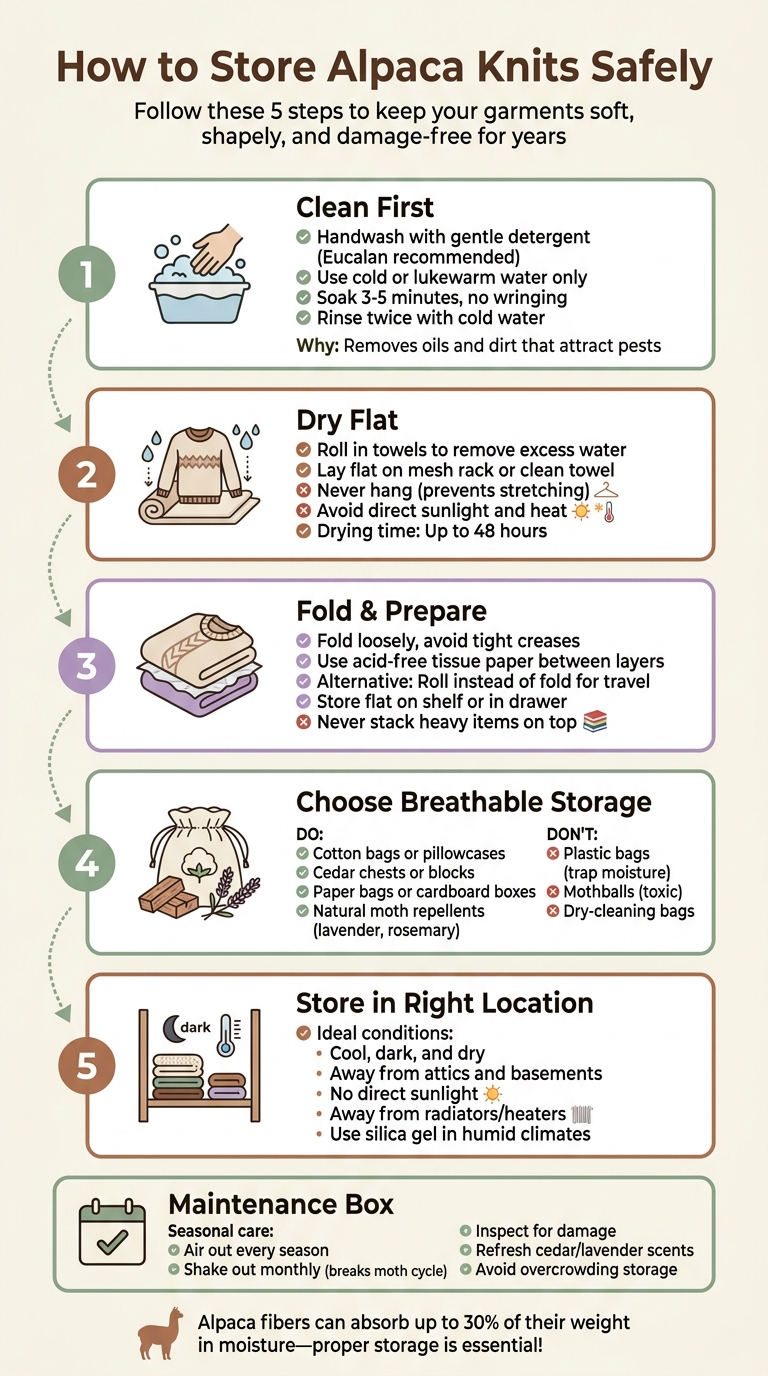
5-Step Guide to Storing Alpaca Knits Safely
If you store alpaca knits without cleaning them first, you’re inviting trouble. Moths and carpet beetles are drawn to the keratin protein in alpaca fibers, along with body oils, sweat, skin cells, and even tiny food particles left behind after wearing. Beyond pests, body oils and perspiration can oxidize over time, leading to permanent yellowing or stubborn odors. Plus, damp or dirty garments can develop mildew or mold, especially in areas with poor ventilation. A thorough cleaning not only removes these residues but also protects your knits from damage while in storage. Think of it as the first step in preserving the beauty and longevity of your alpaca pieces.
Start by filling a basin with cold or lukewarm water - never use hot water - and add a small amount of mild liquid detergent, baby shampoo, or a product specifically made for delicate fibers. For example, Eucalan is a great choice since it contains eucalyptus, a natural moth deterrent. Stay away from chlorine bleach, fabric softeners, and Woolite, as these can weaken alpaca fibers.
Submerge your garment and let it soak for 3 to 5 minutes, gently swirling the water. Avoid wringing, twisting, or scrubbing, as alpaca fibers are delicate and can shrink if handled roughly. Rinse thoroughly with cold water at least twice, ensuring all soap is gone. Be careful to maintain a consistent water temperature - switching between hot and cold can "shock" the fibers, causing them to felt and lose their soft texture.
Once rinsed, place the garment between two dry towels and roll them up gently to remove excess water. After that, lay the item flat on a clean towel or a mesh drying rack, reshaping it to its original size and form. Never hang alpaca knits - the weight of the water can stretch the fibers and permanently alter the shape. Keep the drying area free from direct sunlight, which can fade colors, and avoid heat sources like radiators that can make the fibers brittle. Depending on the thickness of the knit, it may take up to 48 hours to dry completely. Before storing, double-check that the garment is fully dry to prevent mildew from forming.
After ensuring your alpaca knits are clean and completely dry, the next step is all about proper storage. Carefully fold each piece loosely and store it flat on a shelf or inside a drawer to help maintain its shape. Tight folds should be avoided since they can cause pressure creases that might become permanent over time.
"When folding your alpaca wool items for storage, place acid-free tissue paper between layers to prevent any creases or wrinkles." - Sophia Lauringdon, Author
Before folding, take a moment to smooth out any surface wrinkles by hand. If stubborn creases remain, steaming the garment gently for 10–15 minutes can help relax the fibers.
For short-term storage or travel, rolling your knits instead of folding them is a smart option to minimize sharp crease lines. Just make sure the garment is completely dry before rolling. Whether folded or rolled, avoid stacking heavy items on top to prevent permanent creases from forming.
If you're storing yarn or unfinished knits, keep hanks in their original loose form rather than winding them into tight balls. Excess tension can stretch the fibers, reducing their natural elasticity over time.
Looking for more tips on caring for your alpaca knits? Check out our tutorials on YouTube: https://www.youtube.com/@AlpacaDirect
When it comes to storing your delicate items, airflow is key. Materials that allow air circulation help prevent issues like mold and felting. Steer clear of plastic bags or dry-cleaning bags for long-term storage - they trap moisture, which can lead to mold, mildew, and damage to fibers.
Instead, go for natural-fiber storage bags or even repurpose clean cotton pillowcases. If you’re looking for something you might already have at home, paper bags or cardboard shirt boxes are great breathable options.
"Avoid using plastic bags as they can trap moisture and lead to mold or mildew growth. Instead, opt for breathable storage bags or garment bags made of natural fibers like cotton." - Sophia Lauringdon, Great Natural Alpaca
If you live in a humid area, toss in some silica gel packets to manage moisture levels. Another tip? Use acid-free tissue paper between folded layers to help maintain the shape of your items and avoid creases.
Once you’ve got your storage materials sorted, it’s time to protect your knits from pesky pests.
After cleaning your items thoroughly, take steps to keep moths at bay. These tiny pests are drawn to residual body oils and sweat, which makes them a big threat to your stored fabrics.
Natural repellents like cedar blocks, cedar balls, or lavender sachets are excellent choices. You can also use rosemary, bay leaves, or cloves - these not only deter moths but also leave a pleasant scent. Avoid mothballs altogether; they’re highly toxic and leave behind a strong, lingering odor that’s tough to remove from natural fibers.
Keep in mind that cedar’s scent fades over time. To keep it effective, sand cedar blocks every few months to refresh their aroma. If you happen to own a cedar chest or closet, even better - it’s a fantastic option for long-term storage.
Where you store your alpaca garments is just as important as how you store them. The right environment keeps your items safe from fading, fiber damage, and mildew. Stay away from hot attics or damp basements - they’re not your garments' friends. Direct sunlight is another no-go, as it can weaken the protein bonds in alpaca fibers, leading to brittleness and loss of color.
"Direct sunlight can cause fading and damage to alpaca wool fibers over time. Store your garments in a cool, dark place to prevent any discoloration or weakening of the fabric."
- Sophia Lauringdon, Great Natural Alpaca
Also, steer clear of areas near radiators or heaters. These can cause the fibers to shrink or felt. Instead, aim for cool, dark spaces like a dedicated closet shelf or a cedar chest. These locations offer stable temperatures and shield your garments from harmful light exposure.
Humidity is another key factor in maintaining the quality of your alpaca garments. Alpaca fibers can absorb up to 30% of their dry weight in moisture, which makes damp conditions a breeding ground for mold and mildew.
Never store garments while they’re damp. If your knits are wet - whether from washing or rain - lay them flat to air dry for 24–48 hours before putting them away. For those living in humid climates or during particularly damp seasons, silica gel packets or a dehumidifier can help maintain a low-moisture environment. These small steps go a long way in ensuring your alpaca knits stay in excellent condition.
Once your alpaca knits are properly cleaned, stored, and protected from pests, ongoing care is essential to keep them in great shape. One simple step is to air them out each season. Taking them out of their breathable storage bags allows the fibers to refresh and prevents that stale, musty smell.
Make it a habit to inspect and shake out your garments every month. This small effort helps break the moth life cycle, which lasts about 21 days. A quick shake and a brief exposure to sunlight can effectively repel larvae.
"Every month, it is recommended to shake out your garments and leave in bright sunlight. The life cycle of a moth is 21 days and larvae are strongly repelled by light."
While you're at it, check for any signs of damage, such as holes, larvae, or pilling. If you spot pills, use a sweater comb or stone to gently remove them. Also, take a moment to assess your cedar blocks or lavender sachets. If their scent has faded, replace them to ensure continued pest protection.
Finally, resist the temptation to pack your storage space too tightly. Leaving enough room for air circulation prevents crushing, reduces wrinkles, and helps keep excess moisture at bay. A little breathing room goes a long way in preserving your alpaca knits.
Taking care of your alpaca knits doesn’t have to be complicated. By sticking to the five key steps - cleaning before storage, preparing garments correctly, using breathable materials, picking the right storage spot, and performing seasonal maintenance - you can ensure your cherished pieces stay in great shape for years to come.
"With proper care, your valuable alpaca garment will become a personal favorite or perhaps even a family heirloom!" - PurelyAlpaca
One of alpaca fiber's best features is that it’s naturally antimicrobial and odor-resistant. This means it doesn’t need to be washed as often as synthetic fabrics, making thoughtful storage even more essential. When you clean and store your knits properly, you’re preserving a garment that could last a lifetime.
For all your alpaca care needs, Alpaca Direct offers helpful products like gentle detergents, cedar storage options, and tools for removing pilling. They also provide educational resources, including knitting tutorials and project ideas, on their YouTube channel, so you can enjoy your alpaca garments to the fullest.
Proper storage ensures your knits stay fresh, moth-free, and ready to wear whenever you need them.
Storing alpaca knits in vacuum bags is a bad idea. These bags can trap moisture, which might compress the fibers or even cause mold, leading to damage to the delicate alpaca material. To keep your garments in good condition, fold them neatly and store them in breathable containers like cotton bags. This helps prevent moisture buildup and protects the fibers.
To keep alpaca knits in good condition in humid environments, start by making sure they're clean - dirt and oils can attract pests. Opt for breathable storage solutions like cotton bags, which allow air to circulate, and steer clear of plastic bags that can trap moisture. To ward off moths, add natural repellents such as cedar blocks or lavender sachets. Choose a storage spot that's cool, dark, and well-ventilated, and occasionally take the knits out to air them, reducing any chance of mustiness or moisture buildup.
If you spot moth damage on your alpaca knits, take action right away to stop further harm. Start by either cleaning or freezing the items to get rid of any moth larvae or eggs. You can wash the garment, have it dry-cleaned, or freeze it for a few days - this will effectively kill any lingering pests. To keep moths from coming back, consider using natural repellents like cedar blocks or lavender sachets. Quick action is key to preserving your alpaca knits.

Comments will be approved before showing up.