Your Cart is Empty


Alpaca yarn is soft and smooth but can be slippery, making the right knitting needles essential. Here's a quick guide to help you choose:
Needle Sizes:
Tip: Always knit a test swatch to match your tension and yarn weight.
For alpaca projects, wooden and bamboo needles are best for control, while metal needles suit experienced knitters. Choose based on your skill level and project needs for a smoother experience.
Alpaca yarn is known for its soft and smooth texture, but that same smoothness can make stitch control a bit tricky. The fibers tend to slip, especially when working with finer yarns where maintaining consistent tension is key. This can be frustrating if you're not using the right tools to manage it.
The material of your knitting needles plays a big role in how well you can handle these slippery fibers. Wooden needles, for example, provide natural friction that helps grip the yarn and reduces the chance of dropped stitches. On the other hand, metal needles allow stitches to glide more easily, which can speed up your knitting. However, their slick surface can make alpaca yarn even harder to control, particularly for knitters who are still perfecting their technique. These differences in texture not only affect stitch control but also influence the durability and comfort of your knitting experience.
The material of your needles doesn't just impact performance - it also affects how comfortable and durable they are. Wooden needles are lightweight and feel warm to the touch, making them great for long knitting sessions. They also offer that grippy texture that pairs so well with alpaca yarn, though they can be more expensive and may wear down over time with heavy use.
"Bamboo needles are lighter than metal and smoother than wood - a great combination. They're especially suitable for sensitive hands." - Fiorella Cruz, Hansa-Farm
Metal needles, on the other hand, are incredibly durable. They resist warping or breaking, making them a solid choice for larger alpaca projects like sweaters. But their slick surface means you'll need more skill to maintain proper tension with alpaca's slippery fibers. Bamboo needles provide a nice balance - they're lighter than metal, offer more control than slick metal surfaces, and feel gentle on your hands during extended knitting sessions. Understanding these material characteristics can help you choose the best needles for your alpaca yarn projects.
Wooden needles are a fantastic choice for working with alpaca yarn, particularly if you're just starting out. The natural texture of wood adds a slight friction, which helps keep those slippery alpaca stitches secure - perfect for larger projects like sweaters or scarves. If you're tackling circular projects, wooden circular needles with flexible cables help evenly distribute the weight, which is especially handy for heavier garments like cardigans. For smaller, round projects like socks, hats, or sleeve cuffs, double-pointed wooden needles provide better control and help prevent stitches from slipping.
"Wooden knitting needles are ideal if you're using alpaca wool. Why? They're lightweight, feel warm in your hand, and offer just the right amount of grip – the stitches don't slip off as easily as with metal ones." - Fiorella Cruz, Hansa-Farm
While wooden needles are great for grip and control, knitters who want a slightly smoother glide may lean toward bamboo needles as an alternative.
Bamboo needles strike a great balance between glide and grip. They're lighter than metal needles, which reduces hand strain during long knitting sessions, yet they still offer enough friction to handle alpaca's naturally slippery texture. This makes them a solid option for knitters who value comfort or have sensitive hands, including those with arthritis.
If you're looking for an affordable yet reliable option, PONY® bamboo knitting needles are a great pick. Available in sizes ranging from 2 to 10 mm, they retail for around $3.99. However, for projects that demand faster stitching or intricate details, metal needles might be the better choice.
Metal needles are loved by experienced knitters for their speed and precision. Their smooth surface allows stitches to glide effortlessly, making them ideal for large alpaca projects where quick progress is essential. For intricate patterns or delicate alpaca lacework, sharp-tipped metal needles make manipulating stitches a breeze.
Some popular options include ChiaoGoo Red Lace Steel Circulars, starting at $14.49, and HiyaHiya Steel Circulars or HiyaHiya Sharp Steel Circulars, both beginning at $12.50. While the slick surface of metal needles can lead to occasional slippage, mastering your tension control will let you fully enjoy their speed and accuracy.
No matter what your project or skill level, there's a needle material that fits perfectly with alpaca yarn - whether you prioritize security, comfort, or efficiency.
The size of your knitting needles plays a big role in determining the fabric and texture of your alpaca project. Smaller needles create a tighter, more structured fabric, which is perfect for detailed designs. On the other hand, larger needles produce a looser, more open texture, making them ideal for showcasing the soft, cozy quality of bulky alpaca yarns. Picking the right size also helps prevent issues like pulling or slipping stitches.
That said, the needle size listed on a yarn label is just a starting point. As Paradise Fibers puts it:
"The needle size listed on a yarn label is a suggestion, not a rule - your personal tension determines the actual size you need."
To find your perfect match, knit a gauge swatch using your chosen needles and yarn. This step is especially important with alpaca yarn, as its unique properties can affect your results. Pairing the right needle size with the yarn's weight ensures better control and a consistent fabric, which is key for managing alpaca’s smooth fibers. Below is a breakdown of recommended needle sizes for various alpaca yarn weights.
For laceweight alpaca yarns, stick to US 0–3 needles (2.0–3.25 mm). These smaller sizes produce the tight, precise stitches needed for delicate projects like lace shawls, socks, and intricate patterns. A tighter gauge helps prevent alpaca’s naturally slippery fibers from creating uneven stitches. Many knitters prefer metal needles at this size because they’re sturdy and resist bending under tension.
When moving from lightweight projects to more everyday items, you’ll need to adjust your needle size accordingly.
For medium-weight alpaca yarns, such as sport, DK, or worsted, US 4–9 needles (approximately 3.5–5.5 mm) typically work best. This range is versatile enough for sweaters, hats, and scarves. For bulkier alpaca yarns, switch to US 10–11 needles (6.0–8.0 mm) to highlight the yarn’s loft and create a warm, cozy texture - perfect for blankets and cowls. If you’re working on super bulky projects like arm-knit home decor, go even larger with US 13 or bigger (9.0 mm and up) to maintain an airy, open structure.
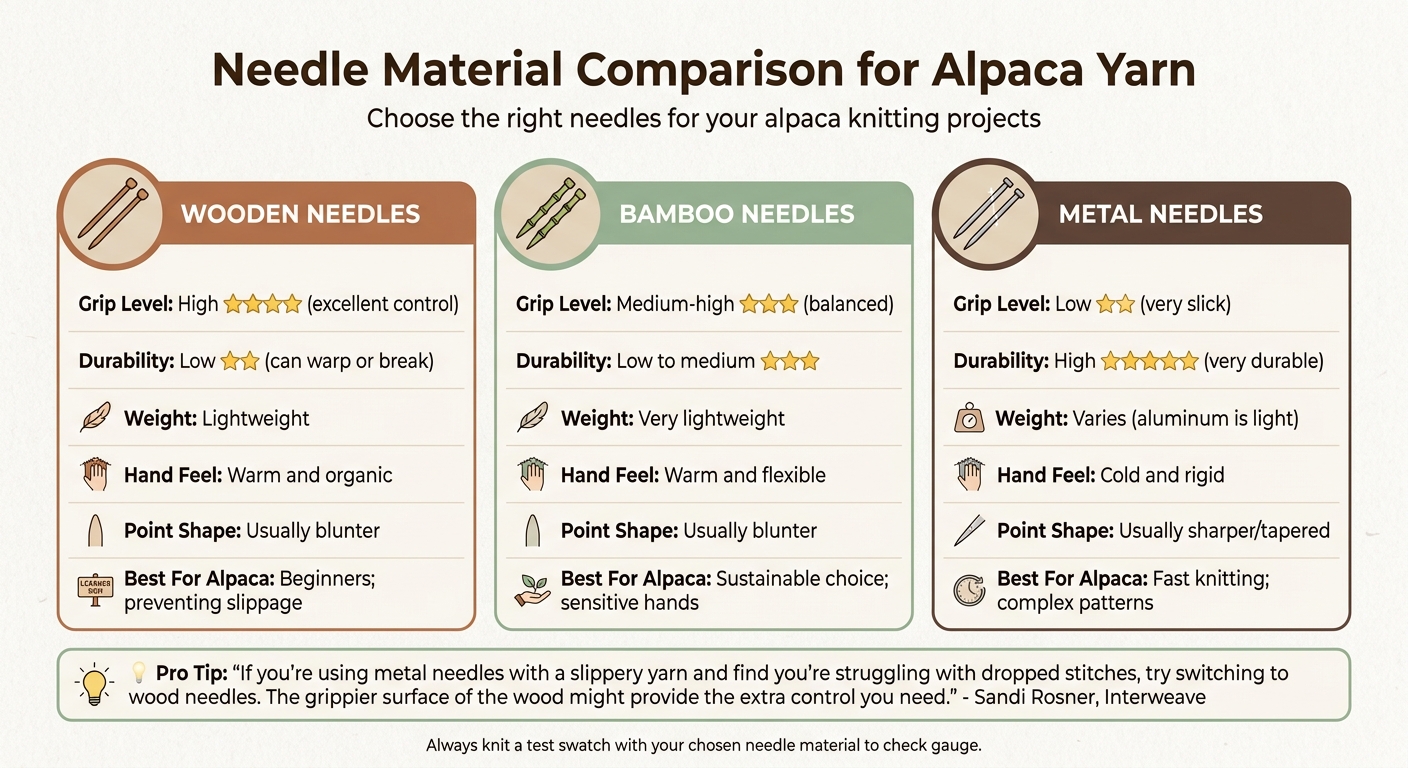
Knitting Needle Material Comparison Guide for Alpaca Yarn
Deciding between wooden, bamboo, and metal needles for your alpaca knitting projects depends on how each material interacts with alpaca's smooth fibers. Each type has its own advantages and challenges, so understanding these differences can help you make the right choice.
Wooden and bamboo needles are known for their warmth and grip, making them great for controlling slippery yarns. However, they are more fragile and prone to damage compared to metal needles. Metal needles, on the other hand, are highly durable and feature sharper points, which are perfect for intricate stitch work. That said, their slick surface can be tricky for beginners, especially when working with alpaca yarn.
Sandi Rosner, Technical Content Editor at Interweave, offers this advice:
"If you're using metal needles with a slippery yarn and find you're struggling with dropped stitches, try switching to wood needles. The grippier surface of the wood might provide the extra control you need".
Here’s a quick breakdown of how these materials stack up:
| Feature | Wooden Needles | Bamboo Needles | Metal Needles |
|---|---|---|---|
| Grip Level | High (excellent control) | Medium-high (balanced) | Low (very slick) |
| Durability | Low (can warp or break) | Low to medium | High (very durable) |
| Weight | Lightweight | Very lightweight | Varies (aluminum is light) |
| Hand Feel | Warm and organic | Warm and flexible | Cold and rigid |
| Point Shape | Usually blunter | Usually blunter | Usually sharper/tapered |
| Best For Alpaca | Beginners; preventing slippage | Sustainable choice; sensitive hands | Fast knitting; complex patterns |
Keep in mind that the friction between your needles and yarn can affect your gauge. Always knit a test swatch with the needle material you plan to use for your project.
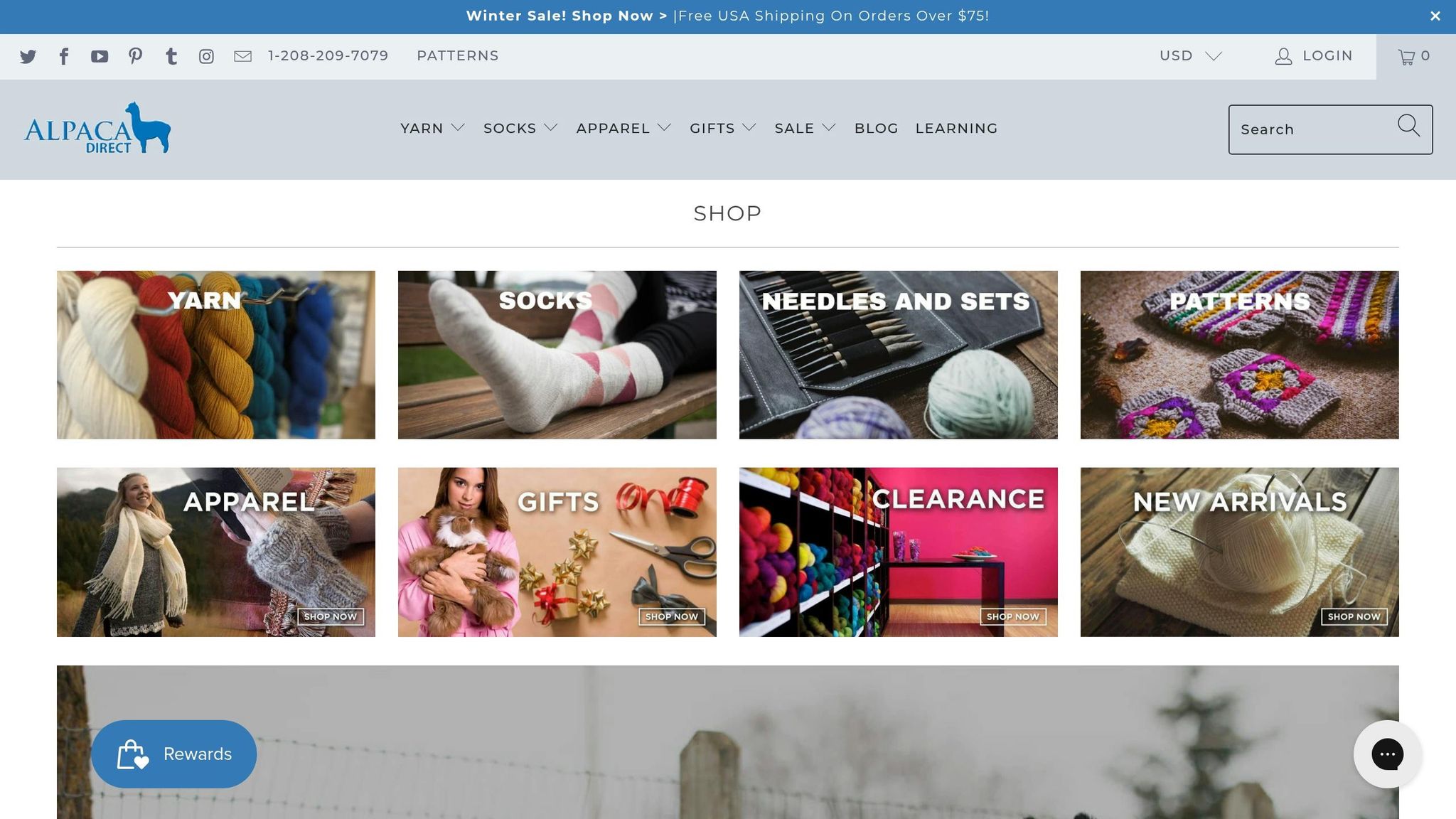
At Alpaca Direct, you'll find a variety of knitting needles designed to pair perfectly with alpaca yarn. They offer wooden needles for a secure grip, bamboo needles for added comfort, and metal needles for precision. These options come in different formats, including circular and double-pointed needles, so you can choose what works best for your specific project. Sizes range from 2–3 mm for delicate lacework to 6–8 mm for chunkier, bulkier yarns. Beyond just selling these tools, Alpaca Direct ensures you have what you need to use them effectively.
Alpaca Direct doesn’t just stop at providing tools - they also help knitters build their skills. Their knitting tutorials dive into why alpaca yarn, with its smooth texture, requires needles that prevent stitches from slipping or snagging. Want to see these needles in action? Check out their YouTube channel, where videos demonstrate how different needle materials interact with alpaca yarn. Beginners can learn why wooden needles are ideal for maintaining control, while more advanced knitters can pick up tips for handling metal needles with slippery fibers.
They also host a weekly show on their website, packed with project ideas and techniques for working specifically with alpaca. These resources are invaluable for understanding how needle materials impact friction and gauge - key factors when knitting a test swatch before diving into your project.
When working with alpaca yarn, choosing the right needles is key to a smooth knitting experience. Alpaca yarn’s slippery texture calls for tools that suit your skill level and project needs. Wooden needles are great for beginners, offering a reliable grip. Bamboo needles provide a middle ground, balancing speed and control. For those with more experience, metal needles allow for fast and precise stitching. As Fiorella Cruz from Hansa-Farm says, "Choosing the right needle can completely change your knitting experience!"
It’s also important to match your needle size to the yarn weight for better control and results. Always check the yarn label for guidance to ensure proper tension and drape.
Alpaca Direct offers a selection of wooden, bamboo, and metal needles in circular and double-pointed styles, all thoughtfully designed for alpaca yarn. Plus, their educational resources - including knitting tutorials, a YouTube channel, and a weekly show - are excellent tools for learning how to work with alpaca's unique characteristics.
With quality tools and expert advice, every alpaca project becomes more manageable and enjoyable. Alpaca Direct is here to help you master the art of knitting with alpaca yarn. For more tips and tutorials, check out their YouTube channel.
To keep alpaca yarn from slipping while working, wooden needles are a great choice. They provide a lightweight feel, a warm touch, and just the right amount of grip to hold your stitches in place. If slipping continues to be an issue, take a closer look at your needle size - using needles that are either too small or too large can throw off your tension, making slipping more likely. For additional guidance and helpful techniques, check out Alpaca Direct's tutorials and resources available on their YouTube channel.
If your alpaca swatch doesn’t match the gauge, try adjusting your needle size to match your stitch tension. If your stitches are too tight, go up a needle size; if they’re too loose, switch to a smaller one. Since alpaca yarn is soft and tends to be slippery, wooden needles can help you keep a more consistent gauge. Keep experimenting until your swatch aligns with the gauge specified in the pattern.
Wooden needle tips work wonderfully for alpaca lace or cable knitting. Their slight grip ensures that fine and slippery alpaca yarn stays in place, which is especially useful when working on detailed or complex patterns.

Comments will be approved before showing up.