Your Cart is Empty


Looking for the perfect eco-friendly yarn for your next gift? Alpaca and organic cotton are two standout options, each offering unique benefits for crafting. Here's a quick breakdown:
Quick Comparison:
| Feature | Alpaca Yarn | Organic Cotton Yarn |
|---|---|---|
| Warmth | High (3x warmer than wool) | Low (breathable and cooling) |
| Processing | Minimal (no lanolin, less water) | Hand-picked, chemical-free |
| Best Use | Winter gifts, luxury items | Summer wear, everyday items |
| Environmental Impact | Low (gentle grazing, high yield) | Lower water use, no pesticides |
Both are biodegradable and skin-friendly, but alpaca yarn stands out for its durability, warmth, and luxurious feel, making it a better choice for long-lasting, cold-weather gifts. Organic cotton shines in warmer seasons and for practical, machine-washable items.
Choose based on your project needs and the recipient's preferences.
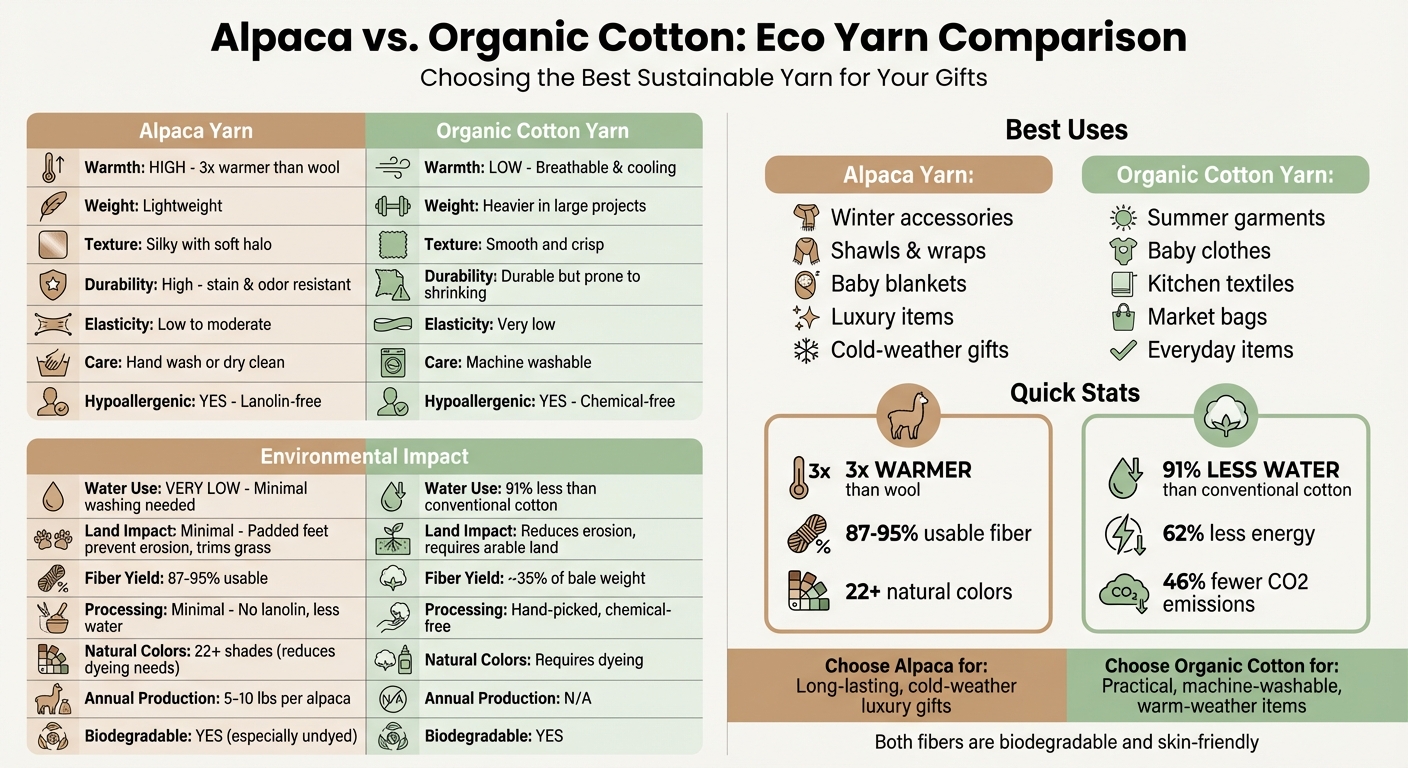
Alpaca vs Organic Cotton Yarn: Complete Eco-Friendly Comparison Chart
Alpaca yarn is made from the fleece of alpacas, animals native to the Andean highlands of South America. The process starts each spring when alpacas are sheared. Their fleece is then cleaned, sorted, and spun into yarn. Each alpaca produces about 5 to 10 pounds of fleece annually, with a processing yield of 87–95%, which is higher than many other animal fibers.
There are two main types of alpaca fiber. Huacaya, the most common, has a fluffy, crimped texture similar to sheep’s wool, making it perfect for knitting. Suri, on the other hand, is less common and features silky, pencil-like locks that resemble dreadlocks, making it ideal for woven goods. The term "Baby Alpaca" refers to the softest fibers, under 20 microns, usually sourced from the alpaca’s finest areas. These characteristics make alpaca yarn a standout choice for many projects.
One of alpaca yarn's most impressive features is its hollow fiber structure, which creates air pockets that trap heat. This makes it about three times warmer than sheep’s wool while being lighter. It’s also water-repellent, fire-resistant, and hypoallergenic.
"Unlike sheep's wool, alpaca fleece contains no lanolin and is therefore ready to spin after only nominal cleaning." - Alpaca Owners Association
Alpaca farming is also gentle on the environment. Their padded feet prevent soil erosion, and their grazing habits preserve root systems. Additionally, alpaca fleece has a low grease content of just 2.8% to 3.9%, meaning it requires far less water and fewer chemicals to clean compared to sheep’s wool. With 22 natural colors available, industrial dyeing is often unnecessary. These eco-friendly qualities make alpaca yarn an appealing choice for environmentally conscious crafters, while its performance characteristics open up endless creative possibilities.
Organic cotton yarn comes from cotton cultivated without synthetic chemicals. Instead, farmers rely on natural methods like non-GMO seeds, compost, manure, and crop rotation to nurture soil health and maintain balanced ecosystems. To manage pests and weeds, they use beneficial insects and manual weeding rather than chemical sprays, protecting both the environment and the well-being of farm workers.
The harvesting process plays a big role in maintaining fiber quality. Organic cotton is hand-picked, which preserves the fibers' length and strength. In contrast, machine harvesting can damage the fibers. After harvesting, the cotton undergoes gentler processing. For example, milder substances like peroxide and natural dyes are used instead of harsher chemicals like chlorine bleach, formaldehyde, or heavy-metal dyes. This approach ensures the yarn remains safe, non-toxic, and environmentally friendly.
"Organic cotton is grown as part of a production system that sustains the health of soils, ecosystems and people."
The environmental benefits of organic cotton are hard to ignore. It requires 91% less water, 62% less energy, and produces about 46% fewer CO2 emissions compared to conventional cotton farming. Around 75% to 80% of organic cotton relies on rainwater instead of irrigation, further reducing its environmental footprint. Despite these advantages, organic cotton still accounts for only 1.4% to 2% of global cotton production.
To ensure you're getting genuine organic cotton yarn, look for certifications like GOTS, OEKO-TEX Standard 100, or OCS. For example, GOTS certification guarantees that at least 95% of the fibers are organic and that the entire processing chain meets strict environmental standards. The Organic Content Standard (OCS) confirms the percentage of organic material in the finished product. These certifications make organic cotton a reliable choice for eco-conscious crafters. It's especially ideal for sensitive skin and baby items because of its chemical-free nature. By prioritizing these sustainable practices, organic cotton not only delivers high-quality fibers but also supports environmentally responsible crafting.
When selecting eco-conscious yarn for gifts, understanding the environmental footprint of each fiber can guide your decision. Both alpaca and organic cotton present environmentally friendly alternatives to conventional materials, though they achieve this in different ways.
Alpacas are gentle grazers, which makes them kind to the land. Their soft, padded feet help prevent soil compression and erosion, unlike the hard hooves of sheep or goats. Instead of uprooting grasses, alpacas trim the tops, allowing vegetation to regrow quickly. They also thrive at high altitudes - around 12,467 feet (3,800 meters) - on land unsuitable for farming, so they don't compete with food production.
"Alpacas are much more eco-friendly than cashmere goats, because they cut the grass they eat instead of pulling it out, which allows for the grass to keep growing."
- SustainYourStyle
Organic cotton farming, on the other hand, avoids synthetic pesticides and fertilizers, protecting soil health and local ecosystems. It also uses significantly less water - 91% less irrigation compared to conventional cotton - and reduces agricultural input by 46% while cutting field emissions by 70%. However, it still requires arable land and some irrigation, even if the demand is far lower than traditional methods.
Water usage is another key factor. Alpaca fiber, with its low grease content and lack of lanolin, requires minimal washing and no chemical scouring. Organic cotton, while more water-efficient than conventional cotton, still relies on irrigation. Alpaca fiber also has an impressive yield, with 87% to 95% of the fiber being usable, compared to organic cotton's approximately 35% of bale weight.
| Environmental Factor | Alpaca Yarn | Organic Cotton Yarn |
|---|---|---|
| Land Impact | Minimal; padded feet prevent erosion; trims grass instead of uprooting | Reduces soil erosion; requires arable land but avoids synthetic inputs |
| Water Use | Very low; no lanolin means minimal washing needed | 91% less irrigation than conventional cotton |
| Yield | High (87–95% usable fiber) | Lower (approx. 35% of bale weight) |
| Biodegradability | Yes (especially if undyed) | Yes |
These metrics highlight how both fibers minimize environmental strain, particularly through reduced chemical intervention. But what about the role of certifications and processing?
The way each fiber is processed also plays a major role in sustainability. Alpaca fiber has a clear advantage here. Unlike sheep's wool, which requires harsh chemical scouring and high-temperature washing, alpaca fiber is naturally clean due to the absence of lanolin. Additionally, alpacas naturally produce up to 22 colors, reducing the need for industrial dyeing and the water pollution that comes with it.
Organic cotton avoids harmful chemicals during cultivation by eliminating synthetic pesticides, fertilizers, and GMO seeds. Certifications like GOTS (Global Organic Textile Standard) ensure at least 70% organic content and enforce strict wastewater treatment protocols. The Organic Content Standard (OCS) verifies the percentage of organic material in the final product. For alpaca yarn, the Responsible Alpaca Standard (RAS) ensures ethical practices, including progressive land management, adherence to animal welfare standards based on the Five Freedoms, and social responsibility. Both fibers are naturally biodegradable when undyed, making them excellent options for eco-conscious crafters.
When choosing between alpaca and organic cotton yarn, it's not just about sustainability - how the fibers feel and perform plays a big role in deciding their best uses. Alpaca is known for its silky, cashmere-like softness, while organic cotton offers a smooth, crisp texture ideal for structured stitching.
Alpaca yarn is celebrated for its luxurious, silky texture, often likened to cashmere, with a soft halo that adds an elegant touch to finished pieces. This makes it a go-to for cozy accessories like shawls and scarves, where a gentle drape is key. On the other hand, organic cotton creates a smooth, well-defined stitch, though it may stiffen slightly after washing. Alpaca, by contrast, maintains its softness over time.
"Alpaca fiber... is actually about three times warmer than sheep's wool, yet lighter and more breathable. In other words, you'll feel cozy, not sweaty."
For those with sensitive skin, both fibers are excellent options. Alpaca is naturally hypoallergenic because it lacks lanolin, the oil found in sheep's wool that can irritate the skin [5, 43]. Organic cotton, grown and processed without harmful chemicals, is also a gentle choice for allergy-prone individuals. While neither fiber is particularly elastic, alpaca offers a graceful drape, whereas organic cotton provides a firmer, more structured finish.
Alpaca excels in warmth, thanks to its hollow fibers that trap air, providing excellent insulation without adding weight. It's lightweight, breathable, and a solid investment for luxury items that can last for decades with proper care. Its natural resistance to stains and odors also reduces the need for frequent washing.
Organic cotton, however, shines in warmer weather. Its breathable and cooling properties make it ideal for summer garments, baby clothes, and household items like dishcloths. While durable and machine washable, cotton lacks the insulating qualities of alpaca and is prone to shrinking, fading, or thinning over time. Additionally, its limited stretch can make larger projects feel heavier. For a balanced option, blends like 60% baby alpaca and 40% Pima cotton combine alpaca's softness with cotton's breathability.
Both fibers are well-suited for sensitive skin. Alpaca's lanolin-free composition makes it a perfect alternative for those who find sheep's wool irritating, and its thermoregulating properties ensure year-round comfort. Organic cotton, free from harsh chemicals, minimizes the risk of skin reactions, making it a safe option for allergy-prone users.
| Property | Alpaca Yarn | Organic Cotton Yarn |
|---|---|---|
| Texture | Silky with a soft halo [42, 43] | Smooth and crisp |
| Warmth | High (3× warmer than wool) | Low (breathable and cooling) |
| Weight | Lightweight | Heavier in larger projects |
| Durability | High - stain and odor resistant | Durable but prone to shrinking |
| Elasticity | Low to moderate | Very low |
| Care | Hand wash or dry clean [5, 43] | Machine washable |
| Hypoallergenic | Yes (lanolin-free) [5, 7] | Yes (chemical-free) |
For winter accessories like scarves and hats, alpaca offers unbeatable warmth and softness without irritation. Meanwhile, organic cotton's practicality and easy care make it ideal for everyday items like baby clothes, kitchen textiles, or lightweight summer wear.
Alpaca yarn brings a touch of cold-weather luxury, while organic cotton offers practicality for warm-weather creations.
If you're thinking about winter gifts that deliver warmth without extra weight, alpaca yarn is a fantastic choice. Its hollow fibers trap heat more effectively than sheep's wool, making it perfect for scarves, hats, and mittens that keep loved ones cozy during chilly months.
Alpaca's natural drape makes it a go-to for elegant shawls, wraps, and cardigans. It also shines in baby blankets, soft toys, and stuffed animals, turning simple projects into cherished keepsakes. For home décor, alpaca yarn adds a luxurious touch to throws and cushion covers while offering durability.
"Alpaca fiber... is naturally thermoregulating. It adapts to your body temperature, keeping you warm when it's chilly and cool when it's hot." - Fernanda Chirinos, Alpalove
Alpaca yarn isn’t just for winter - it works year-round when paired with open-knit patterns. Simple scarves or hats are beginner-friendly projects that showcase alpaca's beauty. Since alpaca has less elasticity than wool, it’s better suited for designs where drape matters more than stretch, such as flowing shawls rather than fitted ribbing. These projects reflect thoughtful craftsmanship, making them ideal for sustainable gift-giving.
While alpaca embodies warmth and elegance, organic cotton offers practicality and versatility, especially for warmer seasons.
Organic cotton yarn complements alpaca's luxury with its everyday usefulness. Thanks to its breathability and moisture-wicking properties, it’s ideal for breezy tops, lightweight sweaters, and airy shawls that help the wearer stay cool.
"One of the first things you'll notice about organic cotton yarn is its exceptional softness, making it ideal for projects intended to be worn close to the skin, such as baby clothes, hats, and scarves." - Mother Knitter
For practical gifts, organic cotton shines in kitchen and home goods. Dishcloths, potholders, and decorative dishtowels made from this yarn are absorbent, durable, and machine-washable - perfect for everyday use. Heavier worsted-weight cotton works well for sturdy accessories like market bags and totes. Its ability to withstand frequent washing without losing quality makes it a great choice for busy households.
Choosing the right yarn weight is key. Lighter weights like DK or fingering are best for garments with a delicate drape, while worsted weight provides the structure needed for accessories. For versatile three-season garments, blends of organic cotton and alpaca combine cotton's breathability with alpaca's warmth, offering the best of both worlds. These thoughtful projects are perfect for gifting with an eco-conscious touch.
If you're looking for a gift that's both sustainable and built to last, alpaca yarn stands out as a superior choice compared to organic cotton. Alpacas are incredibly efficient when it comes to water use - they hydrate naturally from the grass they graze on. In contrast, producing a single organic cotton T-shirt can require up to 2,700 liters of water.
But water conservation is just one part of the story. Alpacas bring other environmental perks to the table. Their soft, padded feet are gentle on the land, helping to prevent soil erosion. Plus, their grazing habits are unique - they nibble only the tops of plants without uprooting them. This sustainable grazing takes place on high-altitude terrains (around 12,467 feet) that are unsuitable for traditional farming, meaning alpacas don't compete with food agriculture. And here's another impressive fact: one alpaca can produce enough fiber annually to make 4–5 sweaters, offering a much higher yield compared to other animals.
"Alpaca is the world's most sustainable fabric for several reasons. It takes few natural resources, doesn't harm the soil or integrity of grasslands, is harvested ethically, helps support small-hold farmers, doesn't hurt animals, doesn't need chemical dyes and finishes, and is biodegradable and renewable." - Diane Small
Alpaca fiber also cuts down on industrial dyeing processes, which are known to pollute water. How? Its natural color range has expanded to over 300 shades, making chemical dyes unnecessary. Additionally, alpaca fiber contains very little grease - just 2.8% to 3.9% - so it requires minimal processing and avoids the use of harsh chemicals. Its flame-resistant properties also mean there’s no need for toxic finishing treatments.
These eco-friendly traits go hand in hand with exceptional durability and comfort. Alpaca yarn offers a luxurious feel that lasts - it’s three times warmer than sheep’s wool, yet it’s lightweight and breathable. Its high tensile strength resists pilling, staining, and wear, ensuring that garments maintain their softness and beauty over time. For knitters who want to create gifts that are both environmentally responsible and long-lasting, alpaca yarn is a clear choice.
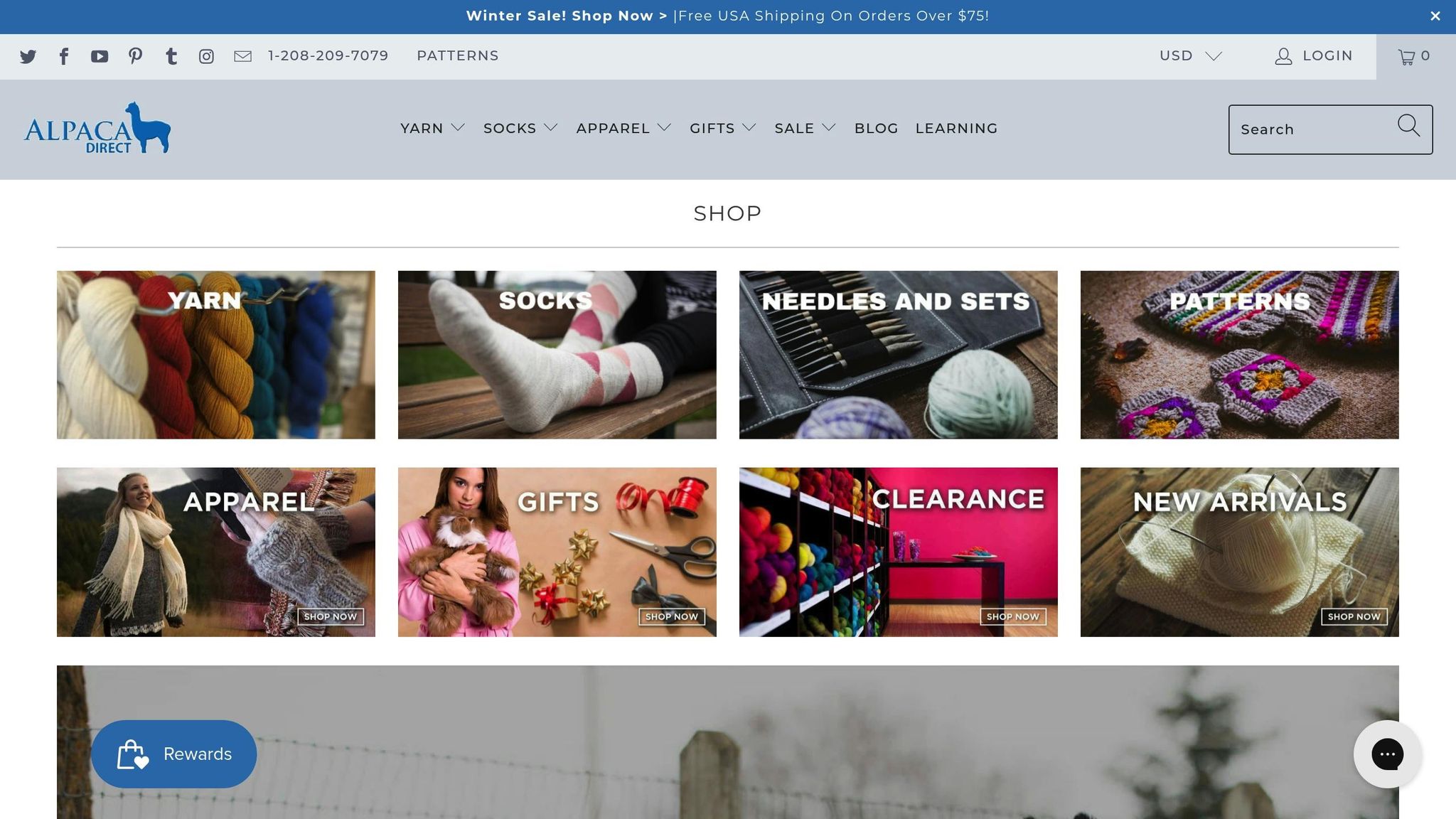
Discover how alpaca yarn can transform your crafting projects with its unique qualities and eco-conscious appeal.
At Alpaca Direct, you'll find an extensive selection of alpaca yarns from brands like Berroco, Cascade Yarns, Coeur d'Alene Yarns, Malabrigo, and Plymouth Yarn. Many of these yarns are made by small artisan workshops in Peru, preserving traditional techniques while offering you access to rare, high-quality fibers.
Need help picking the right yarn? The website's "Yarn by Weight" guide makes it easy to choose from a variety of options, including lace, worsted, and super chunky yarns. Plus, you'll find a range of specialized tools like needle sets from Addi, ChiaoGoo, and Knitter's Pride, as well as handy accessories like needle gauges and point protectors.
Alpaca Direct isn’t just a store - it’s a hub for creativity. Their library of free resources includes knitting and crochet patterns, video tutorials, and "Technique Tuesday" ideas to inspire your next project. For even more tips and step-by-step instructions, check out their YouTube channel at https://www.youtube.com/@AlpacaDirect.
Want to get rewarded for your passion? Join the Alpaca Rewards program to earn points on every purchase and referral. Redeem your points for discounts ranging from $5 to $25, with VIP perks for loyal customers. And if you're looking for a thoughtful gift, their eGift cards start at just $10.00, making it easy to share the joy of sustainable crafting with friends.
Alpaca yarn is a great pick for baby gifts thanks to its softness, hypoallergenic properties, and natural breathability. These features make it perfect for a baby’s delicate skin, providing both comfort and gentle care.
Caring for alpaca and organic cotton requires different approaches because of their distinct fibers. Alpaca is naturally resistant to odor and dirt, meaning it doesn’t need to be washed as often. When cleaning is necessary, hand wash it in warm water or opt for dry cleaning, and make sure to avoid harsh detergents that could damage the fiber.
On the other hand, organic cotton benefits from regular washing to keep its softness and maintain its shape. Use a gentle machine wash cycle with cold or warm water. For drying, either air dry or use a low tumble dry setting to avoid shrinking.
To confirm that cotton is organic, seek certifications such as the Global Organic Textile Standard (GOTS) or the Organic Content Standard (OCS). These certifications guarantee that the cotton meets strict environmental and social standards. For alpaca fibers, look for the Responsible Alpaca Standard (RAS), which ensures proper animal welfare practices and sustainable farming methods. Checking product labels or supplier documentation is the simplest way to verify whether the fibers are organic or ethically sourced.

Comments will be approved before showing up.