Your Cart is Empty


Choosing the right yarn weight is one of the most important decisions when starting a project. Yarn weight determines stitch size, fabric texture, drape, and how long your project will take. Here's a quick breakdown:
Each weight pairs with specific needle or hook sizes and produces a unique stitch gauge. For example, Lace weight creates 33–40+ stitches per 4 inches, while Jumbo weight yields 6 or fewer stitches. Always swatch to match your pattern's gauge and ensure the right fit. For beginners, Medium or Bulky yarns are easier to work with due to their larger, more visible stitches.
Use this guide to match the yarn weight with your project type, skill level, and desired results.
The Craft Yarn Council has created a standardized system that divides yarn into eight categories based on strand thickness. Each category aligns with specific tools and stitch gauges, which refers to the number of stitches you'll achieve in a 4-inch swatch.
Lace weight yarn is incredibly thin, yielding 33–40 or more stitches in a 4-inch swatch when using needles sized 1.5–2.25 mm (US 000–1) or crochet hooks 1.4–2.25 mm. This delicate yarn is ideal for intricate lacework, shawls, and doilies . For a more open, airy look, some crafters prefer slightly larger needles.
Super Fine weight, also known as fingering or sock weight, produces 27–32 stitches per 4 inches when worked with 2.25–3.25 mm needles (US 1–3) or crochet hooks 2.25–3.5 mm. It’s commonly used for socks, baby clothing, and lightweight shawls. For socks, yarns with 10–25% nylon are recommended for added durability. As you move to Fine and Light weights, you’ll find yarns that balance detail with quicker progress.
Fine weight yarn, also called sport weight, achieves 23–26 stitches in 4 inches using 3.25–3.75 mm needles (US 3–5) or crochet hooks 3.5–4.5 mm. It’s a great choice for baby blankets, lightweight sweaters, and colorwork projects that require precision without being overly delicate.
Light weight yarn, often referred to as DK or light worsted, produces 21–24 stitches per 4 inches with 3.75–4.5 mm needles (US 5–7) or crochet hooks 4.5–5.5 mm. This yarn weight is versatile, offering excellent stitch definition for garments like sweaters, vests, and cardigans, as well as accessories. As we transition to Medium and Bulky weights, the yarn becomes thicker, providing more warmth and structure.
Medium weight yarn, also known as worsted or aran, creates 16–20 stitches per 4 inches with 4.5–5.5 mm needles (US 7–9) or crochet hooks 5.5–6.5 mm. This weight is beginner-friendly due to its manageable size and visibility, making it a go-to for afghans, sweaters, hats, and mittens. Its versatility makes it a staple for a wide range of projects.
Bulky weight yarn, sometimes called chunky, produces 12–15 stitches per 4 inches when worked with 5.5–8 mm needles (US 9–11) or crochet hooks 6.5–9 mm. Its thickness makes it perfect for cozy winter hats, cowls, and quick-to-make gift projects. The bold texture adds warmth and visual interest to your creations.
Super Bulky weight yarn is designed for speed, producing 7–11 stitches per 4 inches with 8–12.75 mm needles (US 11–17) or crochet hooks 9–15 mm. This weight is ideal for statement pieces like chunky scarves and throws that provide maximum warmth and work up fast.
Jumbo weight yarn is the thickest of all, creating 6 or fewer stitches per 4 inches using 12.75 mm+ needles (US 17+) or 15 mm+ crochet hooks. It’s great for oversized home decor, giant throws, and arm-knitting projects where dramatic texture takes center stage.
This breakdown helps you pair the right yarn weight with your project, ensuring the perfect balance of texture, warmth, and style.
Yarn thickness plays a huge role in determining how your project will look and feel. It affects everything from the drape and texture to how quickly you can finish. Thinner yarns, like Lace or DK, create lightweight, flexible fabrics, while thicker options like Bulky or Jumbo produce sturdier, more structured results . Check the weight categories above for the recommended needle and hook sizes.
Once you understand the different weight categories, it’s time to pair your yarn choice with your project. For delicate items like shawls, socks, or baby clothes, Lace and Fingering yarns are ideal. They also work wonderfully for intricate stitch patterns and cables . If you're tackling everyday projects - sweaters, hats, or blankets - DK or Worsted weight is a solid choice. These weights strike a nice balance between clearly defined stitches and manageable completion times. For quick projects like chunky throws, rugs, or cozy winter accessories, Bulky and Jumbo yarns are your best bet .
Your experience level and tools also matter when choosing yarn. Beginners often find Worsted or Super Bulky yarn easier to work with since the larger stitches make learning faster and more visible . As Ariane Petyt from AriYARN Shop & Studio puts it:
Worsted makes learning easier: clear stitches + faster progress = better practice reps.
On the other hand, experienced crafters often gravitate toward finer weights like Lace or Fingering for more intricate, time-consuming projects. Whichever weight you choose, matching your tools is critical. Smaller needles or hooks pair best with thin yarns to avoid a fabric full of gaps, while larger tools complement bulkier yarns . If the label doesn’t provide enough information, try the Wraps Per Inch method: wrap the yarn around a ruler for one inch and count the loops. For example, 30–40 wraps usually indicate a thinner yarn like Lace, while 1–4 wraps suggest Jumbo weight .
Before starting a wearable project, knit a 4×4 inch gauge swatch to ensure your tension matches the pattern . This step is especially important if you're substituting yarns - matching the gauge is key to getting the right fit.
If you're considering alpaca yarn, it comes with some unique perks. Alpaca fibers have a hollow core that traps heat, making it incredibly warm. It’s also known for its softness and elegant drape, making it a fantastic choice for lace projects or accessories worn close to the skin. Plus, alpaca yarn "blooms" after blocking, creating a soft halo that fills in gaps and enhances lace designs.
Keep these tips in mind as you plan your next project. For more advice on gauge swatching and yarn selection, check out our YouTube channel:
https://www.youtube.com/@AlpacaDirect
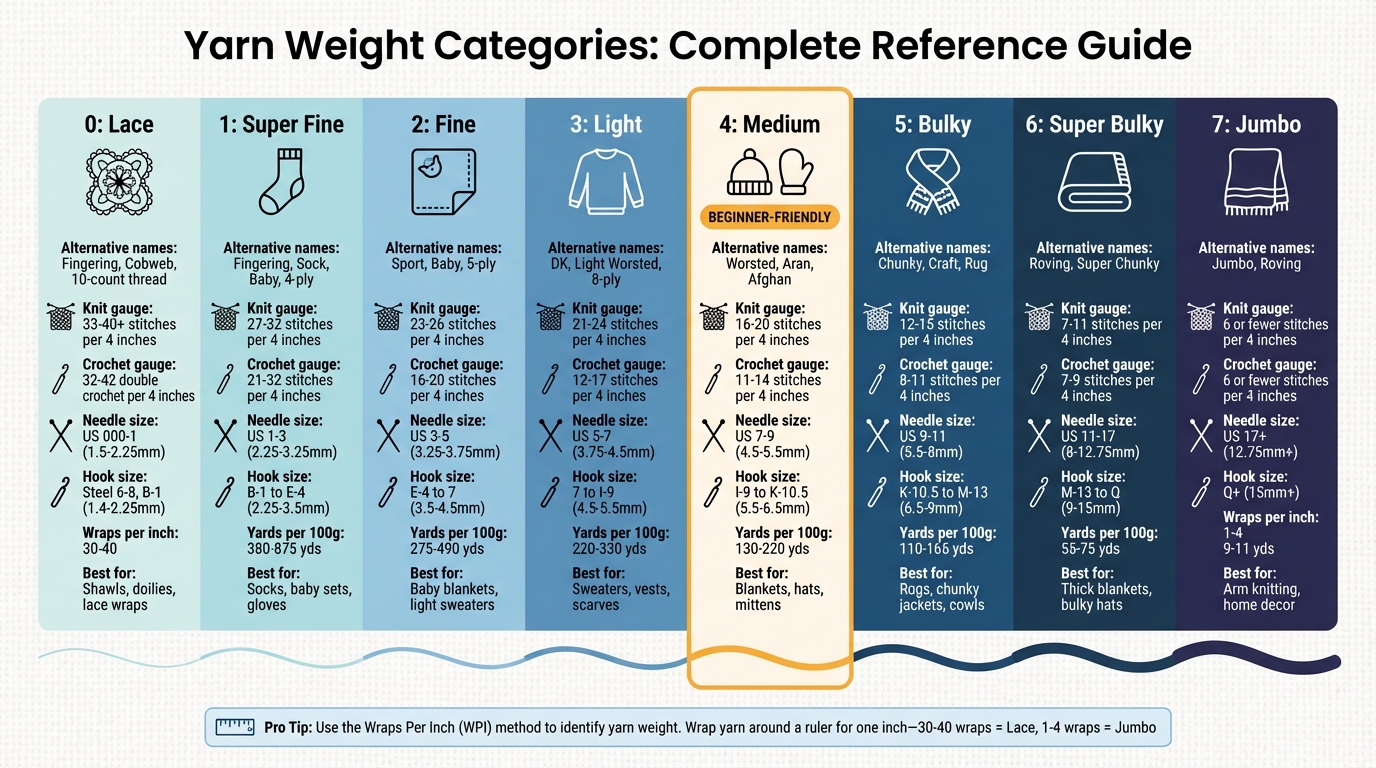
Yarn Weight Categories Guide: Gauge, Needle Sizes, and Project Types
Here’s a handy reference for the eight yarn weight categories, neatly summarized for your convenience. This table brings together all the key details - like gauge, recommended tools, and project ideas - making it easier to choose the right yarn for your next creation.
Tip: Try the Wraps Per Inch (WPI) method to identify yarn weight. Wrap the yarn around a ruler for one inch - 30–40 wraps indicate Lace, while 1–4 wraps suggest Jumbo .
| Category | Common Names | Knit Gauge (sts/4") | Crochet Gauge (sc/4") | Needle Size (US / Metric) | Hook Size (US / Metric) | Typical Projects | Yards per 100g |
|---|---|---|---|---|---|---|---|
| 0: Lace | Fingering, Cobweb, 10-count thread | 33–40+ | 32–42 (dc) | 000–1 / 1.5–2.25mm | Steel 6–8, B-1 / 1.4–2.25mm | Shawls, doilies, lace wraps | 875–1,310 yds |
| 1: Super Fine | Fingering, Sock, Baby, 4-ply | 27–32 | 21–32 | 1–3 / 2.25–3.25mm | B-1 to E-4 / 2.25–3.5mm | Socks, baby sets, gloves | 380–875 yds |
| 2: Fine | Sport, Baby, 5-ply | 23–26 | 16–20 | 3–5 / 3.25–3.75mm | E-4 to 7 / 3.5–4.5mm | Baby blankets, light sweaters | 275–490 yds |
| 3: Light | DK, Light Worsted, 8-ply | 21–24 | 12–17 | 5–7 / 3.75–4.5mm | 7 to I-9 / 4.5–5.5mm | Sweaters, vests, scarves | 220–330 yds |
| 4: Medium | Worsted, Aran, Afghan | 16–20 | 11–14 | 7–9 / 4.5–5.5mm | I-9 to K-10.5 / 5.5–6.5mm | Blankets, hats, mittens | 130–220 yds |
| 5: Bulky | Chunky, Craft, Rug | 12–15 | 8–11 | 9–11 / 5.5–8mm | K-10.5 to M-13 / 6.5–9mm | Rugs, chunky jackets, cowls | 110–165 yds |
| 6: Super Bulky | Roving, Super Chunky | 7–11 | 7–9 | 11–17 / 8–12.75mm | M-13 to Q / 9–15mm | Thick blankets, bulky hats | 55–75 yds |
| 7: Jumbo | Jumbo, Roving | ≤6 | ≤6 | 17+ / 12.75mm+ | Q+ / 15mm+ | Arm knitting, home decor | 9–11 yds |
When choosing a substitute yarn, focus on matching the gauge first, followed by yardage and fiber characteristics. For instance, wool offers elasticity and bounce, while cotton provides a crisper texture, even if they share the same weight category. Always swatch before diving into your project to ensure the desired outcome. Use this table as your go-to guide for aligning yarn weight with your project needs, skill level, and finish preferences.
With a grasp of yarn weights, you can explore projects that align perfectly with each category.
Lace weight yarn (Category 0) is your go-to for delicate, airy designs like shawls, wraps, doilies, and intricate heirloom lacework. These projects often feature graceful, open patterns that showcase the yarn's fine texture. Super Fine yarn (Category 1), also called fingering or sock yarn, is perfect for socks, baby garments, lightweight scarves, and fingerless gloves. For slightly thicker options, Fine weight yarn (Category 2) - often referred to as sport or baby weight - works beautifully for sweaters with a soft drape, baby blankets, summer tops, and colorwork hats.
These lightweight projects require patience, as progress can feel slow - knitting a lace scarf, for instance, may take hours. Smaller needles (1.5–3.75 mm) are key to maintaining the delicate structure of these fabrics. For added texture and a cozy feel, try pairing a lace-weight mohair with a heavier yarn like DK or worsted to create a soft, fluffy "halo" effect.
Worsted weight yarn (Category 4) is a versatile option, ideal for a variety of projects like afghans, sweaters, hats, and mittens. As Ariane Petyt, owner of AriYARN Shop & Studio, notes:
Worsted makes learning easier: clear stitches + faster progress = better practice reps.
In January 2022, Alpaca Direct highlighted the "Brick Sweater" by Clare Lee as a top pick for beginners. Its minimal seaming and clear instructions make it a great first sweater project. Another favorite for new knitters is the Ausable Sweater by Amy Christoffers, also featured by Alpaca Direct in early 2022.
DK weight yarn (Category 3) is a popular choice for baby clothes, lightweight scarves, and hats. Meanwhile, Bulky weight yarn (Category 5) offers speedy results, making it perfect for quick projects like cowls, chunky jackets, and rugs that can be finished in just one evening.
Super Bulky (Category 6) and Jumbo (Category 7) yarns are ideal for quick-turnaround projects and bold home decor. Super Bulky yarn, with a gauge of about 1.75 to 2.75 stitches per inch, is great for thick blankets, chunky hats, and oversized scarves. Jumbo yarn, the thickest on the standard chart, is perfect for arm knitting, creating oversized throws, or making dramatic statement pieces. These yarns work up so quickly that you can complete a chunky scarf or cowl in just a few hours. Their thickness and bold texture provide maximum warmth and visual impact, making them excellent for cozy home accessories and standout designs.
For more inspiration, step-by-step tutorials, and techniques for all yarn weights, check out the Alpaca Direct YouTube channel.
Choosing the right yarn weight boils down to three main factors: matching the yarn's thickness to your project, making an accurate gauge swatch, and understanding how different fibers behave. The Craft Yarn Council's system is a helpful guide, covering weights from Lace to Jumbo. It's important to note that yarn weight refers to strand thickness, not the skein's mass, and even yarns in the same category can differ significantly. These are key points for any crafter to keep in mind.
Taking the time to check your gauge with a 4×4 inch swatch can save you frustration and ensure a proper fit. Since your individual tension affects the final size of your project, swatching is a step you can’t afford to skip before diving into hours of work.
If you’re using alpaca yarn, keep in mind its unique qualities - its incredible drape and warmth come with specific characteristics you’ll want to plan for.
For a wide range of alpaca yarns in all weight categories, along with tools and patterns to enhance your projects, Alpaca Direct has you covered. Need some extra guidance? Check out the Alpaca Direct YouTube channel for tutorials, technique demos, and project ideas using all types of yarn weights. Picking the right yarn weight is key to achieving polished, professional results.
Changing yarn weight is possible, but it takes some thoughtful planning to get the outcome you want. Switching weights can impact your project's size, texture, and overall look. To make it work, you might need to adjust your gauge, stitch count, or even tweak the pattern instructions. Always take the time to create a swatch and measure it carefully before diving in. This step helps ensure your project comes out just the way you envisioned.
If your gauge is off, adjusting your needle size can help. When your swatch is too large (fewer stitches per inch than the pattern calls for), switch to a smaller needle to make your stitches tighter. On the other hand, if your swatch is too small (more stitches per inch), opt for a larger needle to loosen your stitches. This adjustment ensures your finished project aligns with the intended size and fit.
Fiber choice plays a big role in how your finished project feels, drapes, and fits. Take alpaca, for example - it’s known for its soft, silky texture and natural elasticity, making it perfect for creating flowing, cozy pieces like shawls or scarves. On the other hand, cotton gives you a crisper, less stretchy fabric, ideal for projects that need structure, like summer tops or anything with defined shapes. Choosing the right fiber for your project is key to getting the results you want.

Comments will be approved before showing up.