Your Cart is Empty


If wool socks make your feet itch, alpaca is often the better pick. I’d sum it up this way: alpaca usually feels softer, has 0 lanolin, handles moisture better than cotton, and creates less rubbing during long wear.
Here’s the short version:
If I were buying for sensitive feet, I’d look for:
| Material | Feel on Sensitive Skin | Moisture Handling | Heat Control | Shape/Stretch | Best For |
|---|---|---|---|---|---|
| Alpaca | Very soft, low itch risk | Strong | Strong | Lower in pure form | Sensitive skin, cold weather, lounging |
| Sheep’s wool | Can feel prickly | Good | Good | Better spring | Cold weather, if wool doesn’t bother you |
| Cotton | Soft at first, but can get damp | Weak | Weak | Fair | Short wear, low sweat use |
| Synthetic blends | Mixed; depends on fabric | Mid to strong | Can run hot | Strong | Daily wear, stretch, lower cost |
One note: 100% alpaca socks can sag or wear down faster in high-friction spots, so for all-day use inside shoes, a blend is often the smarter buy. That’s the main tradeoff this article explains.
Alpaca usually feels softer because its fibers are finer and its surface scales lie flatter. In most cases, alpaca fibers are finer than standard wool, and those flatter scales create less prickly friction. That mix matters on skin: finer fibers and flatter scales mean less irritation, which helps explain why alpaca often feels better on skin that reacts fast.
That smoother feel is one of the main reasons alpaca often works better for sensitive skin.
Softness is only part of the story. Alpaca also skips lanolin, which can bother some people. Unlike sheep's wool, alpaca contains no lanolin, so that's one less common irritant to deal with. And because alpaca has no lanolin, it usually needs less aggressive cleaning than sheep's wool.
Still, no fiber is a sure thing for every person. Some people may react to dyes, blended fibers such as nylon or spandex, or even detergent residue. So while alpaca is less likely to irritate many wearers, it won't be the right fit for everyone.
| Feature | Alpaca Fiber | Standard Sheep's Wool |
|---|---|---|
| Lanolin | None - naturally lanolin-free | Present - natural waxy grease |
| Itch Risk | Very low | Higher - coarser scales cause prickle |
| Surface Feel | Smooth, low-profile scales | Rough, higher-profile scales |
| Cleaning Needs | Minimal - less aggressive cleaning needed | Intensive - requires chemical scouring |
| Skin Comfort | Excellent for sensitive wearers | Poor or variable |
These differences show up most in day-to-day wear. Once heat, moisture, and friction enter the picture, a sock that seems fine at first can start to feel irritating fast.
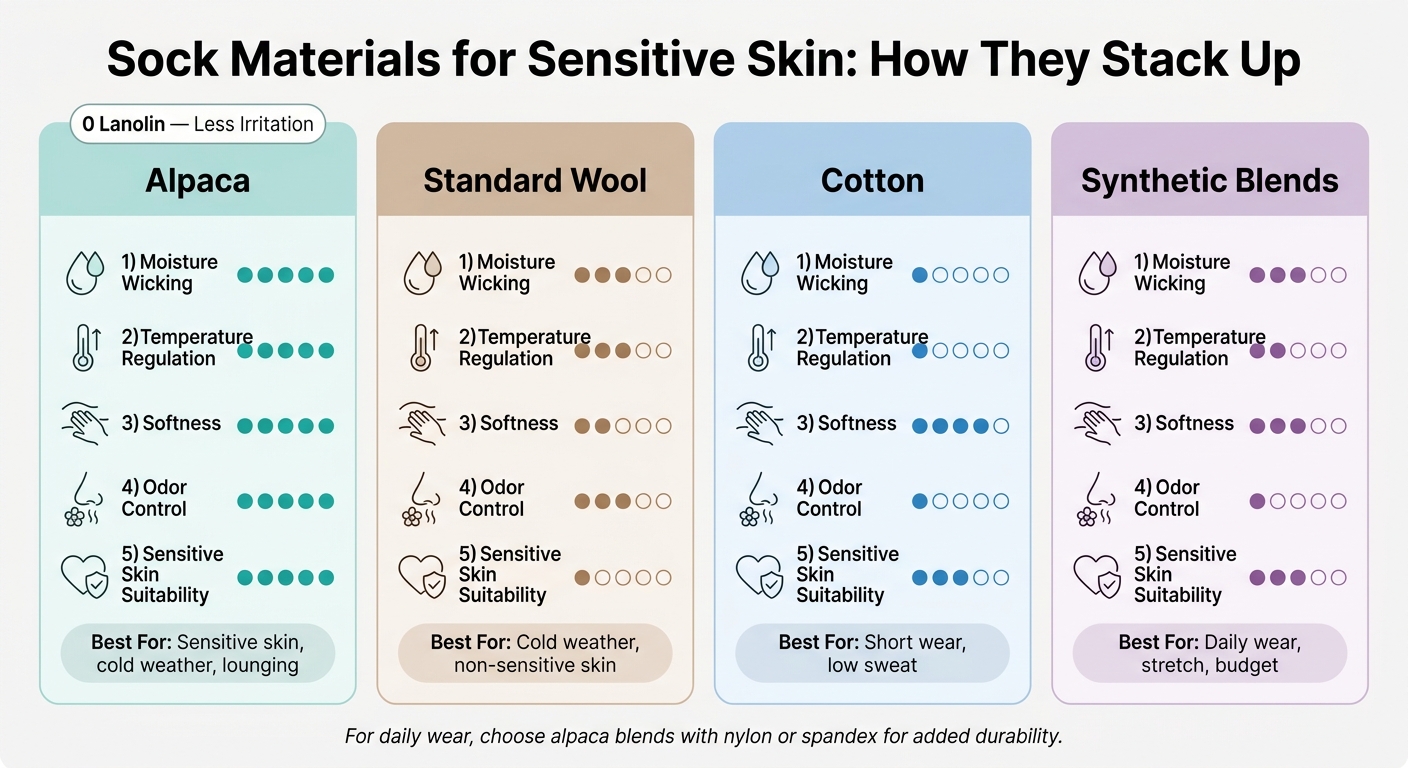
Alpaca vs. Wool vs. Cotton vs. Synthetics: Best Socks for Sensitive Skin
These fiber traits show up most after hours of wear, not just in the first few minutes. Alpaca’s hollow fibers trap warm air when it’s cold and let extra heat escape as temperatures climb. In day-to-day use, that helps feet stay comfortable during errands, lounging at home, and time spent indoors. It can also cut down on sweat-related irritation over the course of the day.
After temperature, moisture is the next big comfort issue. Alpaca pulls moisture away from the skin better than cotton, which can reduce friction during long periods of wear. Its smoother surface also means less rubbing with each step, which may lower blister risk over time. And when feet stay drier, socks tend to smell better for longer.
| Material | Moisture Wicking | Temp Regulation | Softness | Odor Control | Sensitive Skin Suitability |
|---|---|---|---|---|---|
| Alpaca | Excellent | Excellent | Very High | Excellent | Excellent |
| Standard Wool | Good | Good | Low to Moderate | Good | Low |
| Cotton | Poor | Poor | High | Poor | Moderate |
| Synthetic Blends | Moderate to Good | Can trap heat | Moderate | Poor | Moderate |
Cotton tends to hold moisture against the skin instead of moving it away. That can lead to more irritation and a higher chance of blisters. Synthetic fibers often add stretch and help socks last longer, but they can trap heat and usually don’t manage odor as well. Standard wool does a decent job with temperature control, though it can feel rougher and may bother people with sensitive skin more often. That’s the tradeoff to think about when choosing between pure alpaca and a blend.
The right pick comes down to how often you'll wear the socks and how much wear and tear they need to handle.
If softness is your top concern, go with high-alpaca socks that contain 60%+ alpaca. Pure alpaca is a strong comfort pick, but it isn't always the toughest option. These socks make the most sense for low-activity use, sleep socks in cold weather, or any situation where you want maximum warmth without bulk. They're also a good fit for people who need to avoid lanolin, when that matters.
That said, 100% alpaca socks often need hand washing and careful drying because they can felt easily. And here's the part that trips people up: many socks sold as "pure" alpaca are actually high-alpaca blends that add other fibers for better structure.
Alpaca fiber is naturally straight and doesn't have the built-in crimp that gives sheep's wool its spring. In plain English, pure alpaca socks can stretch out, sag, and wear thin in high-friction spots faster than reinforced options.
That's where blends help. Adding nylon or spandex helps the sock stay snug and stand up better to daily use inside shoes. A blend with nylon or elastane can still feel gentle on sensitive skin while keeping its shape through regular wear and washing.
For everyday use, a blend is usually the more practical option. It tends to handle laundry better and fit more consistently over time.
| Feature | Pure / High-Alpaca Socks | Alpaca Blend Socks |
|---|---|---|
| Softness | Highest, with a buttery feel | High; still very soft |
| Durability | Lower; more prone to wear in high-friction areas | High; reinforced for shoes and boots |
| Elasticity | Low; may sag or stretch out | High; maintains shape and a snug fit |
| Moisture Performance | Excellent breathability; can be slower to dry if soaked | Superior wicking and faster drying |
| Care | Usually hand wash; avoid the dryer | Often machine washable on cool/delicate |
| Best Use Case | Lounging, sleep socks, severe sensitivities | Daily wear, office, hiking, active use |
Before you buy, check the label closely. If softness matters most, look for "Baby Alpaca". That term refers to finer fiber, not the animal's age. If you want socks for daily wear, make sure the blend includes nylon or elastane, and see whether the care label says machine wash. If the care instructions aren't clear, hand-wash and air-dry.
Those small label details can be the difference between socks that feel nice once and socks you keep reaching for every day.
Now that the fiber differences are clear, the next step is simple: who gets the most out of alpaca socks?
Alpaca socks can be a good pick for people whose feet get irritated by standard wool. If sheep's wool tends to feel itchy or harsh, alpaca may feel easier on the skin. Some people also react to lanolin in sheep's wool, and alpaca doesn't have lanolin, which can make it a better match.
They also make sense for people who want socks that feel warmer without as much irritation, especially in winter or on long walks.
If alpaca works well for your skin, the small details matter next. They can make the difference between socks you love and socks that sit in a drawer.
For daily wear, it's often smarter to choose a blend with nylon or spandex. That added stretch helps the socks keep their shape and fit better over time.
A few other things are worth checking:
For sensitive skin, alpaca often feels better because the fibers are smoother, there is no lanolin, moisture control is strong, and the hollow core helps hold warmth. For everyday use, though, blends usually work best.
Yes. Alpaca socks are often a good pick if wool makes your feet itch.
The big reason is simple: alpaca fiber contains no lanolin, a waxy substance that can irritate some people.
Alpaca fiber also has a smoother surface and flatter scales than wool. That can mean less friction and less of that prickly, scratchy feeling on sensitive skin.
So if wool tends to bother your feet, alpaca socks may feel much more comfortable for all-day wear. Many people who struggle with wool find that alpaca works better for them.
It comes down to how you plan to use them. Pure alpaca is very soft and warm, which makes it a strong pick for house socks or other low-friction use.
For daily wear, an alpaca blend is often the better fit. A blend adds stretch, holds up better over time, helps manage moisture, and is easier to care for. Pure alpaca, on the other hand, is less durable and more likely to felt or shrink in the washing machine.
Look for alpaca socks with 60% or more alpaca fiber if you want a soft feel and solid moisture-wicking. That fiber content usually gives you more of what people want from alpaca in the first place.
Smooth construction matters too. Seamless or flat-seam stitching can cut down on friction, which is a big deal if your feet get irritated fast.
A few other details are worth checking:
Because alpaca is naturally lanolin-free and hypoallergenic, it’s a strong pick for skin that tends to get irritated.

Comments will be approved before showing up.