Your Cart is Empty



Alpaca lasts longer when I wash it less, use cool water, handle it with care, and dry it flat.
If I had to boil this guide down to a few rules, it would be these:
That’s the whole game. The article makes one point over and over: wet alpaca is weak. A little heat, rubbing, or pulling can lead to shrinking, felting, or stretching. And that matters because even one rough wash can change the fit.
A few points stand out fast:
Here’s the short version in one place:
| Task | What I’d do |
|---|---|
| Everyday care | Air it out if it looks and smells fine |
| Small spot | Blot with cool water, don’t rub |
| Full wash | Hand wash with mild wool wash in cool water |
| Machine wash | Only if the label allows it; use a mesh bag and gentle cycle |
| Drying | Press water out, roll in a towel, dry flat |
| Storage | Fold flat, never hang sweaters |
| Stubborn stain | Take it to a cleaner |
One fact from the article matters most: alpaca can stretch out of shape when wet with very little effort. So if I’m unsure, I’d choose the safer path: less movement, no heat, and full support from sink to shelf.
Wash alpaca garments only when they need it. The best guide is simple: look at the item, smell it, and think about whether you're about to store it away.
If the piece doesn't look dirty, you may not need to wash it at all. In many cases, airing it out between wears does the job.
A small mark doesn't always mean the entire garment needs a wash. Blot minor spots with cool water and a gentle touch before deciding to wash the whole item.
If the garment has soil or odor before seasonal storage, wash it first.
Once washing is needed, the next step is choosing the right detergent and water temperature.
Use a mild wool wash made for delicate fibers. Skip detergents with enzymes, bleach, or fabric softener. If you don't have a wool wash on hand, baby shampoo can work in a pinch.
For alpaca, a mild wool wash is your safest bet. It cleans without being too harsh on the fiber. Baby shampoo is a decent backup if that's what you have at home.
"Gently wash in warm water with a mild soap (mild shampoo will do) and thoroughly rinse in water of the same temperature." - Alpaca Direct
Bleach and fabric softener are best left out. Those additives can be rough on delicate animal fibers and may shorten the life of the garment.
Keep both the wash water and rinse water at the same cool temperature from start to finish. Big temperature swings can cause alpaca to felt or shrink, and that can happen faster than people expect.
"Special care must be taken as wet Alpaca fabric can weaken and stretch out of shape. Never wring or twist." - Alpaca Direct
Wet alpaca is fragile. Don't pull it, wring it, or twist it, even if you're trying to get water out fast. Once your detergent and water are sorted, the next step is choosing between hand washing, machine washing, or dry cleaning.
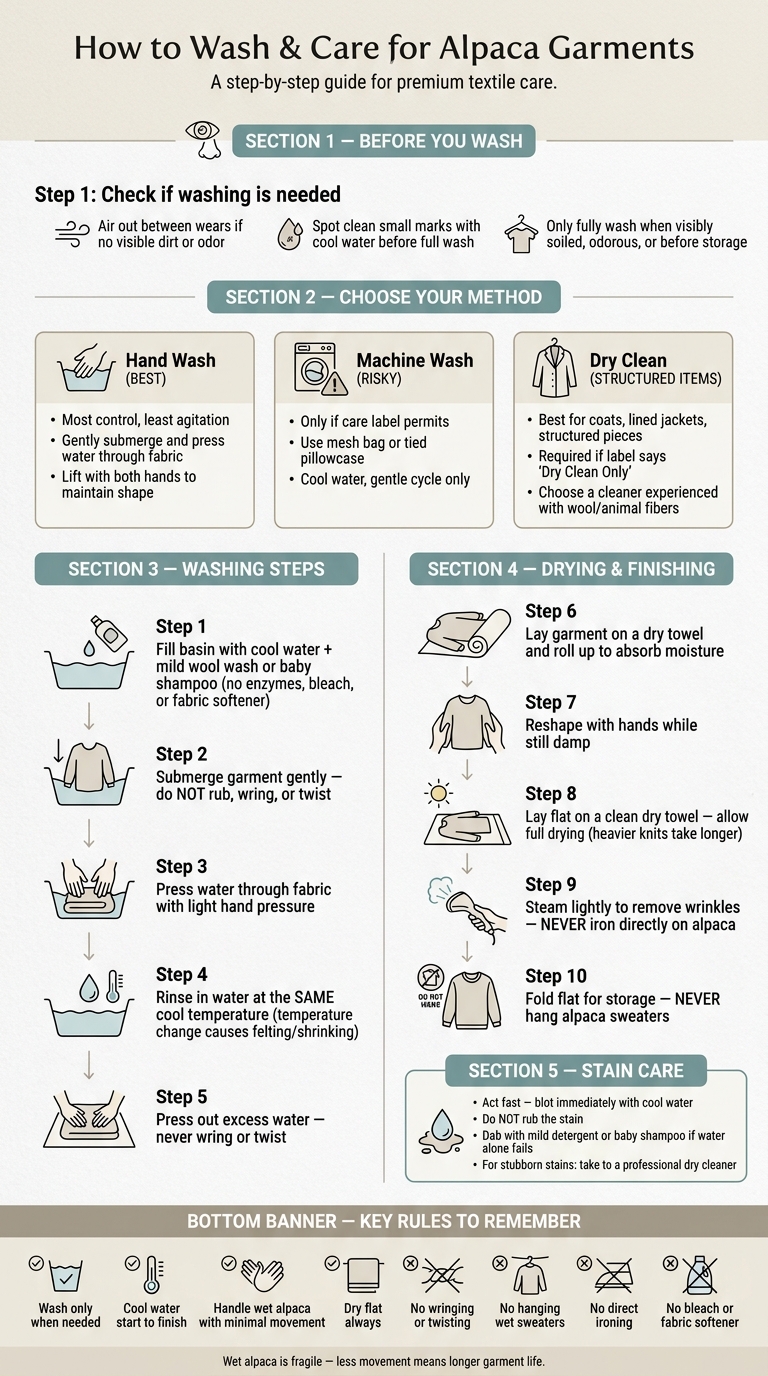
How to Wash & Care for Alpaca Garments: Step-by-Step Guide
Once you’ve picked the detergent and water temperature, the next step is deciding how to wash the garment without overworking the fibers. Not every cleaning method treats alpaca the same way. The best option depends on two things: the care label and how the piece is made. In most cases, hand washing is the safest route, machine washing brings more risk, and dry cleaning makes sense for more structured items.
"Hand-washing is the gentlest method of cleaning an Alpaca garment, and will add years to the life of your Alpaca clothing." - Alpaca Direct
Hand washing gives you the most control, and that matters because alpaca does best with very little agitation. Gently submerge the item, then press water through the fabric instead of rubbing or twisting it. When it’s time to get the water out, press out the excess and lift the garment with both hands so it keeps its shape.
Machine washing can be hard on alpaca apparel. Even a gentle cycle moves the garment around inside the drum, and that motion can stretch fibers, lead to felting, or leave the piece misshapen for good. If you have no other option, place the item in a mesh bag or a tied pillowcase and use a cool, gentle cycle.
Dry cleaning isn’t the go-to choice for alpaca, but there are times when it makes more sense. Coats, lined jackets, and other structured pieces can lose their shape if you hand wash them, so dry cleaning is often the safer move there. And if the care label says "Dry Clean Only," stick with that. When you bring the garment to a cleaner, it helps to choose one that has worked with wool and other animal-fiber garments.
After cleaning, move the garment straight to flat drying so it doesn’t stretch out.
After washing, dry alpaca flat so it keeps its shape. At this stage, the main job is simple: get the moisture out without pulling or stretching the fibers.
Press out water gently. Never wring or twist the garment.
A simple way to do this is to lay the item on a dry towel, roll it up to soak up extra water, then repeat with a second towel if the piece is thick or heavy. While it's still damp, reshape it with your hands. Then lay it flat on a clean, dry towel and let it dry all the way through. Heavier knits will take longer than lighter ones.
Once the garment is fully dry, deal with wrinkles and storage. Use a garment steamer lightly to relax wrinkles, but never iron directly on alpaca.
"Never hang an Alpaca sweater as it will stretch the garment out of shape. Lay flat in a drawer or on a closet shelf." - Alpaca Direct
When the garment is smooth and dry, fold it flat for storage. Don't press a hard center crease into the fabric.
Handle stains as soon as you notice them so they don't set. Blot the spot with cool water, and don't rub. If water isn't enough, dab the area with a small amount of mild detergent or mild shampoo.
"In the event of stubborn stains, dry cleaning may be the only solution." - Alpaca Direct
If the stain won't come out, take it in for professional dry cleaning.
The safest alpaca routine is simple: wash sparingly, handle gently, and dry flat.
Only wash alpaca when it needs it, and use cool water with a mild wool wash.
"Hand-washing is the gentlest method of cleaning an Alpaca garment, and will add years to the life of your Alpaca clothing." - Alpaca Direct
Hand wash when you can. Use a machine only if the care label says it’s okay.
Once it’s washed, keep handling to a minimum so the garment can hold its shape. Gently press out extra water, lay it flat to dry, and fold it for storage. Never hang alpaca sweaters. Over time, the weight of the fabric can stretch them out and leave them misshapen.
If you spot a stain, act fast with cool water and light dabbing. If it doesn’t come out, take it to a professional cleaner.
Gentle care helps alpaca stay soft, keep its shape, and last longer.

Comments will be approved before showing up.