Your Cart is Empty


If I want one simple answer, I start with wood or bamboo for most alpaca yarns. Alpaca has less bounce than wool, so stitches can loosen and slide more on slick needles. When I want more glide for lace or halo-heavy yarn, I switch to metal. For bulky brushed alpaca, I often use plastic. And when I want a middle ground, I look at carbon fiber.
Here’s the short version:
A few points matter most when I choose:
| Needle material | Grip | Glide | Best for | Main watch-out |
|---|---|---|---|---|
| Wood / Bamboo | High | Slower | Slippery, fine alpaca | Can feel sticky with halo-heavy yarn |
| Metal | Low | Fast | Lace, drape, crisp stitches | Can split loose yarn |
| Carbon fiber | Medium | Medium/Fast | Mixed projects, control + flow | Not as grippy as wood |
| Plastic | Medium | Medium | Bulky, brushed alpaca | Less precise for fine detail |
One more fact worth keeping in mind: alpaca can stretch more than wool because it has less memory. So even if a swatch looks right on the needle, the fabric can shift after a wash. This makes steam blocking alpaca essential to set the final shape. That’s why the best needle is not just about speed or comfort. It’s about how the yarn behaves in your hands.
If I had to narrow it down even more, I’d say this:
That’s the full answer up front. The rest of the article helps you match needle surface, tip shape, and yarn weight so your alpaca fabric comes out the way you want.
Needle choice comes down to how the yarn behaves in your hands. Suri blends usually need more grip. Halo-heavy yarns usually work better with more glide.
Slippery alpaca needs friction. Fuzzy alpaca needs a smoother surface.
Suri alpaca is naturally slicker than Huacaya, so stitches tend to slide more easily, especially in polished Suri blends or alpaca-silk yarns. That’s where wooden or bamboo needles can help. They add a bit of grip, which gives you better control and keeps stitches from skating around.
Brushed or halo-heavy alpaca behaves differently. It can cling to grippy needles and feel slow or sticky. In that case, metal needles usually give the best glide and cut down on drag.
Needle material also changes how neatly alpaca stitches form.
Sharp-tipped metal needles make it easier to enter stitches cleanly. They also help keep lace and textured patterns crisp.
There’s a trade-off, though. Very sharp tips can split loose singles and airy yarns. If that starts happening, switch to a rounder bamboo or wood tip. With fine yarns, that balance matters even more.
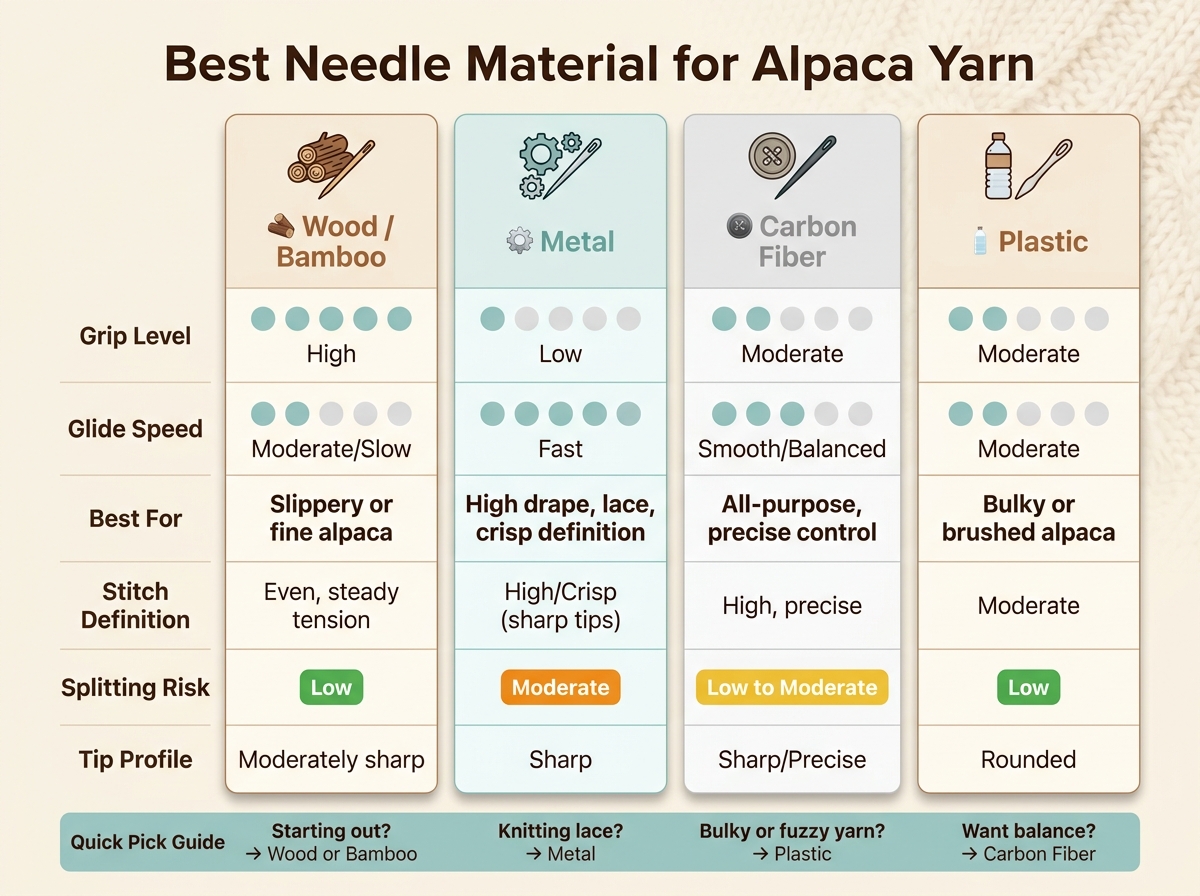
Best Needle Material for Alpaca Yarn: Quick Comparison Guide
Use this quick comparison to pair the right needle material with alpaca texture and the kind of stitch control you want. The chart gives you the short version. The notes below explain where each material shines and where it can trip you up.
| Material | Grip Level | Glide Speed | Best Use | Stitch Definition | Splitting Risk |
|---|---|---|---|---|---|
| Wood / Bamboo | High | Moderate/Slow | Slippery or fine alpaca | Even, steady tension | Low |
| Metal | Low | Fast | High drape, lace, crisp definition | High/Crisp (sharp tips) | Moderate |
| Carbon Fiber | Moderate | Smooth/Balanced | All-purpose, precise control | High, precise | Low to Moderate |
| Plastic | Moderate | Moderate | Bulky or brushed alpaca | Moderate | Low |
Wood and bamboo are often the easiest starting point when alpaca feels slick in your hands. They add just enough friction to keep stitches in place instead of letting them slide around on their own.
They also tend to feel warmer to hold, which many knitters like during long sessions. If you're working with slippery alpaca or a finer yarn, that extra grip can help you keep your tension more even from row to row.
If you want more speed and less drag, metal needles move stitches the fastest. Their smooth surface lets alpaca glide with almost no resistance, which makes them a good fit for alpaca blends or lace projects with lots of increases and decreases. Sharp metal tips also make fine lace work look clean and crisp. The trade-off is simple: very sharp tips can split loose alpaca.
Carbon fiber lands in the middle. The shafts are light, and the metal tips help stitches move in a smooth, controlled way without feeling as slick as full metal needles.
Plastic is a good match for bulky or brushed alpaca. It has a middle-of-the-road grip that works nicely with those softer, loftier textures.
Once you know how alpaca acts on the needle, yarn weight makes the choice much easier. Use the chart below as a quick starting point for needle material and tip shape. After that, you can fine-tune based on how the stitches behave and how much halo the yarn has.
| Alpaca Yarn Weight | Typical US Needle Sizes | Best Material | Tip Profile |
|---|---|---|---|
| Fingering / Lace | US 0–3 | Wood, Bamboo, Carbon Fiber | Moderately sharp |
| Sport / Light DK | US 3–6 | Wood, Bamboo, Metal | Moderately sharp |
| Worsted / Aran | US 7–9 | Wood, Metal | Medium point |
| Bulky / Brushed / Chunky | US 10–15 | Wood, Plastic | Rounded |
Start with the chart, then adjust based on stitch behavior and halo. This is especially helpful when planning alpaca yarn projects for winter like sweaters or blankets.
For fine alpaca, wood or bamboo with a moderately sharp tip is usually the safest place to start. These materials help keep thin alpaca stitches steady, which matters even more with slippery blends.
That said, metal can still work well here. It’s a good pick when lace, increases, or decreases call for faster, cleaner tip movement. One thing to watch: loose-spun fine alpaca can split on very sharp tips. So before you reach for the sharpest needle in your set, take a close look at how the yarn is spun.
For bulky or brushed alpaca, go with wood or plastic and a rounded tip. That shape slips through the halo more cleanly, without snagging or splitting fibers. It also makes stitches easier to see and enter, which can be half the battle with fuzzy yarn.
If wood starts to feel a bit too grippy, switch to metal for more glide. Just watch the tip shape. With halo-rich yarns, a very pointed tip can poke into the fuzz and make it hard to see where one stitch ends and the next begins.
Once you’ve matched the needle material to the feel of the alpaca yarn, the next step is the project itself. At that point, shape and stitch style help you decide whether you want more grip or more glide.
Sweaters and cardigans usually do better with steady tension, so wood or bamboo needles can help keep alpaca stitches from slipping around too much.
Shawls and wraps often work better on smooth metal needles. They let alpaca move more freely and can make lace work feel easier.
Hats and mittens need stitches to stay put, so wood or bamboo is often a safer pick for even tension.
After you’ve picked a starting point, test it before you cast on. Knit a swatch using two needle materials. Keep the yarn, stitch pattern, and needle size the same. Only change the needle material.
Then look at how the fabric hangs and whether the yarn splits more on sharper tips. That side-by-side test can tell you a lot, fast.
Wash and block the swatch before you measure gauge. Alpaca doesn’t have much memory, and it can grow quite a bit when wet. If you measure only before washing, your gauge can be off, which is a headache for fitted garments.
If you want visual help, video tutorials are a good place to start. For yarn, needles, and project support, check out Alpaca Direct and its YouTube tutorials for needle comparisons, project planning help, and tips on choosing the right needle.
After looking at grip, glide, halo, and split risk, here’s the short version.
Wood and bamboo are the best starting point for most alpaca yarns. They give you enough grip to keep stitches under control, which helps a lot with soft, airy fibers. If the yarn starts to feel slow on the needles, then switch to a smoother material.
If you want more speed, shift from grip to glide. Metal needles are a good fit when faster knitting or sharp stitch definition is the goal. Their slick surface lets yarn move with less drag, though some alpaca blends can feel a bit too slippery on them.
Plastic works well for bulky or fuzzy alpaca because its moderate grip helps keep large stitches from getting unruly. Carbon fiber sits in the middle: the shaft offers some grip, while the metal tips add smoother entry into stitches. That makes it a solid pick when you need both control and flow.
Match the needle to the yarn’s grip, halo, and split risk, then swatch with two materials before you commit.
Watch your stitch control. If stitches keep sliding off the needle or you’re dropping stitches - a common issue with alpaca’s soft, smooth texture, especially fine yarns on metal needles - you probably need more grip. Wood or bamboo needles often help.
If stitches start to feel snaggy, or you want faster knitting and cleaner transfers, you probably need more glide. Metal needles give you the most glide, but it’s smart to swatch first and make sure the yarn still feels easy to control.
Yes - usually. The big reason is alpaca’s naturally slippery fiber.
Blends often add more structure and help stitches stay put. Pure alpaca, on the other hand, can slide around more and make stitch definition look softer. If you notice dropped stitches or less stitch clarity with pure alpaca, try wood or bamboo needles.
Always swatch with the exact yarn you’re using.
Usually not. If your alpaca swatch grows after blocking, that’s usually because alpaca has low elasticity and weak memory, not because of the needle material. Once alpaca stretches, it doesn’t bounce back much, so changing needles won’t stop the fabric from growing.
A better move is to knit at a tighter gauge from the start, or pick an alpaca blend with wool if you want the fabric to hold its shape better.

Comments will be approved before showing up.