Your Cart is Empty



Steam blocking is the best way to finish alpaca knits. It uses heat and moisture to gently relax fibers, improving the look, feel, and shape of your project. Unlike wet blocking, steam blocking avoids over-stretching or weakening alpaca, which lacks wool's elasticity and can stretch permanently when soaked. Here's how it works:
Steam blocking is especially effective for lace patterns, ribbed edges, and brushed alpaca. Follow these steps to achieve a polished, professional finish for your alpaca projects.
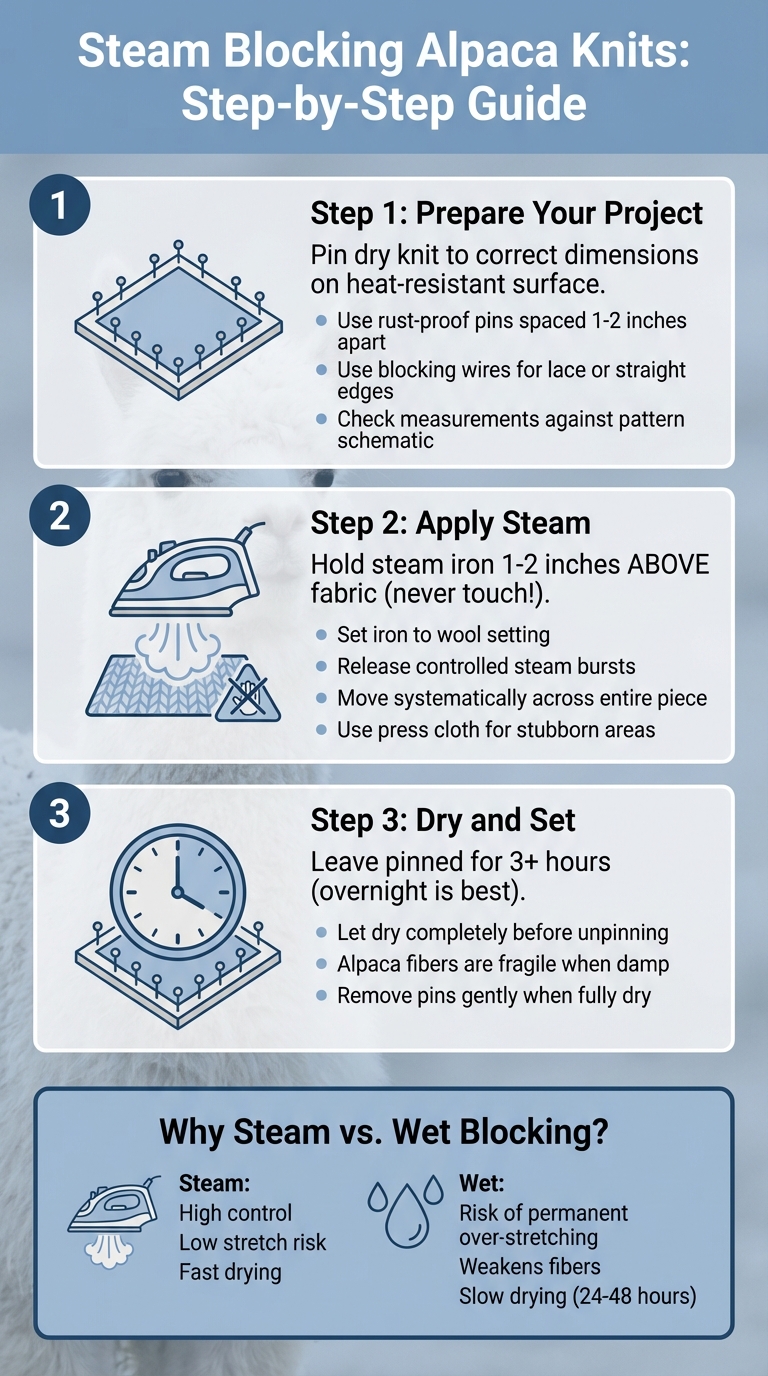
How to Steam Block Alpaca Knits: 3-Step Process
Alpaca fiber behaves quite differently from wool, and understanding these differences sheds light on why steam blocking is the best finishing method. Unlike wool, alpaca lacks natural crimp - the springy quality that helps wool bounce back into shape. Beth, the Founder of Short Rounds, explains it clearly:
"Alpaca has no crimp (the bounce you get from wool), so it won't spring back. Overblock it, and your cardigan suddenly becomes a dress."
This smooth, heavy fiber gives alpaca its signature luxurious drape. But this same weight can cause problems when the garment is fully wet - it may stretch under its own weight and stay stretched permanently. Additionally, alpaca fibers weaken when saturated with water.
Steam blocking strikes the perfect balance. It introduces just enough moisture to relax the fibers without soaking them entirely. The heat briefly loosens the bond between fibers, making it easier to reshape the garment. Once it dries, the fibers lock into their new position. This method smooths out stitches, encourages the yarn to bloom, and maintains the fiber's strength.
When working with alpaca, the choice between steam and wet blocking becomes crucial. While wet blocking is suitable for wool, it can spell trouble for alpaca projects. The following table highlights why steam blocking offers better control:
| Feature | Steam Blocking | Wet Blocking |
|---|---|---|
| Control | High; allows targeted shaping without full saturation | Low; the entire piece becomes heavy and harder to manage |
| Risk of Over-stretching | Low; gentle heat settles stitches without adding weight | High; alpaca can stretch significantly and permanently |
| Fiber Integrity | Maintains strength by avoiding full saturation | Fibers weaken when fully wet, risking damage |
| Drying Time | Fast; ready in a few hours or overnight | Slow; can take 24–48 hours depending on thickness |
| Texture Preservation | Excellent for keeping the "halo" and stitch definition | May flatten texture if not handled carefully |
Jody Moody from Alpaca Direct highlights the risks of wet blocking:
"Be careful not to stretch your work out too much since it will keep stretching as the garment is worn."
Steam blocking offers precision and control. You can focus on specific areas - like loose elbows or curled edges - without exposing the entire garment to moisture. This targeted approach ensures you can relax the fabric just enough without risking an oversized or misshapen result. This level of control is essential as you prepare and finalize your alpaca project.
Having the right tools makes steam blocking alpaca both effective and safe. Start with a steam iron that has a "wool" setting or a "burst of steam" function. If you have a garment steamer, that's an excellent alternative - it allows you to get close to the fabric without risking damage to the delicate fibers. If you're using an older iron, test its steam burst on a scrap piece first to avoid leaving mineral residue on your project.
You'll also need rust-proof T-pins, such as those made from stainless steel or nickel-plated brass. Be cautious with pins labeled "rust-resistant", as they can still cause permanent stains on damp alpaca yarn. As Kathleen Cubley from Alpaca Direct warns:
"Be sure to use rust-proof pins; you don't want to stain your project with rust spots. The horror!"
For straight edges, multi-pin blockers can save time. These tools, which feature rows of 4 to 8 pins, help maintain even tension and speed up the pinning process. If your project has long, straight lines or intricate lace details, blocking wires are invaluable. These stainless steel wires help create sharp, clean edges that individual pins might not achieve.
A flexible measuring tape is another must-have. It allows you to check your work against the pattern's schematic and ensures your piece matches the intended dimensions. Lastly, keep a thin cotton press cloth or washcloth handy. This barrier protects your alpaca from direct contact with the iron, especially when tackling stubborn areas. Jody Moody from Alpaca Direct shares her approach:
"I use either a steamer or a steam iron with a somewhat thin towel over the work and then carefully set it with pins if necessary."
Once your tools are ready, you can move on to preparing a stable and heat-resistant surface for blocking.
Your blocking surface needs to be flat, sturdy, and heat-resistant to keep your project secure. Foam blocking mats are a great choice because they firmly hold pins and don’t warp under steam. Other options include cork, Styrofoam, or even an ironing board for smaller pieces. If you’re using a surface like cardboard, make sure to cover it with a thick towel to absorb moisture and protect it from damage.
For longer items, such as scarves, you can block in sections on an ironing board. Allow each section to cool and dry before moving on to the next. Stability is key here, as alpaca tends to "grow" during wear, and improper pinning could lead to uneven results. By ensuring your surface is solid and your pins are secure, you’ll set yourself up for success.
Start by laying your finished alpaca knit flat on a dry blocking surface. Using your pattern's schematic and a measuring tape, position the piece to match the correct dimensions. Next, insert rust-proof pins along the edges, spacing them about 1–2 inches apart. If your project has straight edges or intricate lace patterns, thread blocking wires through the edge stitches first, then pin the wires in place for clean, even lines. Be gentle when handling the fabric - alpaca fibers lack natural elasticity, so pulling too hard can permanently distort the shape.
"Be careful not to stretch your work out too much since it will keep stretching as the garment is worn. This can turn a lovely item that fits beautifully off the needles into a over-sized mess."
Once you've pinned and measured everything, you're ready to move on to steaming.
Fill your iron's water reservoir and set it to the wool setting. Before steaming, press the steam burst button away from your project to clear out any mineral residue. Hold the iron 1–2 inches above the fabric, ensuring it never makes direct contact with the fibers, and release controlled bursts of steam until the fabric feels damp and relaxed. Kathleen Cubley from Alpaca Direct underscores the importance of this technique:
"Hold the iron a couple of inches above the pieces and press the steam button to apply the steam... DO NOT touch the iron to the surface of the garment; you could ruin your knitting!"
Move systematically across the entire piece to ensure even steaming. For areas that need extra attention, use a press cloth as an added layer of protection. Remember, steam is extremely hot and can cause burns, so always keep your hands well away from the steam path.
Once the fabric is evenly damp, you're ready to let it dry and set into shape.
The drying phase is where your alpaca knit takes its final form. Leave the project pinned in place for at least 3 hours, though overnight is ideal, to allow the fibers to fully set. Alpaca fibers are more fragile when wet, so avoid moving or unpinning the piece prematurely, as this can undo your careful work and cause the fabric to lose its shape.
When the piece is completely dry, gently remove the pins. Handle your blocked project with care to maintain the crisp, well-defined shape you've worked so hard to achieve.
One of the biggest missteps when working with alpaca fabric is letting the iron touch it directly. This can completely ruin the texture and intricate details of your work. Always keep a safe distance - about 1 to 2 inches - between the iron and the fabric.
Another frequent error is over-stretching during the blocking process. Unlike wool, alpaca lacks natural elasticity and won't bounce back if stretched too far. Overdoing it can permanently distort your garment's shape.
Removing pins before the fabric is fully dry is another mistake that can undo all your careful work. Always use rust-proof pins to avoid staining the material. Additionally, handle damp alpaca fabric with care, as it becomes more fragile when wet. Rough handling could lead to felting or unwanted stretching.
The blocking technique you use should be tailored to the specific alpaca project you're working on. For lace shawls, aggressive pinning is often necessary. Thread blocking wires through the edges to open up the stitch pattern and define points. These pieces can also handle more steam to enhance intricate designs.
For ribbed items, such as scarves or sweater cuffs, a gentler approach is better. Use minimal steam and avoid stretching during pinning to maintain the ribbing's elasticity and prevent flattening. Sweaters, on the other hand, demand precision. Pin each piece carefully, using a measuring tape to ensure the dimensions match your pattern schematic, all without stretching the fabric.
Brushed alpaca or Suri lace requires even more care. Use steam only and avoid touching or patting the fabric to preserve its soft, fluffy "halo" texture. If you're working with alpaca-wool blends, proceed cautiously. The wool component may shrink while the alpaca stretches, which can lead to an uneven, puckered effect reminiscent of seersucker fabric. Use lighter steam and handle these blends with extra care to avoid such issues.
Steam blocking is a game-changer for handmade alpaca knits, turning them into polished, professional-looking pieces. This technique allows the fibers to "bloom", filling in gaps and creating a smooth, even fabric. As Kathleen Cubley explains, steam blocking helps the fibers bloom and smooths out uneven stitches, enhancing the overall appearance.
To achieve the best results, pin your project to the desired dimensions, hold the steam source 1–2 inches away, and let it dry completely before unpinning. This careful process protects the delicate structure of alpaca fibers while enhancing their natural beauty. Unlike wet blocking, steam blocking avoids overstretching or weakening the fibers, ensuring your knits maintain their shape and texture.
Expert knitter Jody Moody highlights the benefits of using moist steam, which enhances the beauty of alpaca yarn and stitch work. It’s particularly effective for creating flat edges, opening up lace patterns, and preserving alpaca's signature halo. The gentle combination of heat and moisture makes steam blocking the go-to method for alpaca projects, delivering professional results without compromising the integrity of the fibers.
Now that your project is beautifully finished, why not dive into your next alpaca creation? Explore premium yarns and top-notch blocking tools at Alpaca Direct. For more inspiration and step-by-step tutorials, check out our YouTube channel. Happy knitting!
Steaming is a handy method to help restore stretched alpaca garments to their original shape. The heat from the steam works by temporarily loosening the fibers, allowing you to reshape the fabric more easily. Alpaca fibers respond particularly well to this technique, which can also minimize stretching in the material.
To safely steam block an alpaca-wool blend, start by laying your project flat on a blocking surface and shaping it to your desired dimensions. Use a steamer or a steam iron held a few inches above the fabric to gently apply steam, ensuring you avoid direct contact with the fibers. Be careful not to press or overheat the material, as this can damage the delicate blend. Allow the project to cool and dry completely before handling. It's a good idea to test this method on a small swatch first to ensure the fibers respond well to steaming.
When blocking alpaca, it's best to use a light spray and gentle hand shaping to keep its soft, fluffy halo intact. Wet blocking can weigh down and flatten the fibers, diminishing their natural texture. Also, steer clear of pressing an iron directly onto the yarn - this can crush the fibers and alter their delicate appearance.

Comments will be approved before showing up.