Your Cart is Empty


Looking to start knitting with alpaca yarn? Here's everything you need to know to get started. Alpaca yarn is soft, lightweight, and perfect for cozy projects, but its smooth texture requires specific tools and techniques.
Alpaca yarn is ideal for beginners who want to create warm, beautiful pieces while learning the basics of knitting. Ready to begin? Let’s dive deeper into tools, techniques, and project ideas.
Since alpaca yarn is smooth and tends to be slippery, choosing the right tools can make all the difference in maintaining stitch control.
When working with alpaca yarn, bamboo or wooden needles are ideal. Their natural texture provides just enough friction to prevent your stitches from sliding off too easily. Knit designer Christina Behnke explains:
"Baby alpaca feels smooth as butter - and that means your stitches will have more 'slip,' which can get unwieldy on slick metal or plastic needles. Using a grippier material, like bamboo or compressed wood, will keep your stitches from slipping off your needles."
If you're new to knitting, start with US size 8 (5 mm) straight wooden needles paired with worsted weight yarn. For bulky alpaca yarn, blunt tips are a better choice, while sharp-tipped needles work well for intricate lace patterns.
Alpaca Direct offers a variety of high-quality needles to suit your needs. Birch and bamboo straight needles range from $3.45 to $10.45, circular needles cost between $10.45 and $16.95, and premium interchangeable sets - perfect for swapping needle sizes and cable lengths - are priced between $104.45 and $199.95.
But needles aren't the only tools you'll need to make your alpaca knitting experience easier.
In addition to needles, a few essential tools can help you manage alpaca yarn's smooth texture. Stitch markers are a must for keeping track of pattern repeats and transitions, especially useful when working on stitch sampler projects for practice. Alpaca Direct offers locking stitch markers in a 40-count pack for $4.98, which boasts a 5-star rating from 19 reviewers.
Other helpful tools include tapestry needles for weaving in ends, sharp scissors for clean cuts, and a measuring tape for checking your gauge swatches. A needle and hook gauge, priced at $4.98, is another handy tool, especially if your needles lack size markings. Customers have praised it for being "sturdy" and covering a "wide range of sizes."
One standout recommendation is the Fix-A-Stitch tool, particularly helpful for beginners. This tool is designed to repair dropped stitches in stockinette, purl, and garter patterns, making it a lifesaver when working with slippery alpaca yarn. As Meg Bateman from Alpaca Direct highlights:
"Kelley loves the Fix-A-Stitch tools. They're uniquely made to make it very easy to quickly fix your knitting mistakes."
Alpaca Yarn Weight Guide: Types, Best Uses, and Needle Sizes for Knitting Projects
Alpaca yarn is known for its incredible softness and natural drape, but picking the right weight and type of yarn can make or break your project.
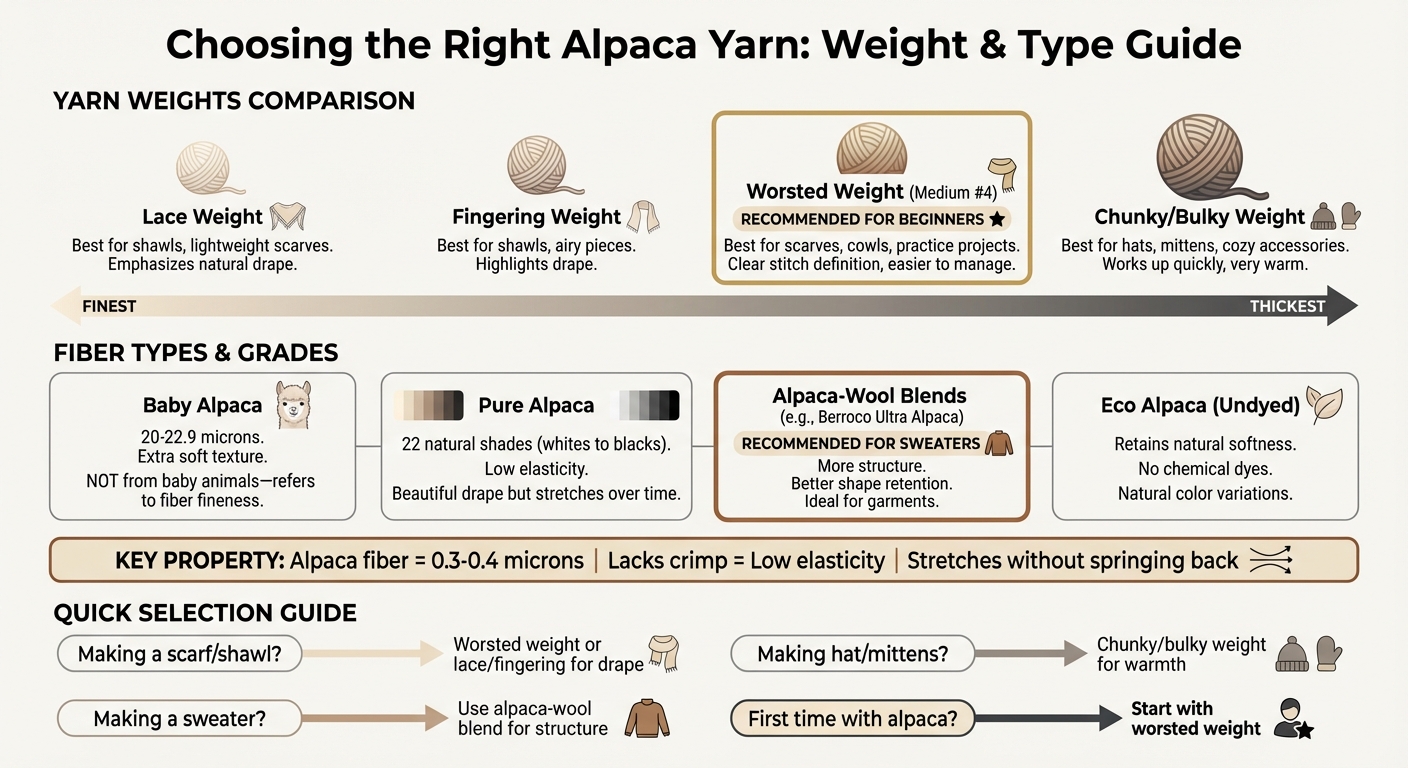
Alpaca yarn is available in a range of weights, from delicate lace to bulky. If you’re new to working with alpaca, worsted weight (Medium #4) is a great starting point. It offers clear stitch definition and is easier to manage for beginners.
When it comes to softness, pay attention to fiber grades. Baby Alpaca - which refers to the fineness of the fiber (20-22.9 microns) - is an excellent choice. Despite the name, it doesn’t come from baby animals; it’s all about the texture.
Another perk of alpaca yarn is its 22 natural shades, ranging from creamy whites to deep blacks and everything in between. If you want to keep things natural, look for undyed "Eco Alpaca" yarns. These retain their original softness, as chemical dyes can sometimes alter the texture.
That said, pure alpaca has a unique characteristic: it’s not very elastic. The smooth fibers lack crimp, which can lead to garments stretching out of shape over time. For projects that need more structure - like sweaters - alpaca-wool blends are a better option. Alpaca Direct explains:
"Alpaca fiber can have a lot of 'Drape' so if you are planning to make a sweater, it may become heavy and not have as much structure as you were looking for. We often recommend blended yarns like Berroco Ultra Alpaca for these types of projects."
By understanding these weights and grades, you’ll be better equipped to pick the perfect yarn for your project.
With the basics of weight and fiber grades in mind, match your yarn choice to the needs of your project. For light and airy pieces like shawls or scarves, opt for lace or fingering weight yarn to highlight alpaca’s natural drape. On the other hand, chunky or bulky weights are ideal for cozy accessories like hats and mittens - they’re warm and work up quickly.
If you’re just starting out, a simple scarf or cowl in worsted weight yarn is a smart choice. These beginner-friendly projects let you get comfortable with alpaca’s slippery texture without worrying about complicated shaping. As you gain confidence, you can tackle more structured items - but stick with blends if you need the finished piece to hold its shape.
Don’t forget to knit a gauge swatch! Alpaca’s low elasticity can affect your tension, so it’s worth taking the time to adjust before diving into your project.
If you're just starting out, alpaca yarn works seamlessly with standard knitting techniques like casting on, knit stitches, purl stitches, and binding off. However, the real challenge lies in keeping your tension even. Alpaca fibers are incredibly fine, measuring only 0.3–0.4 microns, which makes your stitches more prone to slipping compared to wool.
When working with alpaca, using the right needles is key (check the tools section for recommendations). Focus on keeping a steady flow of yarn as you knit. Unlike wool, which has a natural bounce and can forgive uneven tension, alpaca lacks that elasticity. Any inconsistencies in your tension will remain visible in the final fabric.
Mastering these basics is the first step. Once you're comfortable, understanding alpaca's unique characteristics will help you refine your approach.
Alpaca yarn behaves differently than wool because it lacks stitch memory. Its fibers have minimal crimp, meaning they won’t spring back into shape once stretched. This impacts everything from your gauge to how your finished piece holds up over time.
To address this, consider using a needle size smaller than what's typically recommended. A tighter stitch creates a more stable fabric, reducing the risk of stretching. For ribbing, opt for smaller needles (like US size 2) to ensure snug edges, then switch to a larger size (like US size 5) for the main body.
Before diving into your project, knit a large swatch. Add about 10 extra stitches to prevent the edges from curling, and block it just as you would the finished piece. For an even better test, hang the blocked swatch with a small weight attached. This simulates how the fabric will stretch under its own weight in a full garment. You'll see how much the fabric "grows" and can adjust your needle size accordingly.
These adjustments are especially helpful for beginners who want their projects to last and maintain their shape.
Once you've nailed tension and needle selection, finishing becomes the final crucial step. Blocking is a must when working with alpaca yarn. Wet-blocking helps set the stitches, smooth out inconsistencies, and highlight the yarn's natural drape. After washing, gently press out excess water without wringing the fabric.
Lay your project flat on a blocking mat or towels, shaping it to the desired size. Pin the edges if necessary, especially for items like shawls or scarves where sharp, even lines are important. Let the piece dry completely before handling it.
When storing your finished alpaca items, always fold them flat and place them in drawers or cotton bags. Avoid hanging them, as gravity will stretch the fibers, and alpaca's lack of elasticity means they won’t bounce back. These finishing touches ensure your project stays beautiful and stable for years to come.
Alpaca yarn is known for its luxurious softness and elegant drape, making it a joy to work with - even for beginners. Here are a few simple projects to help you get started.
Scarves are a great choice for beginners because they focus on basic stitches without complicated shaping. If knitting a full-length scarf feels overwhelming, you can make a shorter one and stitch the ends together to create a cozy cowl. Alpaca Direct offers a beginner-friendly scarf pattern that introduces techniques beyond the basic garter stitch while keeping things manageable.
Hats provide an excellent opportunity to practice shaping techniques like garter and stockinette. Since alpaca yarn lacks elasticity, choose patterns with tight ribbing to help the hat maintain its shape. The Simple Ribbed Hat pattern, for instance, starts with 4 inches of snug ribbing on US size 2 needles before transitioning to US size 5 for the main body, addressing alpaca's tendency to stretch. For a quicker project, try the Pocket Slouch Hat by Amit Jivani, which uses a slip-stitch pattern that mimics ribbing and knits up faster.
Small accessories such as fingerless gloves and washcloths are perfect for practicing new techniques. The Bravo Alpaca Gloves pattern, for example, teaches you how to pick up stitches between fingers to avoid gaps - a valuable skill for garment construction. For ease of handling, start with worsted or aran weight yarns, which knit up faster and are less fiddly than thinner lace-weight yarns.
These beginner projects will help you build confidence and develop essential skills while enjoying the unique qualities of alpaca yarn.
When selecting patterns, look for those labeled "simple" or "beginner-friendly", especially ones designed to highlight alpaca's natural drape. The fiber's elegant flow works beautifully with simple lace patterns and stockinette designs that let the fabric move gracefully. Steer clear of patterns that require a lot of elasticity unless they include structural details like chainette yarn or very tight ribbing.
Narrow your options by filtering patterns based on difficulty level, yarn weight, and project type. For hats, prioritize designs with ribbed brims worked on smaller needles to ensure a snug fit. Slip-stitch patterns are another excellent choice for alpaca - they create double layers of fabric for added warmth while being easy to knit. Alpaca Direct offers a variety of patterns, such as The Rockford Hat, which features a syncopated rib design in light worsted weight yarn, and the Alpaca DK Family Pullover Pattern, available for $3.98 (discounted from $5.00).
"Since alpaca yarn doesn't have much memory (it stretches and might not shrink back into place), Kelley built in the tight ribbing so it would hold its shape." - Kathleen Cubley, Alpaca Direct
To dive into knitting with alpaca yarn, having the right tools and techniques is key. Start with size 8 (5 mm) wooden or bamboo needles. These materials give you the grip needed to keep alpaca's naturally smooth fibers from slipping off. For beginners, a worsted weight yarn is a great choice. This combination of tools helps you get comfortable with alpaca's unique texture and handling.
Before jumping into a full project, knit and block a gauge swatch. This step lets you see how the yarn stretches and drapes after washing - important since alpaca has less elasticity compared to sheep's wool.
Simple projects like scarves, cowls, or slouchy hats are ideal for showcasing alpaca's natural drape without requiring a perfect fit. To make your search easier, Alpaca Direct offers a pattern browser that lets you filter by difficulty level and yarn weight, making it simple to find beginner-friendly patterns. As you gain confidence, take advantage of community resources to enhance your skills. Alpaca Direct provides free educational tools like "Technique Tuesday" videos and tutorials, designed to help you learn at your own pace.
"Our free tools will help you get started right away on your first knit or crochet project and then help you grow your skills along the journey!" - Alpaca Direct
For additional support and inspiration, consider joining the Alpaca Direct VIP Facebook group. It’s a great way to share ideas and connect with others who are passionate about alpaca yarn. With quality materials, the right equipment, and a supportive community, you're ready to begin your alpaca knitting adventure.
Alpaca yarn is celebrated for its incredible softness, making it a cozy choice even for those with sensitive skin. Thanks to its hollow fibers, it offers excellent insulation, keeping you warm during chilly weather without feeling heavy. Plus, it's lightweight and breathable, so you stay comfortable. Unlike many other animal fibers, alpaca yarn is lanolin-free, which means it's hypoallergenic - a fantastic option for anyone with allergies. Its natural shine and strength also make it perfect for crafting stunning, durable pieces that stand the test of time.
To keep alpaca yarn from stretching, it’s crucial to handle it with care and stick to a few simple guidelines. Since alpaca fibers don’t have the natural elasticity of wool, opt for patterns that include structured features like cables or ribbing to help the garment hold its shape. Avoid using overly loose stitches, as they can make stretching more noticeable.
When it’s time to wash your alpaca items, always hand wash them in cool water with a mild shampoo or conditioner. Never wring or agitate the fibers - this can lead to distortion. Instead, gently press out excess water. To dry, lay the item flat on a towel, reshape it softly, and let it air dry completely.
For blocking, secure the piece on a flat surface using rust-proof pins. Lightly mist it with cold water, then leave it to dry fully before removing the pins. This helps the item maintain its intended shape. By treating your alpaca creations with care, you can ensure they remain beautiful and durable for years to come.
If you’re just getting started with alpaca yarn, beginning with straightforward projects can help you ease into the process while appreciating its cozy softness. Scarves, hats, and cowls are great beginner-friendly choices. These usually involve simple stitches like garter or stockinette, allowing you to focus on handling the unique texture of alpaca yarn without feeling overwhelmed.
Looking for something even simpler? A basic wrap or blanket might be the way to go. These projects often skip complex shaping, making them ideal for practicing consistent tension. Plus, the natural warmth and softness of alpaca yarn mean your finished piece will feel both practical and indulgent, even if you’re new to knitting.

Comments will be approved before showing up.