Your Cart is Empty


I’d choose a wool–alpaca blend for cables that hold their shape, and pure alpaca for a softer, drapier cowl. Berroco Ultra Alpaca’s 50% wool and 50% alpaca blend balances both. Before buying enough yarn, I’d knit and wash a cable swatch to check fit, stretch, and neck comfort.
I compare four yarns by blend, ply, cable definition, softness, warmth, fit, and care. Twist and halo matter too - not just fiber content.
Quick Comparison
| Yarn | Blend and construction | Cable look and fit | Feel and warmth | Care |
|---|---|---|---|---|
| Berroco Ultra Alpaca | 50% wool, 50% alpaca; 2-ply | Bold cables; structured cowls | Warm, soft, with some wool feel | Hand wash; dry flat |
| Cascade Alpaca Lana D’Oro | Plied wool–alpaca blend | Clear cables with some drape | Soft and warm; wool may bother sensitive necks | Hand wash; dry flat |
| Plymouth Yarn Baby Alpaca Worsted | 100% baby alpaca; plied | Soft-edged cables; loose, flowing cowls | Silky and warm; may stretch under heavy cables | Hand wash; dry flat |
| DROPS Lima | 65% wool, 35% alpaca; plied | Firmer cables; snug neckwarmers | Dense warmth and a firmer feel | Hand wash; dry flat |
My final check: <u>wear the washed, dry swatch inside your collar</u>. Soft in your hand doesn’t always mean comfortable against your neck. I’d also use blocked cable gauge to set the size and plan yarn needs by yardage - not skein count.
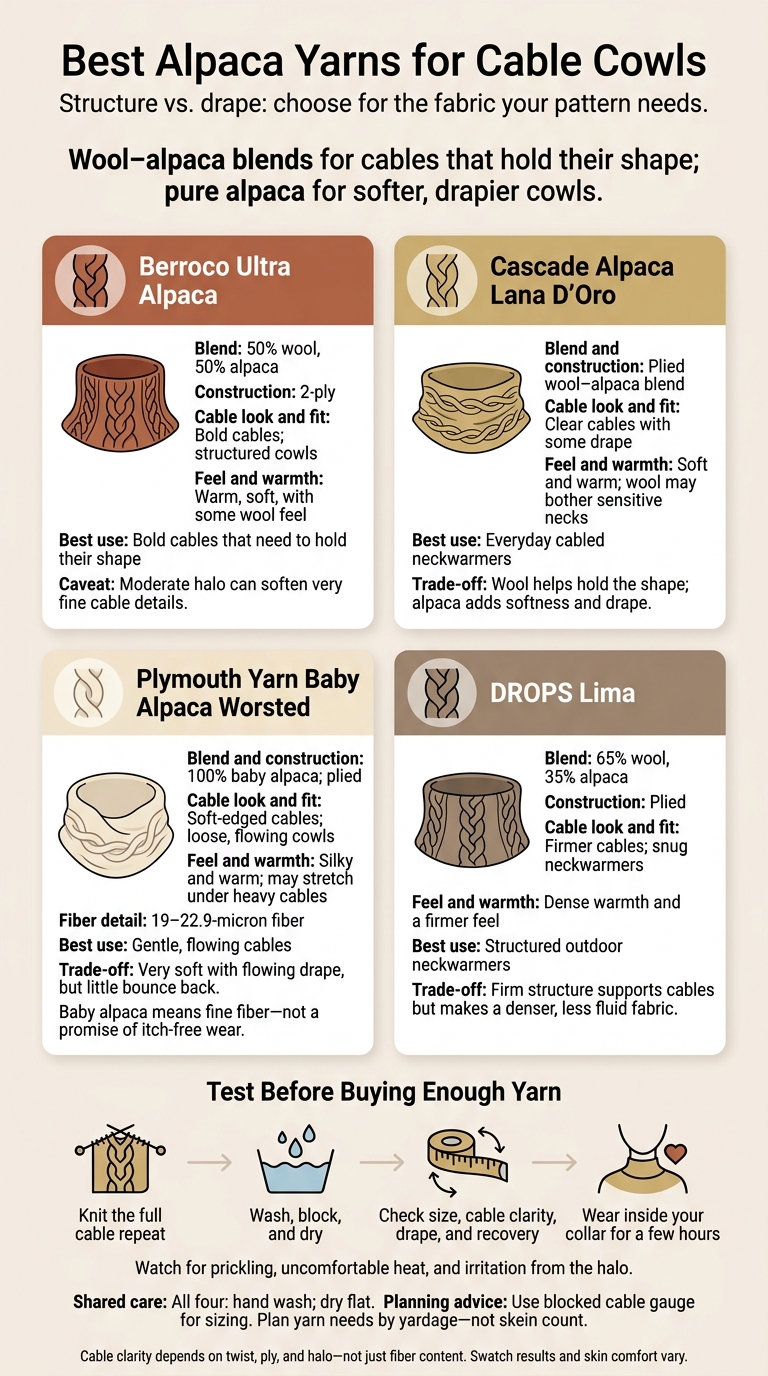
Best Alpaca Yarns for Cable Cowls: Structure vs. Drape
Berroco Ultra Alpaca blends 50% alpaca and 50% wool, pairing softness and drape with a springy structure. Its plied construction helps cable edges stand out, making it a good fit for bold cables or softer textures, depending on the motif.
The yarn’s moderate halo can soften very fine cable details, so larger motifs tend to show more clearly. For a plusher feel, the next yarn gives up some structure in exchange for extra softness.
This blend is very warm - a good match for cold-weather cowls. It feels soft against the neck while holding its shape better than pure alpaca or merino wool.
Choose patterns that call for clear stitch definition and steady cable support, especially large cable panels. Ribbed edges can help the opening hold its shape. Hand wash and air dry to protect the finished shape.
Ultra Alpaca offers a useful reference point when comparing yarns. The next option leans more into alpaca’s rich feel for a silkier, softer cable fabric.
Compared with Ultra Alpaca, this yarn makes a softer fabric while keeping cables easy to see.
Cascade Alpaca Lana D’Oro pairs alpaca softness with enough structure to make cables stand out. Choose it for bold cables with clear texture or softer cowls where drape matters more than crisp definition.
For even more softness and a lighter feel, the next yarn takes that balance a step further.
Alpaca adds warmth without bulk and feels soft against your neck.
Wooden or bamboo needles help you control the stitches at cable crossings. Wet-block your swatch, then hand-wash the finished cowl in cool water and lay it flat to dry. Following a storage checklist will keep your cowl moth-free.
This pure alpaca yarn offers more drape than the earlier wool blend.
Plymouth Yarn Baby Alpaca Worsted is 100% baby alpaca with a plied structure. Expect soft, relaxed cables rather than crisp edges and springy stitches.
Choose this yarn for softness and warmth. Its fine 19–22.9-micron fiber adds softness, but not spring.
Swatch the full cable pattern, then block it to check the drape and any stretching. Hand wash and dry flat to help prevent stretching.
For more spring and firmer cable edges, the next yarn brings back more structure.
After the softer pure alpaca option, Lima brings back wool’s spring for firmer cable definition.
DROPS Lima blends wool’s spring with alpaca’s softness, giving cables more elasticity and stitch memory. Its firm spin and multiple plies help cable edges stand out, though the noticeable halo can blur fine details.
Lima feels warm and soft against the neck. But its halo and density may feel too plush for sensitive skin. Check both against your skin before casting on.
Match the pattern gauge closely. Then wet-block the finished cowl to even out the stitches and help it hold its shape.
This wool–alpaca mix sets up the next question: how do ply and blend change the look of cables?
Cable clarity depends on twist, ply, and halo - not just ply count. Side by side, these four yarns range from crisp wool blends to softer, alpaca-heavy fabrics. The table uses documented yarn construction to estimate how cables will look before you swatch.
| Yarn | Documented construction | Best cable use |
|---|---|---|
| Berroco Ultra Alpaca | 2-ply; 50% alpaca, 50% wool | Bold, structured cables with clear edges |
| Cascade Alpaca Lana D’Oro | Plied alpaca/wool blend | Bold or complex cables |
| Plymouth Yarn Baby Alpaca Worsted | Plied; 100% baby alpaca | Soft-edged cables in drapey cowls |
| DROPS Lima | Plied; 65% wool, 35% alpaca | Crisp, high-relief cables |
Match the cable sharpness to the fabric your pattern needs. Swatch the actual cable repeat, wash it, then compare its size, edge clarity, and recovery.
Once you’ve considered cable definition, look at how each yarn feels against your neck. Baby alpaca means fine fiber - not a promise of itch-free wear. Coarser guard hairs and sensitivity to halo can still cause itching or irritation. Dense cables also add bulk, changing how the cowl feels.
Skin comfort matters just as much as crisp cables. Treat this table as a guide, not a substitute for a wear test.
| Yarn | Hand feel | Warmth/structure | Definition or stability limitations | Best wearer or cowl style |
|---|---|---|---|---|
| Berroco Ultra Alpaca | Balanced softness; may feel slightly wooly against sensitive skin | Moderate halo; warm without too much bulk | Less fluid than pure alpaca | Structured, upright neckwarmers |
| Cascade Alpaca Lana D’Oro | Soft, but not ideal for very sensitive necks | Very warm with good shape retention | Wool content may irritate sensitive necks | Everyday cabled neckwarmers |
| Plymouth Yarn Baby Alpaca Worsted | Silky 100% alpaca feel without wool | Warm for its weight, with visible halo and fluid drape | Dense cables may feel heavy, relax, or blur | Loose cowls that favor drape over crisp structure |
| DROPS Lima | Firm rather than silky | Dense warmth with less drape | Firmer wool feel can seem scratchier against sensitive skin | Snug outdoor neckwarmers for wool-tolerant wearers |
Wool blends usually feel firmer and hold heat better, while pure alpaca stays lighter and drapes more. Even soft yarns gain weight when worked into dense cables.
Knit, wash, dry, and wear the swatch inside your collar for a few hours. Watch for prickling, uncomfortable heat, and irritation from the halo. A yarn that feels soft in your hand may not feel comfortable during wear.
Fit and blocking will fine-tune how each yarn feels in the finished cowl.
Use your blocked swatch to check final size, drape, and cable definition, then consider care needs. Dense cables need more yarn than stockinette, so estimate by yardage - not skein count.
| Yarn | Fit check | Care requirements | Key trade-off | Best use |
|---|---|---|---|---|
| Berroco Ultra Alpaca | Check the 50/50 blend and blocked cable gauge. | Hand wash; lay flat to dry. | Wool adds spring and structure but changes the pure-alpaca feel. | Bold cables that need to hold their shape |
| Cascade Alpaca Lana D’Oro | Check blocked gauge and whether the cowl holds its intended shape. | Hand wash; lay flat to dry. | Wool helps hold the shape; alpaca adds softness and drape. | Everyday cabled neckwarmers |
| Plymouth Yarn Baby Alpaca Worsted | Check 100% alpaca, blocked size, and stretch before choosing the repeat. | Hand wash; lay flat to dry. | Very soft with flowing drape, but little bounce back. | Gentle, flowing cables |
| DROPS Lima | Check blocked gauge and cable bulk for a snug fit. | Hand wash; lay flat to dry. | Firm structure supports cables but makes a denser, less fluid fabric. | Structured outdoor neckwarmers |
Before casting on, knit the full cable repeat, wash it, and block it. Compare the swatch with your target measurements and check how it feels against your neck. These steps help you choose yarn based on how the finished cowl will fit and feel.
For technique help, visit Alpaca Direct’s knitting resources or YouTube channel.
Alpaca has less elasticity and memory than wool, so an alpaca cowl can sag over time. Choose a firmer, multi-ply yarn or an alpaca-wool blend to help it hold its shape.
Use needles smaller than the recommended size to create a tighter, more stable fabric. Keep cable panels narrow rather than wide. Hand wash in cool water, then lay flat to dry. Avoid wringing or agitation, which can distort the fibers.
Choose structure over softness to keep cables well-defined. Look for a firmly spun, multi-plied yarn instead of a loose, single-ply yarn. An alpaca-wool blend works best: wool supplies the elasticity and memory that pure alpaca lacks, so cables keep their shape over time.
Before starting your project, knit and wet-block a swatch to check that the cable pattern stays clear and defined.
Cables use more yarn than stockinette because crossing stitches draws the fabric inward and adds depth. The more complex and frequent the cables, the more yarn you’ll need.
Check your pattern’s yardage requirements - they usually account for cables. If you’re substituting yarn, consider buying at least 10% to 15% more than the pattern suggests so you don’t run out.

Comments will be approved before showing up.