Your Cart is Empty



Alpaca fabric is soft, warm, and durable, but it needs careful handling to stay in great shape. Repairs are affordable, starting at $20, and learning simple repair techniques can save you time and money. Key points to remember:
With proper care, your alpaca garments can last for years and stay in excellent condition.
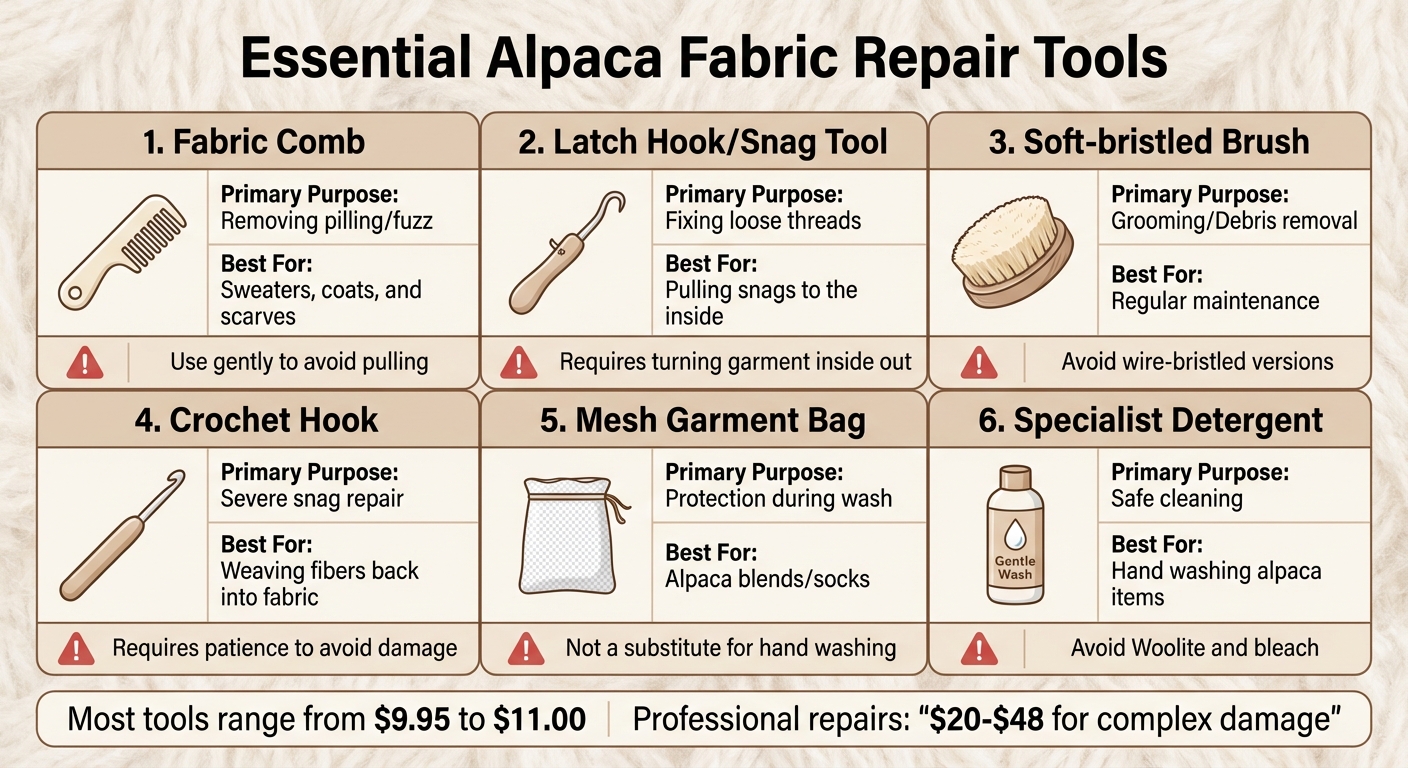
Alpaca Fabric Repair Tools Comparison Guide
Having the right tools is key when it comes to repairing alpaca fabrics. Because alpaca fibers are delicate, it's important to avoid harsh tools typically used for synthetic materials. A good repair kit should cover a range of needs, from fixing minor snags to patching small holes. Most tools are reasonably priced, ranging from $9.95 to $11.00.
Here are the essential tools for alpaca fabric repairs and tips on how to use them effectively.
Sweater combs and sweater stones are perfect for tackling pilling. Sweater combs work best for lightweight items like scarves and cardigans, while sweater stones are ideal for heavier garments such as thick sweaters and vests. Always use these tools in one direction to avoid pulling or damaging the fibers. The LonaScott Garment Repair Kit, which includes a wooden comb, is highly rated (4.9/5 from 39 reviews) for its ability to remove bobbles quickly without harming the fabric.
For snag repairs, the tool you choose depends on the severity of the snag. Minor snags can often be fixed with gentle finger manipulation. For more serious cases, a crochet hook or darning needle is recommended. To use a crochet hook, turn the garment inside out, insert the hook through the center of the snag, and pull the fiber to the inside before weaving it back into place. As Inkari Alpaca advises:
You don't want to choose something too harsh and damage the ultra-soft fibers of alpaca fleece.
Cleaning and maintenance tools are another essential part of your kit. A lint roller or soft-bristled brush can help remove surface debris, dust, and hair during routine care. Avoid using wire brushes or razors, as these can tear the fibers. For washing, opt for a specialist wool detergent - but steer clear of Woolite. According to Alpaca by Design:
Avoid using Woolite as it is designed to break down similar proteins that makeup alpaca fiber.
You'll also need clean, dry towels for blotting moisture and a mesh drying rack to lay garments flat while air-drying.
| Tool | Primary Purpose | Best For | Limitations/Warnings |
|---|---|---|---|
| Fabric Comb | Removing pilling/fuzz | Sweaters, coats, and scarves | Use gently to avoid pulling |
| Latch Hook/Snag Tool | Fixing loose threads | Pulling snags to the inside | Requires turning garment inside out |
| Soft-bristled Brush | Grooming/Debris removal | Regular maintenance | Avoid wire-bristled versions |
| Crochet Hook | Severe snag repair | Weaving fibers back into fabric | Requires patience to avoid damage |
| Mesh Garment Bag | Protection during wash | Alpaca blends/socks | Not a substitute for hand washing |
| Specialist Detergent | Safe cleaning | Hand washing alpaca items | Avoid Woolite and bleach |
For small holes, a standard needle and thread can handle most repairs. However, larger tears or complex damage may require professional help. If you take your garment to a seamstress or tailor, be sure to mention that it's made of alpaca, as it demands special handling compared to regular wool.
Next, learn how to address common alpaca fabric problems with confidence.
When it comes to fixing alpaca garments, patience and a gentle touch are key. Alpaca fibers are delicate, and rushing through repairs can turn small issues into bigger problems.
Snags need quick attention to prevent them from worsening. For minor snags, you can carefully coax the fibers back into place with your fingers or a soft-bristled brush.
For more serious snags, turn the garment inside out. Use a crochet hook to pull the snagged yarn back into the fabric, securing it with a few careful stitches. Alternatively, you can use a needle and thread to stitch the snag into place with small, even stitches.
"Remember, when repairing snags in alpaca clothing, it's important to be gentle and take your time to avoid causing further damage to the fabric".
If you're unsure about handling a severe snag, consider professional repair services, which generally range from $32 to $48.
After dealing with snags, you might notice pilling - those pesky little fuzz balls that form in high-friction areas like underarms. For lightweight alpaca items like fine knits or scarves, a sweater comb works well to lift the pills. For heavier pieces, a sweater stone is a better option.
Always work in a single, steady direction when using these tools. To prevent future pilling, use a lint brush or soft-bristled brush between wears to remove debris. Stay away from razors or wire brushes, as these can harm the fabric. If your garment has both pills and stains, blot the stain with a mild detergent and cool water before addressing the pills, but avoid rubbing the fabric.
Start by examining the hole - its size, location, and the condition of the surrounding fibers. For small holes, use a darning or tapestry needle with matching thread to sew a ladder or running stitch that closes the gap. For tears, flatten the area, stabilize it with fusible interfacing, and then use a ladder stitch to join the edges.
For larger holes, a darning mushroom can help. Weave vertical and horizontal stitches to create a sturdy grid, making sure not to pull the threads too tight. If the hole is too large or in a prominent spot, it’s best to consult a professional tailor who has experience with alpaca fiber.
"If you're (understandably) too nervous to do it yourself, take it to a professional! Just be sure to let them know it's alpaca fiber they'll be working with".
Taking a few simple precautions can help keep your alpaca fabric in great shape and save you from repairs down the line.
Before storing alpaca items for an extended period, make sure they’re clean to deter moths. Always fold them flat instead of hanging to avoid stretching.
"Avoid hanging alpaca wool garments as they may stretch out of shape over time. Instead, fold your items neatly and store them flat in a drawer or on a shelf to maintain their original fit and structure." - Sophia Lauringdon, Great Natural Alpaca
Use breathable cotton or canvas bags to prevent moisture buildup. To keep pests at bay, add cedar blocks or lavender sachets to your storage area. Choose a cool, dark, and dry location, and consider placing acid-free tissue paper between layers to maintain the fabric’s condition. If you suspect moth activity, seal the item in a bag and freeze it for 48 hours.
Pairing proper storage with regular upkeep is key to keeping your alpaca fabric looking its best.
Alpaca fabric doesn’t need frequent washing. Often, simply airing it out in a well-ventilated space is enough. After wearing, use a lint brush to remove any debris. If wrinkles appear, opt for a low-setting steamer or allow steam from a hot shower to do the trick - just steer clear of direct ironing.
"Alpaca fibers naturally repel dirt and odors. Simply airing out your alpaca throw or sweater can freshen it up between uses." - Alicia Adams Alpaca
When washing is necessary, handwash in cool water with a gentle wool or baby shampoo. Limit soaking to 30 minutes. Press out excess water carefully without wringing and lay the item flat to dry. Never hang wet alpaca or toss it in the dryer.
Daily wear can also affect your alpaca items, so take steps to protect them while you’re using them.
Be mindful of sharp objects like zippers, jewelry, or long nails that can snag the fibers. Avoid rough surfaces that might cause damage. To prevent pilling, use a sweater comb or stone, working in a single direction.
After wearing, shake out any dust and fold the garment flat for storage. These small, preventative measures go a long way in extending the life of your alpaca fabric, complementing the care routines you’ve already established.
This guide has covered the essential tools and techniques to repair, maintain, and protect alpaca fabric. From using a crochet hook to fix snagged fibers to employing soft-bristled brushes for regular grooming, these tools are key to keeping your items in great condition. Techniques such as gently massaging minor snags, weaving loose fibers back into the fabric with a needle, and addressing small holes immediately are simple but effective.
Prevention plays a big role in maintaining alpaca garments. For items with a high alpaca fiber content, like sweaters and throws, dry cleaning is the preferred option. Smaller pieces can be hand washed in cool water with a wool-specific detergent. Avoid harsh chemicals, and always lay items flat to dry. These preventative measures complement the repair techniques discussed earlier.
Developing consistent care habits can significantly extend the life of your alpaca garments. Tackle snags and stains promptly, and use a lint roller or soft brush regularly to remove dust and debris. Proper storage is also crucial - keep items in airtight bags or containers with natural repellents like cedar or lavender, and store them in a cool, dark, and dry space.
"With proper care, your alpaca products will last for many years and provide you with warmth and comfort." - Alpaca by Design
If you're considering expanding your alpaca collection or need reliable repair tools, check out Alpaca Direct. They offer a variety of alpaca products, including yarn, apparel, knitting supplies, and educational resources. For more tips and tutorials, visit the Alpaca Direct YouTube channel. By dedicating time to care and repair, your alpaca fabrics will continue to provide warmth and elegance for years to come.
If your alpaca garment has minor issues like small snags or loose fibers, you can handle these yourself with basic tools such as a crochet hook or needle and thread. These quick fixes are manageable at home and can help keep your garment looking great.
However, for more serious damage or if you're not confident in your skills, it's a good idea to leave it to the professionals. They have the expertise to properly restore the garment without compromising its quality. In short, DIY is perfect for small touch-ups, while professional help is better for major repairs.
To keep alpaca fabric in great condition, avoid machine washing or tumble drying. Instead, gently hand wash it using cold or lukewarm water. Afterward, lay it flat to dry. This careful approach preserves its softness and maintains its shape over time.
To keep your alpaca garments safe from moths, regular cleaning is key. This helps eliminate food particles, sweat, and oils that can attract pests. Store your items in airtight containers or vacuum-sealed bags to create a protective barrier. Adding natural repellents like cedar blocks or lavender sachets can further deter moths. Make sure to keep your garments in a cool, dark place and air them out occasionally to reduce the risk of infestations. With these steps, your alpaca items will remain in excellent shape.

Comments will be approved before showing up.