Your Cart is Empty



Good hook care is simple: keep hooks dry, clean them by material, store them apart, and check cases often. That’s the whole article in one line.
If I wanted the short version, I’d keep these 7 points in mind:
A few small habits can help hooks last longer and feel smoother in use. In this guide, I’d focus on what to do for metal, wood, bamboo, plastic, acrylic, and ergonomic hooks, plus how to store them day to day and for months at a time.
Crochet Hook Care by Material: Cleaning & Storage Guide
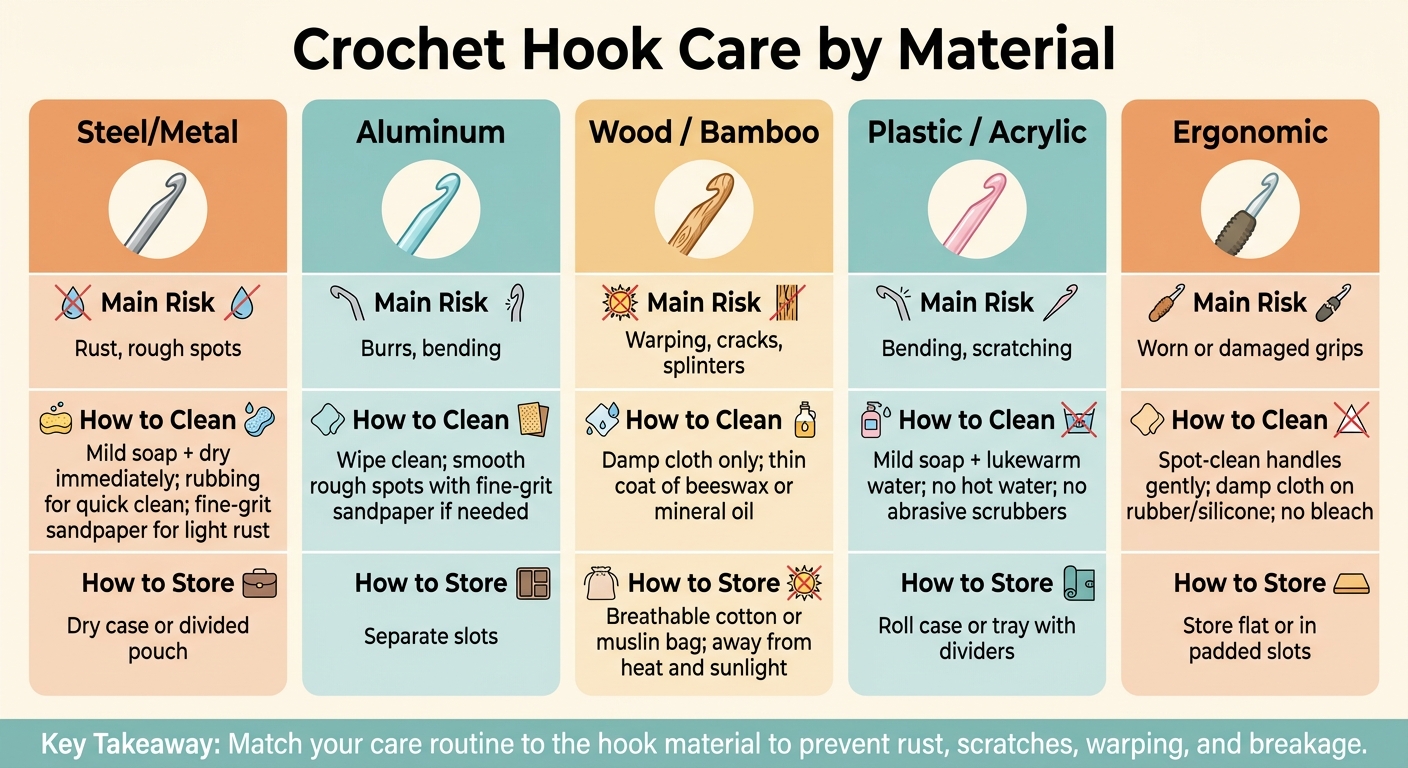
| Hook type | Main risk | Best care move | Best storage move |
|---|---|---|---|
| Steel/metal | Rust, rough spots | Mild soap, then dry right away | Dry case or divided pouch |
| Aluminum | Burrs, bending | Wipe clean; smooth rough spots if needed | Separate slots |
| Wood/Bamboo | Warping, cracks, splinters | Damp cloth only; light oil or wax | Breathable cotton or muslin bag |
| Plastic/Acrylic | Bending, scratching | Mild soap; no hot water | Roll case or tray with dividers |
| Ergonomic | Worn or damaged grips | Spot-clean handles gently | Store flat or in padded slots |
Bottom line: if you match the care routine to the hook material, you can cut down on rust, scratches, warping, and breakage before they start.
Metal, wood, bamboo, plastic, and ergonomic designs don’t all hold up the same way. Moisture, heat, and friction affect each one a bit differently, so the safest cleaning and storage routine depends on the material.
Metal hooks are durable and smooth, but they still need care. Wipe them dry after use. Steel hooks should be dried right away to help prevent rust. Aluminum hooks don’t rust like steel, but they can develop small burrs or rough spots that snag yarn.
Wood and bamboo hooks need the lightest touch. These natural materials can warp or crack if they sit in heat or direct sunlight. Thin bamboo hooks can also splinter or break if too much pressure is applied.
Plastic and acrylic hooks are more likely to bend or snap, especially when used with thicker yarns or under heavy tension. Ergonomic hooks often include rubber, foam, or soft plastic handles, so clean them gently to avoid damaging the grip.
Quick guide:
| Material | Main Care Risks | Key Maintenance Need |
|---|---|---|
| Steel | Rust, dulling tip | Wipe dry; deep clean grooves |
| Aluminum | Bending, surface burrs, rough spots | Smooth minor burrs with fine-grit sandpaper. |
| Wood/Bamboo | Warping, splintering, cracking, breaking | Condition with beeswax or mineral oil; avoid sunlight and heat |
| Plastic/Acrylic | Bending, snapping | Avoid heavy tension; clean gently |
| Ergonomic | Worn grips | Gentle cleaning of handle materials |
Start with metal hooks, since rust prevention matters most there.
Start with a gentle wash and dry metal hooks right away. Clean aluminum and steel hooks with mild soap and warm water, then dry them at once. If you just need a fast touch-up, wipe the hooks with rubbing alcohol.
Steel hooks can rust in no time, so don’t let moisture sit on them. If you spot light rust on a steel hook, use very fine-grit sandpaper to rub it off, then wipe the hook clean and dry it well.
Cleaning metal hooks helps keep them smooth and snag-free. After that, store them in a dry case or caddy.
With wooden and bamboo hooks, moisture is the big thing to watch. These materials soak up water, so it helps to keep them as dry as you can. Wipe each hook with a slightly damp cloth, then dry it right away.
Once it's clean, rub on a thin layer of beeswax or mineral oil. That helps keep the wood or bamboo from drying out and cracking.
It also pays to check for small nicks or rough patches. Even tiny snags can catch yarn, especially delicate fibers. Before you start a project, run your fingertip along the shaft and head. If anything feels rough, smooth it with fine-grit sandpaper.
Thinner bamboo hooks can break or splinter more easily, so use a light touch. And storage matters too. Keep them away from sunny windowsills, hot cars, and damp bathrooms, since those spots can lead to warping. Plastic, acrylic, and ergonomic hooks need a different cleaning touch.
Clean plastic, acrylic, and ergonomic hooks with a gentle touch. Use lukewarm water and a mild detergent, and skip hot water since it can damage plastic and synthetic grips.
Wipe each hook with a soft cloth and light pressure. Avoid abrasive scrubbers because they can scratch acrylic. For rubber or silicone grips, spot-clean with a damp cloth and don't soak them. Around seams and thumb rests, clean lightly and stay away from harsh chemicals or bleach.
Pat the hooks dry, then let them air-dry all the way. Keep them out of direct sunlight, which can fade colors and weaken the material over time. Once everything is dry, store the hooks in a clean, dry place. With the hook surfaces clean and dry, daily storage matters next.
Once your hooks are clean and dry, store them separately so they don't get scratched or wander off. A dedicated hook case with individual slots helps keep hooks from rubbing together, which can protect metal hooks from scratches and help wooden or bamboo hooks keep their finish. This matters day to day because even clean hooks can get dull, scratched, or lost when they're tossed in loose.
For travel, a mesh bag makes hooks easy to see and grab. At a desk, drawer dividers are a simple fix. Ice cube trays, pillboxes, and jewelry organizers also do a nice job of keeping small hooks and notions apart and easy to spot.
Pick a case that's long enough for standard 6-inch hooks. A roll-up pencil case works well for plastic, acrylic, and ergonomic hooks since it keeps each surface apart. Mason jars are best saved for low-cost bulk storage, because hooks can still bump into each other inside.
Use this quick guide to match storage to how you crochet.
| Storage Option | Best For | Key Benefit |
|---|---|---|
| Hook Case/Roll | All materials; travel | Prevents scratches; keeps sizes in order |
| Mesh Bag | Active projects; travel | See-through; lightweight |
| Drawer Dividers | Small hooks; notions | Keeps items separated and easy to find |
| Mason Jars | Low-cost bulk storage | Low cost |
If you won’t use your hooks for a while, storage should do more than stop scratches. It needs to help protect the hook material itself.
Before you put hooks away for months, make sure they’re completely dry. Even small amounts of moisture can rust metal and slowly damage wood or bamboo. And before long-term storage, skip harsh cleaners on wood and bamboo.
Where you store them matters too. Keep hooks in a cool, dark spot with steady humidity and no direct sunlight.
The storage container matters just as much as the room. Use breathable cotton or muslin bags for wood and bamboo hooks. For metal hooks, use a clean, dry case or pouch that blocks dust without trapping moisture.
After daily storage, sort hooks by size and material so everything stays in order. This also helps protect the hooks. When hooks rub against each other, surfaces can get scratched, especially on metal hooks and coated handles.
Labeling doesn’t just make storage look neat. It makes the whole setup faster to use. A case or tray with labeled slots keeps each hook apart and easy to grab. A pegboard works well too: hang hooks on separate pegs and group them by size.
When you label hooks, include both U.S. and metric sizes. For example: G-6 / 4.0 mm. If the printed size has faded, use a hook sizer to double-check before you sort.
It also helps to keep metal, wood, bamboo, and plastic hooks in separate compartments. Metal hooks can nick softer wooden ones if they’re stored together. Repurposed dividers or small bins work well for this, giving each material its own spot and cutting down on wear over time.
Even if your hooks are spotless, their case can still be the problem. Dust, lint, and trapped moisture build up inside storage containers over time, and that mess can wear down hooks.
Clean cases and caddies on a regular basis. For fabric cases, wash by hand or use a delicate cycle, then let them dry all the way before using them again. If the case is small or soft-sided, place it inside a mesh laundry bag first to help protect it during the wash.
Plastic organizers are simple to deal with. Wipe them with a damp cloth, then dry them completely before you put anything back inside.
With synthetic cases, go easy. Avoid harsh scrubbing, and never wring the material. If you use a wooden organizer, polish it with a wood-safe product and let it dry fully before restocking.
Once the container is clean, take a minute to check how well it still holds each hook. A clean case isn't enough if the closures are worn out or the slots have stretched.
Look over:
Zippered closures are recommended over snaps for keeping small hooks secure. If slots have loosened, hooks can slide around and rub against each other, which may lead to scratches.
If you want quick references for sizing, storage, and maintenance, a few go-to resources can make hook care much simpler. Alpaca Direct offers both tools and how-to help.
A good place to start is the Alpaca Direct Needle & Hook Gauge. It helps you identify unmarked hooks by size, which is handy when you're sorting through a mixed set and run into unlabeled pieces.
Alpaca Direct’s "Learn To Knit and Crochet" resource center includes free videos and guides on hook care and organization. If you’d rather watch than read, the YouTube channel covers the same topics in video form. You can find tutorials on Alpaca Direct's YouTube channel at youtube.com/@AlpacaDirect.
These seven habits help your hooks last longer and work better day after day. The right care depends on what the hook is made from: keep metal dry, store wood and bamboo in breathable containers, and keep plastic and ergonomic handles away from heat and direct sunlight.
Storage plays a big part too. A case, bin, or mesh bag can keep hooks separated, easy to see, and simple to grab when you need them. That separation also helps prevent scratches.
It also pays to check your hooks from time to time. Look for rust, scratches, or signs of wear, and use a gauge to double-check older sizes. Hooks that are cared for well tend to stay smoother, safer, and easier to use.
Small habits can go a long way in protecting both your hooks and your stitches.
Clean your crochet hooks when you notice oil, dirt, or dust starting to build up. There’s no set schedule, so a quick wipe-down now and then as part of your regular craft cleanup usually does the job.
If a hook starts to feel less smooth in your hand or catches a bit while you work, that’s a clear sign it needs attention. Good care keeps your hooks comfortable to use and helps protect your yarn fibers.
If your crochet hook starts snagging yarn, take a close look at it. Check for visible scratches, burrs, or wear, especially around the throat and head. Even small surface damage can stop the yarn from gliding smoothly.
To help prevent more snags, store your hooks with care. If they knock against other metal tools, they can pick up tiny nicks that lead to the same problem later on.
Use a dedicated hook case with a separate slot for each tool. If you line the hooks up from smallest to largest, it’s much easier to grab the one you need.
Wooden or ergonomic hooks do best in a binder or leather folio, which helps protect the finish. Metal hooks can sit on a magnetic strip or board. When your hooks stay in one organized place, they’re less likely to get damaged, and it’s much easier to notice when a size is missing.

Comments will be approved before showing up.