
Single-Ended Crochet Hooks: Full Guide

If you want one crochet hook that works for most projects, this is it. A single-ended hook has one hook tip, usually measures about 6 inches, and is the standard pick for things like hats, scarves, blankets, amigurumi, and garments.
Here’s the short version:
- I use a single-ended hook for regular crochet because it works one stitch at a time
- A 5.0 mm (H/8) hook with worsted weight yarn is a common starting point for beginners
- Inline hooks tend to make stitches a bit tighter, while tapered hooks often glide through stitches more easily
- Aluminum feels smooth, wood and bamboo add grip, and ergonomic handles can help with hand strain
- The mm size matters more than the U.S. letter/number label
- For better results, I would check the yarn label, make a swatch, and adjust for gauge
- Single-ended hooks differ from Tunisian and double-ended hooks because they don’t hold many loops at once
If you’re not sure what to buy, start simple: one 5.0 mm aluminum hook, light-colored worsted yarn, and a small practice swatch. That setup keeps things easy to see and easy to control.
GUIDE to CROCHET HOOKS by Naztazia
Quick Comparison
| Hook type | Best for | How it works | Fabric feel |
|---|---|---|---|
| Single-ended | Most crochet projects | One stitch at a time | Flexible, varied drape |
| Tunisian | Blankets, wraps, sweaters | Holds many loops before working them off | Dense, woven-like |
| Double-ended | Two-color work, some circular methods | Worked from both ends | Often reversible |
I’d sum it up this way: pick the hook by project, yarn, tension, and comfort - not by label alone. That one choice can change stitch size, fabric density, and how your hand feels after 30 minutes or more of crocheting.
Parts of a Single-Ended Crochet Hook and How They Affect Your Stitching
Every single-ended crochet hook has six parts: head, throat, shaft, thumb rest, handle, and end. Each one plays a role, but three parts have the biggest effect on how a hook feels in your hand and how your stitches turn out: the head, shaft, and handle.
Hook shape can change stitch size, control, and comfort in a pretty noticeable way.
| Part | What It Does |
|---|---|
| Head | Enters stitches and catches yarn |
| Throat | Guides the loop |
| Shaft | Sets hook size and gauge |
| Thumb Rest | Adds leverage |
| Handle | Affects comfort |
| End | Balances the hook |
Hook Head Shape: Inline vs. Tapered
Inline hooks like Susan Bates have a head that lines up with the shaft, so the point stays centered. The throat is the same width as the shaft, which helps make stitches a bit tighter and more even. Tapered hooks like Boye are shaped differently: the head sits slightly off-center, and the throat narrows toward the tip.
"Inline hooks produce slightly tighter, more uniform stitches... Tapered hooks let the loop slide partway down the throat before stopping. This produces slightly looser stitches and lets the hook glide through stitches more easily." - Kelley Delano, Editor & Lead Author, Crochet Calc
That difference matters once you start stitching. If you tend to crochet tightly, a tapered hook can help the loop move more freely and give your fabric a little more give. If your tension is loose, an inline hook can keep each loop at a steady depth for a firmer, more even look.
That’s one reason inline hooks are often a go-to for amigurumi and other projects where you want dense, controlled stitches. Tapered hooks, on the other hand, often feel smoother when speed matters.
Shaft, Throat, and Thumb Rest
The shaft diameter sets the hook size. So a 5.0 mm hook has a shaft diameter of exactly 5.0 mm, whether it’s inline or tapered.
The throat links the head to the shaft and guides the loop as you work. A deeper throat holds the loop more securely, which can help if you're using slippery fibers. A shallower throat lets yarn move faster, which some experienced crocheters with tight tension may like.
The thumb rest is easy to overlook, but it matters during long sessions. That flat spot gives your thumb and index finger a steady place to pinch the hook, which can give you better leverage during repeated motions.
Handle Design and Hand Comfort
The handle affects how the hook feels over time. With a knife grip, the handle rests in the palm. With a pencil grip, it sits more between the fingers. That means handle shape can change comfort in a big way.
Basic aluminum hooks often have thin, straight handles, and those can lead to hand cramping during long stitching sessions. Hooks with ergonomic grips, like Clover Amour and Tulip Etimo, use soft rubber or elastomer handles to spread pressure across the hand. People who crochet often may find those hooks easier to use.
Material also changes the feel. Aluminum is the slickest option, so yarn slides across it fast. Wood and bamboo add a bit more friction, which can help keep slippery yarns from moving too fast.
Hook Materials and Sizes: Choosing the Right Hook for Your Yarn and Project
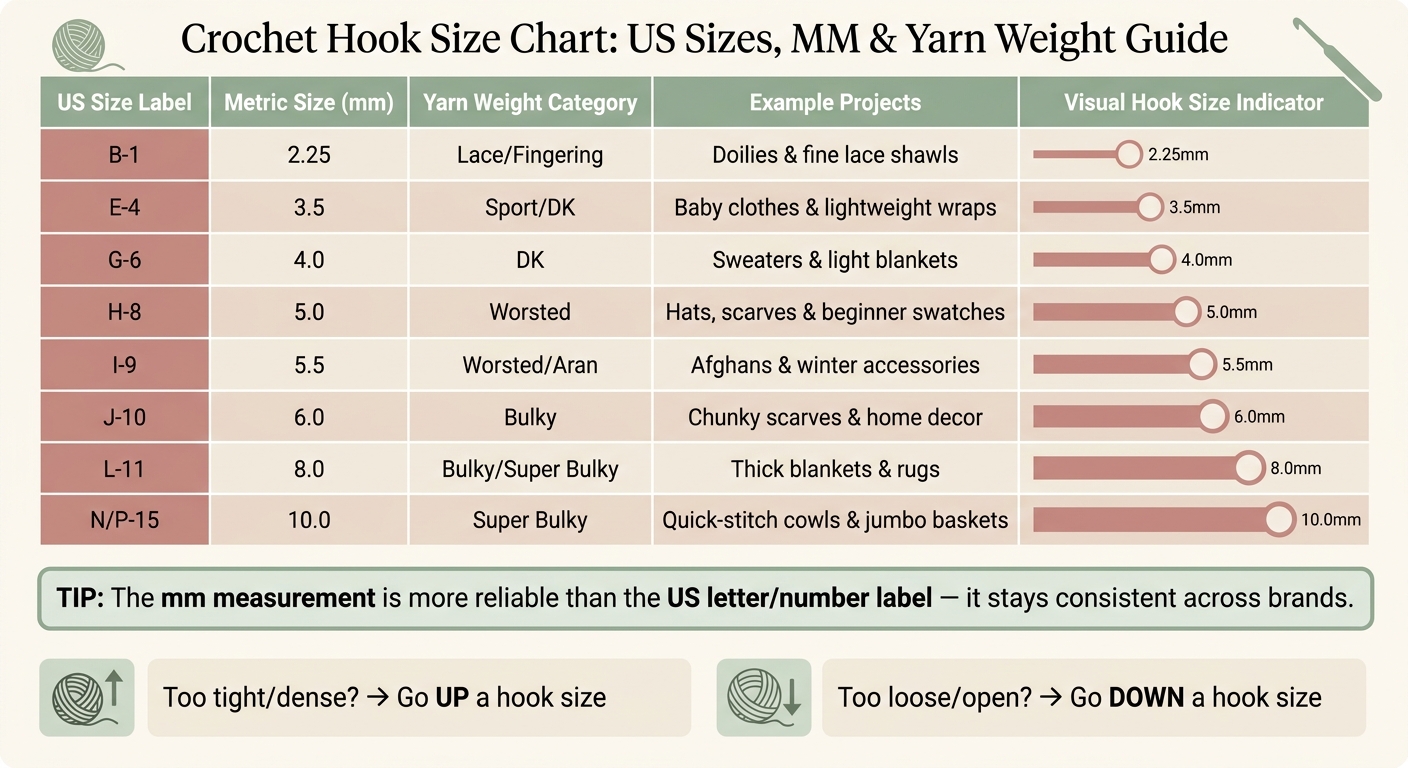
Crochet Hook Size Chart: US Sizes, MM & Yarn Weight Guide
Hook Materials: Aluminum, Steel, Wood, Bamboo, Plastic, and Ergonomic Options
Hook material changes how the yarn moves, how much control you have, and how your hand feels after a long stretch of crocheting.
Aluminum is the most common pick. It’s smooth and durable, which makes it handy for fibers that tend to cling to themselves, like wool, mohair, and cotton.
Steel hooks are made for thread crochet and lace work, usually in sizes from 0.6 mm to 3.5 mm. One thing that trips people up: U.S. steel hook numbering runs backward compared with standard hooks, so a size 14 steel hook is much smaller than a size 0.
Wood and bamboo give you more grip. That can help a lot with slippery fibers like silk and rayon, where an aluminum hook may let loops slide off a bit too easily.
Plastic hooks are light, which makes them a good fit for jumbo or super-bulky projects. A large metal hook can start to feel heavy fast. Plastic can also sound a little noisy against acrylic yarn, and some crocheters don’t love that during long sessions.
Ergonomic hooks come with wider, soft-grip handles, often made from rubber, elastomer, or silicone. Clover Amour and Tulip Etimo are two popular examples. These handles can help cut down on hand fatigue when you crochet for a while.
Once the material feels good in your hand, hook size starts to shape your gauge and the look of each stitch.
U.S. Hook Sizes and Millimeter Equivalents
In the U.S., hooks often use a letter or number label, like H-8 or J-10. The catch is that those labels can shift a little from one brand to another. That’s why the millimeter (mm) measurement is the most reliable reference.
Here are the most common sizes for standard yarn crochet:
| U.S. Size | Metric (mm) | Yarn Weight | Example Projects |
|---|---|---|---|
| B-1 | 2.25 | Lace / Fingering | Doilies, fine lace shawls |
| E-4 | 3.5 | Sport / DK | Baby clothes, lightweight wraps |
| G-6 | 4.0 | DK | Sweaters, light blankets |
| H-8 | 5.0 | Worsted | Hats, scarves, beginner swatches |
| I-9 | 5.5 | Worsted / Aran | Afghans, winter accessories |
| J-10 | 6.0 | Bulky | Chunky scarves, home decor |
| L-11 | 8.0 | Bulky / Super Bulky | Thick blankets, rugs |
| N/P-15 | 10.0 | Super Bulky | Quick-stitch cowls, jumbo baskets |
How to Match Hook Size to Your Yarn Label and Gauge
The hook size on a yarn label is a starting point, not a hard rule. It assumes average tension, but your tension might be tighter or looser.
The best move is to swatch first and then adjust your hook size until you hit the pattern gauge. If your stitches come out too small and dense, go up a hook size. If they look too loose and open, go down a size.
Project type matters too. For amigurumi or stuffed toys, a tighter fabric works better so the stuffing doesn’t peek through, which usually means going smaller than the label suggests. For shawls or garments, a slightly larger hook can give the fabric more drape and movement.
After that, the way the hook feels comes down to your grip and stitch style.
How to Use a Single-Ended Crochet Hook: Common Stitches and Beginner Practice
Pencil Grip vs. Knife Grip
Once you have a feel for the hook itself, the next step is holding it in a way that feels steady. Your hook hand controls the hook, while your other hand manages yarn tension. Most crocheters use either a pencil grip or a knife grip. There’s no prize for picking one over the other, so go with the hold that feels most natural.
With the pencil grip, you hold the hook like a pencil, with the handle above your hand. With the knife grip, the handle rests in your palm, which can feel steadier during longer sessions. If you want to see both in action, check out Alpaca Direct's YouTube channel.
Standard Stitches Worked One Loop at a Time
After grip, the next piece is stitch formation. Single-ended hooks complete one stitch at a time, so these are the main stitches to learn first.
| Stitch | Abbreviation | How It Works |
|---|---|---|
| Chain | ch | YO, pull through the loop on hook |
| Slip Stitch | sl st | Insert hook, YO, pull through stitch and loop on hook in one motion |
| Single Crochet | sc | Insert hook, YO, pull up a loop, YO, pull through both loops |
| Double Crochet | dc | YO, insert hook, YO, pull up a loop, (YO, pull through 2 loops) twice |
| Treble Crochet | tr | YO twice, insert hook, YO, pull up a loop, (YO, pull through 2 loops) three times |
Each stitch follows the same basic pattern: yarn over, insert, pull through. Taller stitches just add a few more steps.
Beginner Setup Tips for Better Results
A few small setup choices can make practice much less frustrating. Start with a light-colored yarn so you can see each stitch more clearly. Keep every loop on the full diameter of the shaft for more even stitches. And instead of jumping straight into a full project, practice on small swatches - just a few rows of single crochet or double crochet works well.
It also helps to stop early when your hands start to tense up. A short break can save you from fighting your yarn and your hook at the same time.
These basics make it easier to compare hook styles and care next.
Comparing Hook Types, Hook Care, and Key Takeaways
Single-Ended vs. Tunisian vs. Double-Ended Hooks
If you’re buying just one crochet hook for most projects, go with a single-ended hook. It’s the standard choice and works for the broadest range of day-to-day crochet projects.
Single-ended hooks work one stitch at a time. That makes them the go-to option for most crocheters. Tunisian hooks do something different: they hold multiple loops at once, which creates a denser fabric with more of a woven look. Double-ended hooks are more niche and are mainly used for certain colorwork methods and Tunisian crochet techniques.
Cleaning, Storage, and Reducing Hand Strain Over Time
Once you’ve picked a hook type, a little care goes a long way. Clean storage helps the hook stay smooth and keeps sizing easier to track.
Steel hooks, especially the tiny ones used for lace, are delicate and should be kept in protective sheaths. Aluminum hooks often come with an anodized finish that helps them stay smooth, but heavy use can wear that finish down. Wood and bamboo hooks feel warm in the hand and offer more grip, but they’re easier to damage than metal. Plastic hooks are light, which some people like, but smaller sizes can bend or snap. They can also feel rough or noisy against acrylic yarn, which can be annoying for sensitive hands.
A simple setup works best: store hooks by size in a labeled case or hook roll. That makes it easier to grab the one you need fast and helps keep your gauge steady from project to project. If your hand gets tired during long crochet sessions, soft-grip handles can help cut down on fatigue.
With care handled, the next part is making sure the hook matches both your yarn and how your hand likes to work.
Conclusion: What to Keep in Mind When Choosing a Single-Ended Hook
Start with the yarn label, then make a swatch. That’s the safest way to see how the hook actually performs with your yarn, your tension, and your project.
If a hook feels awkward or starts to cause strain, don’t push through it. Switch the material or try a different grip instead.
"The right hook improves comfort, speed, and stitch quality."
FAQs
How do I know if my hook is the wrong size?
Check the fabric and gauge first. If the fabric feels too drapey or looks too open, the hook may be too large for that yarn weight. If it feels too dense or stiff, the hook may be too small.
Before you start, crochet a gauge swatch to make sure the hook and yarn work well together. In most cases, your hook size should also line up with the recommended range on the yarn label.
Which hook shape is better for beginners?
For beginners, the better hook shape usually comes down to personal preference.
Inline hooks are often recommended because they can help you make more even stitches and hold yarn more securely.
Tapered hooks tend to glide through stitches more smoothly, which some beginners find easier. Some people like inline hooks for the extra control, while others prefer the smoother feel of tapered hooks.
When should I use a single-ended hook instead of a Tunisian hook?
Use a single-ended hook for standard crochet projects like scarves, hats, toys, and granny squares. With this type of hook, you finish each stitch one at a time.
It’s a solid pick for more open, flexible fabric. And for beginners, it often feels easier because you’re only dealing with one loop at a time.
Choose a Tunisian hook when you need to keep multiple stitches on the hook at once for Tunisian crochet.