Your Cart is Empty


If you want the short answer: shape matters more than brand. In most cases, straight cable needles are fastest, bent styles give more control, and U-shaped holders keep stitches safest.
If I were picking one, I’d use this rule first:
A cable needle is usually 3 to 5 inches long and holds a few stitches while you cross them. This guide reviews 10 brand options across the three main shapes: straight, bent/J-shaped, and U-shaped. I’d use it to match the tool to your yarn, cable width, and how much stitch security you want.
Quick Comparison
| Brand | Main Shape | Material | Best Use | Main Tradeoff |
|---|---|---|---|---|
| Alpaca Direct / Knitter’s Pride Dreamz | Straight | Wood | Slick yarns, extra hold | Less secure than curved shapes |
| Clover U-Shaped | U-shaped | Resin/plastic | Beginners, bulky yarn, stopping mid-row | Slower stitch return |
| Pony | U-shaped | Aluminum | Fine to medium cables with high stitch hold | Slicker surface |
| Prym | Bent | Aluminum | Standard cable work | Less grip with slick fibers |
| Susan Bates | U-shape + J-shape | Aluminum | Mixed cable sizes in one set | Metal can feel slippery |
| Boye | Straight + curved | Metal | Simple all-around set | Less grip than wood/plastic |
| Clover Straight | Straight with notch | Plastic | Small cables, light yarns | Ends can get in the way |
| Brittany Birch | Straight with groove | Birch wood | Slick fibers, small to medium cables | Less hold than U-shape |
| Addi | Bent/kinked | Aluminum | Fast transfers with some hold | Smooth finish gives less friction |
| HiyaHiya | Bent | Stainless steel | Good balance of movement and control | Not as locked-in as U-shape |
So if you knit small, simple cables, I’d start with a straight needle. If you want a safer all-around choice, I’d go with a bent style. And if dropped stitches are your main problem, I’d pick a U-shaped holder first.
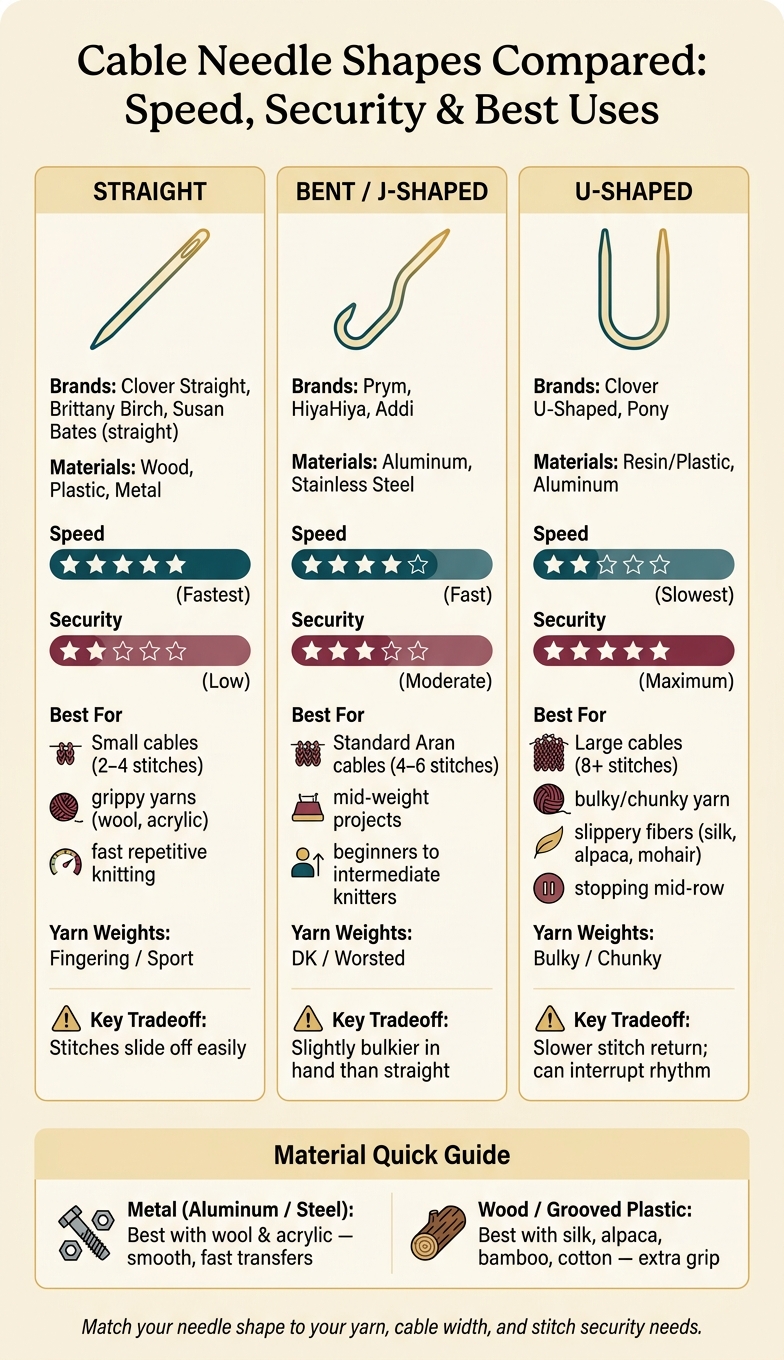
Cable Needle Shapes Compared: Speed, Security & Best Uses
These straight wooden cable needles are a good fit for knitters who want a bit more grip, especially when working with slippery yarns. At Alpaca Direct, you’ll find Knitter's Pride Dreamz and Brittany Birch cable needles. Both are wood, but they handle a little differently. Dreamz needles have grooves along the body, while Brittany Birch needles have a smooth finish.
The Dreamz needles are straight and have tapered tips, plus grooves along the shaft. Those grooves help keep stitches from sliding off while you cable. That gives you more hold than wood texture alone. Alpaca Direct puts it this way:
"Wooden cable needle with grooves that prevent stitches from slipping off when cabling."
Brittany Birch needles are also straight, but they’re made from birch and have a smooth finish.
Here’s the size range for each option:
Alpaca Direct also backs these tools up with video help on the Alpaca Direct YouTube channel. Tutorials cover cabling without a cable needle, fixing cable mistakes, and counting rows between twists.
So the main difference isn’t the straight shape. It’s how much hold each tool gives your stitches while you work.
Clover's U-shaped cable stitch holders keep stitches locked in place, which makes them a good pick for beginners, bulky yarns, and projects you put down a lot. They're better for knitters who care more about a secure hold than speedy stitch transfer. So yes, the shape matters. But the material also plays a big part in how these holders behave.
The deep U-shaped curve creates a pocket that helps keep stitches from slipping off, even if you set your knitting aside or carry it around. Clover Needlecraft, Inc. puts it this way:
"Stitches will not drop due to the U-Shape design."
That extra security is handy when you're stopping and starting, or when you're working on more complex cables with more stitches on hold.
Clover makes these holders from ABS Resin and Polyacetal. The feel lands in the middle: smoother than wood, but with more grip than aluminum. If you've ever worked with a slippery alpaca blend, you know that little bit of grip can make a big difference. It helps keep stitches contained without feeling sticky. In practice, that means the holder works best when you pair the right size with the right yarn weight.
Clover sells these holders in two size ranges: a standard set for medium-weight yarns and a jumbo set for bulky yarns.
| Set | Yarn Weight | Sizes Included |
|---|---|---|
| Standard 3-pack | Medium-weight yarns | Small, Medium, Large |
| Jumbo 2-pack | Bulky / ultra-thick yarns | Small: 8–10 mm; Large: 10–15 mm |
The standard set costs about $4.
Pony's U-shaped holders use the same security-first shape, but with a different size range and feel.
Pony sticks with the security-first U-shape, but the lightweight aluminum gives it a faster, smoother feel in your hand. That deep bend helps keep stitches in place until you're ready to move them back to the working needle. The trade-off is simple: putting stitches back on takes a bit more care than it does with a straight needle.
The aluminum surface slides with very little friction, which can feel nice to work with. But with silk, bamboo, mercerized cotton, and other smooth fibers, it may feel a little slippery.
Pony U-shaped cable needles come in two sizes:
| Size | Best For |
|---|---|
| 2.50 mm (US 1) | Fine yarns, small cable motifs |
| 4.00 mm (US 6) | Thicker yarns, cables with more stitches |
Prym uses a similar bent shape, but its curve and surface finish give it a different feel.
Prym's bent cable needles sit right in the middle between straight needles and U-shaped ones. The bend in the center works like a built-in stopping point, so held stitches stay put without needing the deep hook of a U-shape. In plain terms: you get more security than a straight needle, with less fuss than a U-shaped holder. Prym markets these needles for more involved cable work.
As Prym describes it:
"Its curve in the middle lets you effortlessly secure the stitch you want to place on hold without having it slip from the needle." - Prym
That J-shaped bend gives you a bit more control than a straight cable needle, while still feeling faster to move than a U-shape. Because the curve holds stitches without a deep pocket, it works well for longer cable sections and patterns with more moving parts. It can also reduce how tightly you need to grip the needle with your hand.
Prym uses smooth aluminum with a pearl grey finish. That slick surface helps stitches slide back onto the working needle cleanly. The tradeoff is simple: with slippery yarns like silk or bamboo blends, aluminum gives you less friction than wood or plastic.
Prym sells two sets for different yarn weights:
| Set | Sizes | Best For |
|---|---|---|
| Fine Wool | 2.5 mm (US 1) and 4.0 mm (US 6) | Fingering, sport, DK, worsted |
| Thick Wool | 6.0 mm (US 10) and 8.0 mm (US 11) | Bulky, super bulky |
Pick the size closest to your working needle. That usually helps your tension stay even.
From here, the next brand moves back to lighter aluminum handling, but in a different shape.
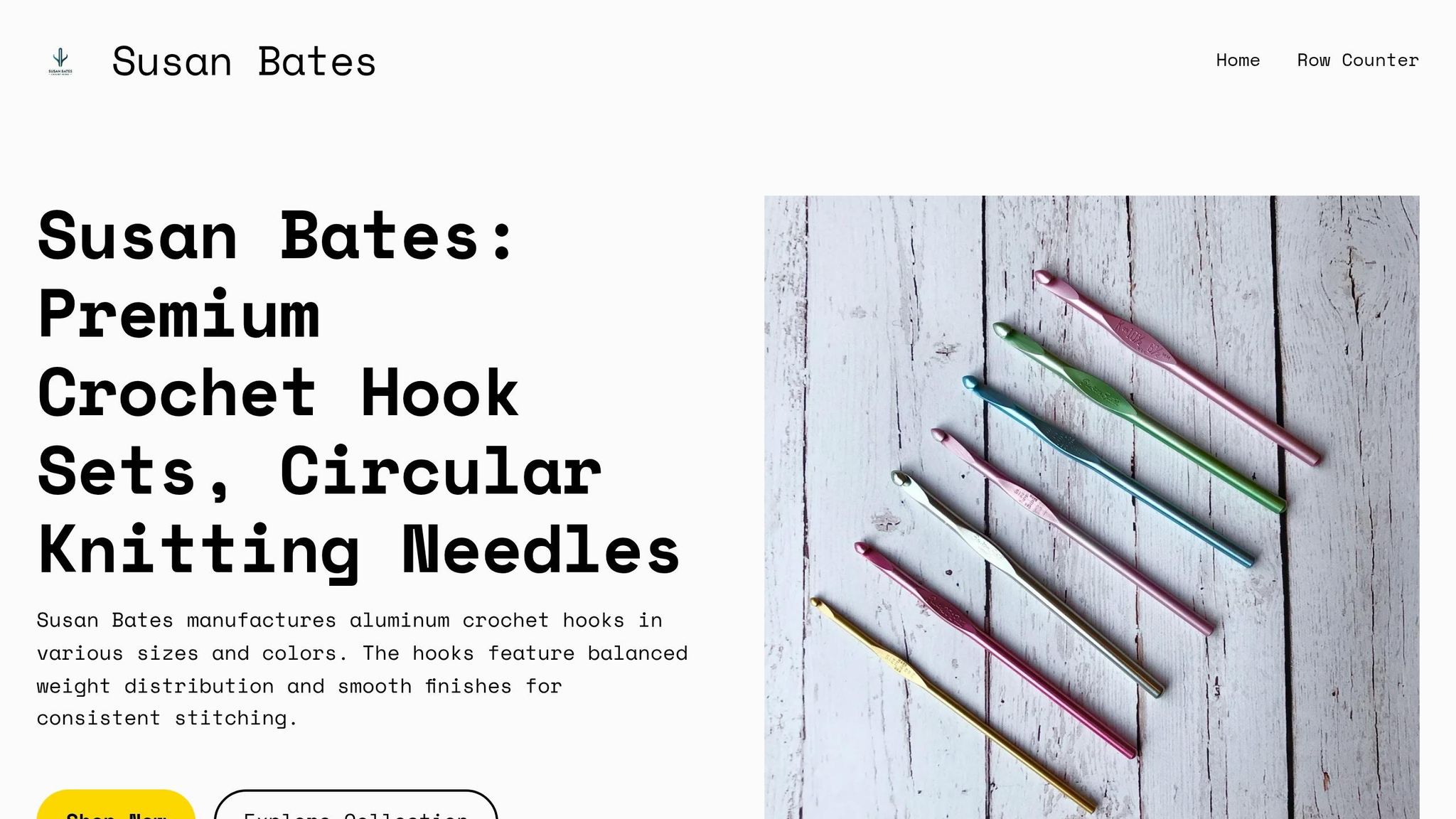
Susan Bates sells a three-piece set: small U-shape, large U-shape, and small J-shape. Compared with Prym's bent-only approach, this set gives you more shape choices in one package.
The U-shaped holders have a deep valley that cradles stitches, while the J-shaped holder uses a hook to hold stitches. In practice, the large U-shape works well when you need to park more stitches, and the J-shape can make transfers feel a bit faster. So with one set, you get options for different cable sizes and different knitting styles.
These polished aluminum needles with tapered tips slide fast, which works well with wool and acrylic. If you're using silk or bamboo, the bend tends to do more of the work when it comes to keeping stitches in place.
This set covers sport weight through super bulky. A simple rule helps: match the holder size to your working needles.
That range of sizes makes Susan Bates a handy aluminum set before moving to the simpler Boye option.
Boye keeps the same metal feel as the last section, but the setup is simpler: one straight needle and two curved ones.
This set includes two curved needles and one straight needle, which gives knitters a simple balance of speed and control. You get a regular curved needle at 4-3/4 in., a bulky curved needle at 4-1/2 in., and a straight needle at 3 in.. All three are pointed on both ends, which helps with cleaner stitch pickup.
The polished metal finish lets stitches move fast. That’s great when you want smooth cable transfers. The tradeoff is grip. Metal is slicker than wood or bamboo, so it tends to work better with yarns that already keep their shape well. The rigid body also helps the needles glide with less resistance, which leans more toward fast movement than extra stitch hold.
Use the sizes below to match the set to your yarn weight:
| Needle Type | Length | Best For |
|---|---|---|
| Regular Curved | 4-3/4 in. | Standard yarn weights; general cabling |
| Bulky Curved | 4-1/2 in. | Heavy-weight or bulky yarns |
| Straight | 3 in. | Fastest movement during cable crossings |
Match the cable needle size to your working needles so your tension stays even. Boye fits knitters who want a basic metal set with one straight option for speed and two curved options for more control. It’s a simple pick if you want metal handling without a lot of extra shapes.
After Boye’s mixed metal set, Clover sticks with the straight-needle style but makes one smart tweak: a small notch in the middle. That little detail helps the needle sit more steadily while you work. These holders are short, tapered tools that move stitches fast and work well for small cable crosses.
These needles look a lot like DPNs. They have tapered points on both ends and no curve to work around, so stitch transfers feel fast and easy. That said, the pointed ends can be a bit awkward when you’re working near your main needles.
"The protruding ends can sometimes get in the way, making maneuvering stitches around your working needles tricky." - Krista Ann, Author, Interweave
Clover adds a shallow notch in the center to help keep stitches from sliding off.
The plastic is light in the hand and gives you a bit of grip, but not so much that it slows down transfers.
Clover sells these in a 3-pack with Small, Medium, and Large sizes. The Small, Medium, and Large options work best for light to medium cables. For larger crosses, a U-shape tends to work better.
| Feature | Detail |
|---|---|
| Shape | Straight with a center notch |
| Stitch security | Moderate; the center notch helps prevent slipping |
| Material | Lightweight plastic with mild grip |
| Sizes included | Small, Medium, Large (3-pack) |
| Best for | Small cables, lightweight yarns, and quick stitch transfers |
Brittany Birch keeps the same straight profile, but wood changes the feel and grip.
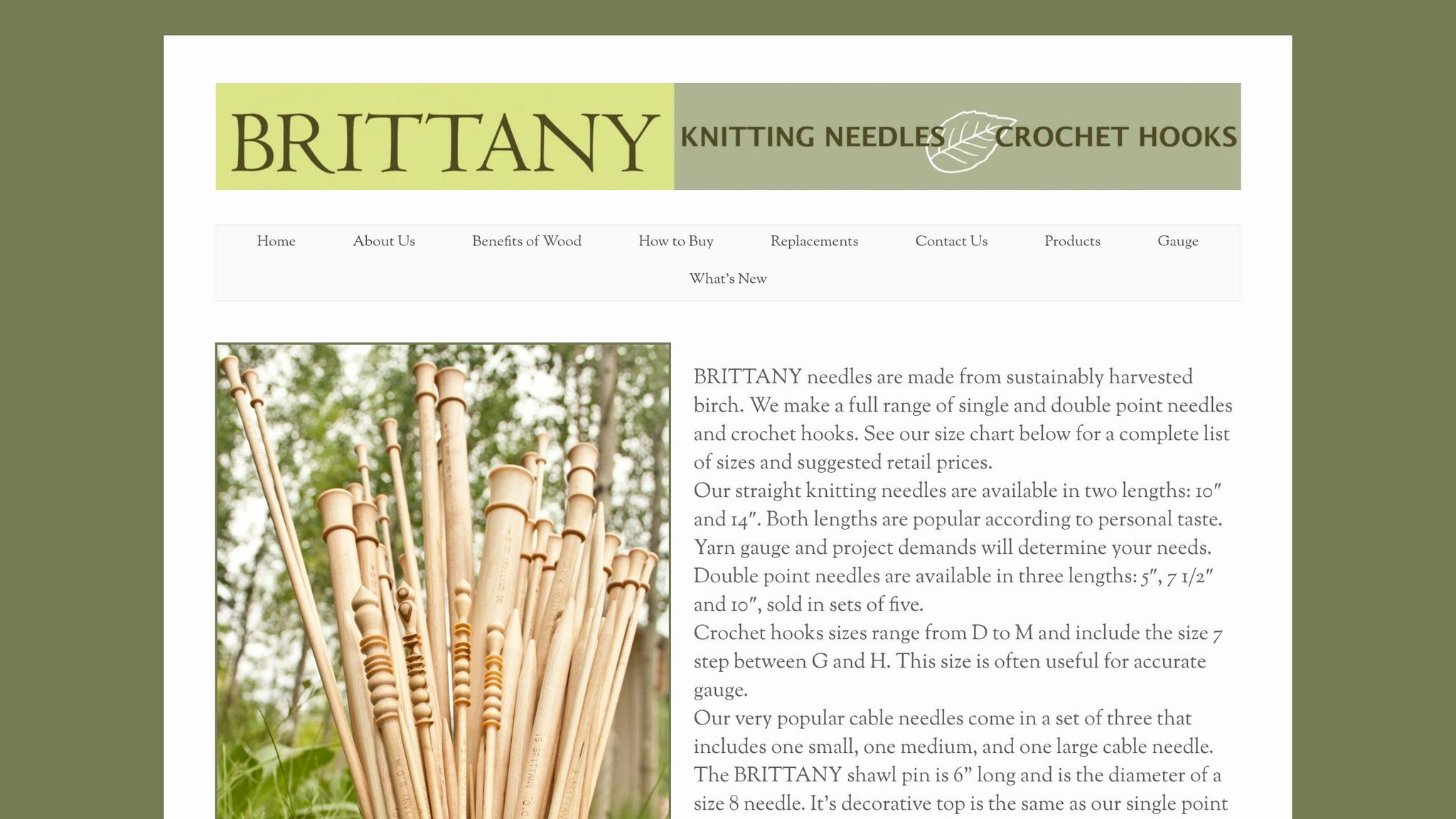
Brittany cable needles keep things simple. Like other straight cable needles, they’re fast to move, but the grooved center gives you extra hold. Each needle is straight, about 3.75 to 4 inches long, with a middle section made to keep held stitches in place while still letting you work through a cable cross without much fuss.
The grooved center helps held stitches stay put. At the same time, the smooth ends make it easy to slip those stitches back onto the main needle when you’re ready.
The tapered center helps stop stitches from drifting toward the tips, and the birch surface adds a bit of natural grip without feeling rough. That’s a nice match for slippery fibers like alpaca, silk, or bamboo blends.
Made in California from sustainably harvested birch, these needles feel warm in your hand and pick up a slight patina over time, which adds a little more grip.
Brittany cable needles come in sets of three and cover sport, worsted, and bulky yarns.
| Needle Size | Recommended Yarn Weight |
|---|---|
| Small | Sport / Fine |
| Medium | Worsted / Medium |
| Large | Bulky / Chunky |
This straight-needle style keeps transfers fast while giving you more hold at the center than a plain shaft. The next brand moves from wood to metal, which changes both the feel in hand and how stitches slide.
After the grippier birch needles, Addi moves back to smooth metal, but with a smart center kink for extra stitch control. Addi cable needles use that kinked middle section to hold stitches in place without the deep U-shape you see on some other styles.
The center kink works like a built-in stop point. Set your held stitches at the bend, and they tend to stay there while you work the cable cross. It’s a small design choice, but it makes a difference.
The kink is shallow, so transfers still feel fast. At the same time, it gives you enough hold to keep stitches from slipping off too easily. That can help a lot if you knit loosely or use slick yarns.
So if you like the speed of metal needles but want more control than a straight shaft gives, Addi sits in that middle ground.
The pearl-gray anodized aluminum surface lets stitches slide smoothly.
Addi offers a few size options, depending on the yarn and project:
Those size ranges cover a lot of ground, from finer knitting to chunky pieces. As a rule, match the cable needle size to your working needle and yarn weight. Addi also backs the tool with a 10-year manufacturer's guarantee.
Like Prym, HiyaHiya uses a bent shape. But the curve is softer, and the stainless-steel finish gives it a lighter, faster feel.
HiyaHiya uses a gentle bend that holds stitches without the bulk of a deep U-shape. That bend in the middle helps the needle feel balanced during cable crosses. You get enough hold to keep stitches in place, but enough opening to keep moving without a hitch.
The curve holds stitches well and helps prevent drops during cable crosses.
HiyaHiya cable needles are made from stainless steel with a smooth finish. That smooth steel helps the needle move fast, while the bend adds hold. The steel also has a slight drag compared with some heavily coated metal needles. In plain terms, it gives you a bit more grip with slippery yarns like alpaca or silk.
HiyaHiya sells these cable needles in a 3-pack with small, medium, and large sizes for about $5.00. That size spread works for fingering through bulky yarns.
That mix of speed and stitch control makes HiyaHiya a good reference point for the shape-versus-security tradeoff discussed next.
After you compare the brands above, narrow things down with a few simple rules.
Start with shape:
Material matters too, because it changes how firmly stitches stay put while they’re on hold. Metal slides the fastest and works well with grippy yarns like wool or acrylic. Wood and bamboo add a bit of friction, which helps with slippery fibers like silk, alpaca, or mercerized cotton. Plastic and resin land somewhere between the two.
Once you’ve picked the shape and material, choose a needle size that matches your working needles.
Here’s a quick match guide:
| Project Type | U.S. Yarn Weight | Cable Width | Recommended Style |
|---|---|---|---|
| Simple ribbed cables | Fingering / Sport | 2–4 stitches | Straight; metal or wood |
| Standard Aran sweaters | Worsted / DK | 4–6 stitches | Bent / J-shape; metal or plastic |
| Complex braids / large twists | Bulky / Chunky | 8+ stitches | U-shaped; plastic or grooved wood |
| Slippery fibers (silk, mohair, alpaca) | Any weight | Any | Bent or U-shaped; wood or notched |
| Fast, repetitive knitting | Wool / Acrylic | Small to medium | Metal straight |
When you strip away the brand differences, cable needles come down to three main shapes: straight, bent, and U-shaped. Each one handles a little differently, and the right pick depends on what matters most to you: speed, stitch security, or control.
Straight needles are the fastest to use. If you like quick stitch transfers and already have good control over your work, they can feel smooth and efficient. The catch? Stitches can slide off the ends pretty easily, especially with grippy wool under tension or slick fibers that don’t offer much friction.
Bent/J-shaped needles sit in the middle. They give you more hold than straight needles without slowing you down too much. That slight bend helps keep stitches from slipping while you work. They’re a good everyday option, especially for standard cable patterns where you want a balance between speed and stitch hold.
U-shaped needles give you the most stitch security, but they’re also the slowest to move. The deep curve holds stitches in place, which helps a lot if you stop in the middle of a row. The short end can also make stitch order easier to track. On the downside, that same deep curve can interrupt your rhythm, and plastic versions may feel a bit less firm in the hand.
Use the table below to match the needle shape to the kind of cable knitting you do most often.
| Style | Main Strengths | Main Drawbacks | Best for | Best use |
|---|---|---|---|---|
| Straight (Clover Straight, Susan Bates, Brittany Birch) | Fastest stitch transfer; compact size | Stitches slide off easily | Knitters with strong stitch control | Small, simple cables in grippy yarn |
| Bent/J-shaped (Prym, HiyaHiya, Addi) | Balanced speed and security | Slightly larger in hand than straight styles | Beginners to intermediate knitters | Standard cable patterns; mid-weight projects |
| U-shaped (Clover U-Shaped, Pony) | Maximum stitch security; keeps stitch order | Slower to manipulate; plastic versions feel less rigid | Knitters working complex or heavy patterns | Best for large crosses and bulky or slippery yarns |
Across these brands, the choice comes down to shape, grip, and yarn weight.
Straight needles tend to work best for fast transfers and small cables. Bent needles hit a nice middle ground for day-to-day cabling. U-shaped tools are often the better pick for bulky cables and slippery yarns.
It also helps to match the cable needle size to your working needles, and the material to your yarn. Go with slick metal for sticky yarns, and pick grippier wood for slippery fibers.
If you want help picking one and putting it to use, Alpaca Direct offers cable needles, yarns, and tutorials on the Alpaca Direct YouTube channel as a useful next step.
The best cable needle is the one that fits your yarn, your tension, and your cable pattern.
Many beginners find J-shaped or U-shaped cable needles easiest to use. The curved shape helps keep stitches from slipping off, which can make the whole process feel a lot less nerve-racking.
Straight needles are often faster in the hands of experienced knitters, but they can be a bit tougher for beginners to handle. Bamboo or wooden needles add some grip, which helps, and using a cable needle that matches the size of your working needles can help you keep your tension even.
Choose a cable needle that’s close in size to your working needles. That helps keep your tension even.
If the cable needle is too large, your stitches can stretch. If it’s much smaller, they may tighten up more than you want.
Match the needle to the yarn, too. For bulky yarn, go with a thicker cable needle. For lace or fingering-weight yarn, use a slimmer one.
Some knitters like using a cable needle that’s slightly larger, especially with slippery yarn, because it can help keep stitches from sliding off.
For slippery yarns like silk, bamboo blends, or alpaca, wood or bamboo cable needles usually work best. They add a bit more friction, which helps keep stitches from slipping off.
Needles with notches or ridges can give you extra grip too. As for shape, J-shaped needles help hold stitches with their curved design, while U-shaped needles keep stitches contained.

Comments will be approved before showing up.