Your Cart is Empty


Alpaca fiber is a natural material that excels at keeping you dry and comfortable, whether you're active or going about your day. Its hollow core structure wicks moisture efficiently, pulling sweat away from your skin and allowing it to evaporate quickly. Unlike cotton or synthetic fabrics, alpaca fiber absorbs less water, dries faster, and resists odors, making it a great choice for clothing and accessories.
Whether you're hiking in alpaca socks or knitting with alpaca yarn, this fiber offers practical benefits for daily wear and crafting projects. Products like alpaca-blend socks and yarn combine performance with comfort, ensuring you stay dry and fresh throughout the day.
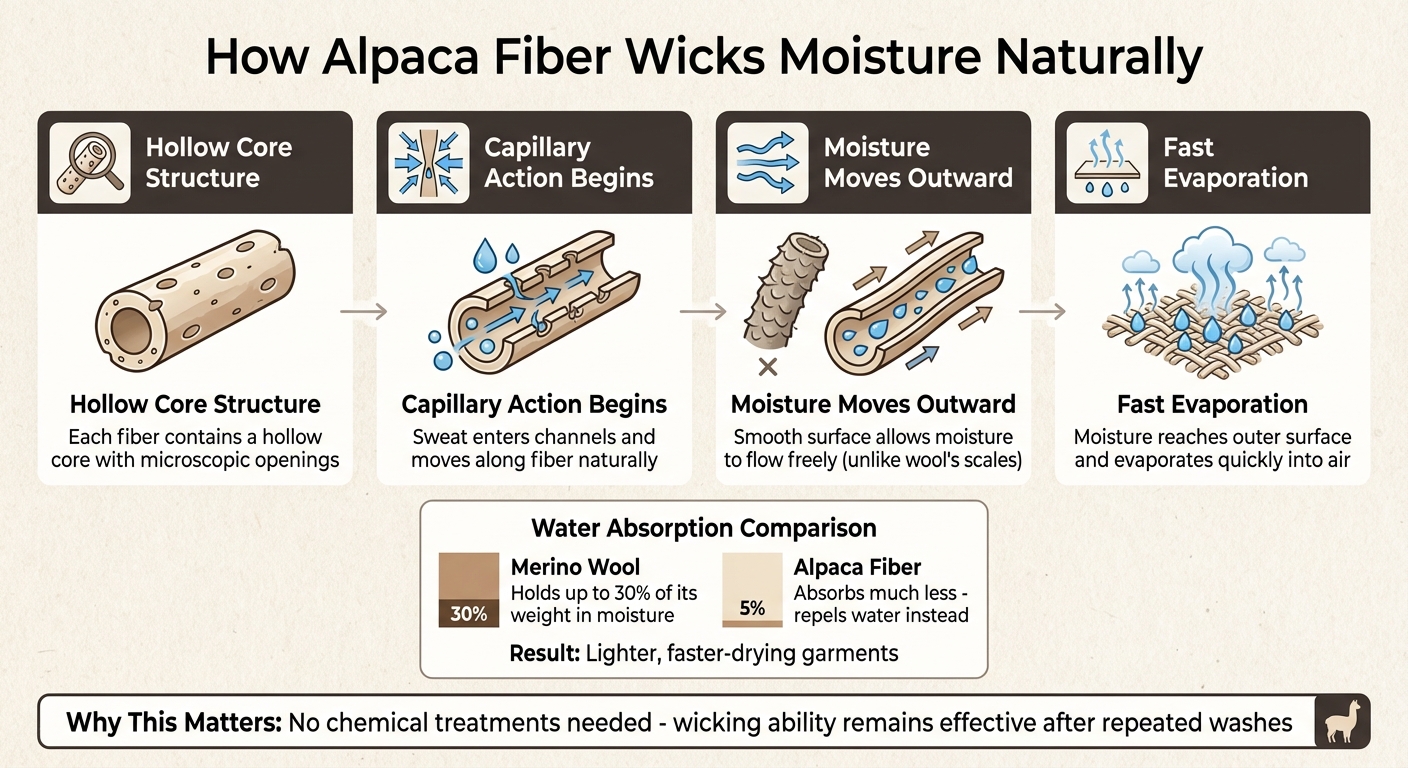
How Alpaca Fiber Wicks Moisture: The Natural Process Explained
Alpaca fiber has an impressive ability to wick moisture, thanks to its unique structure. Each strand contains a hollow or semi-hollow core - imagine a tiny straw running through the fiber. This core creates natural channels that efficiently transport moisture. As you sweat, the moisture enters these channels through microscopic openings and moves along the fiber via capillary action. From there, it travels to the fabric’s outer surface, where it evaporates into the air. Unlike sheep’s wool, which has scales that trap moisture, alpaca fiber’s smooth surface allows moisture to flow freely.
Capillary action is the key to alpaca fiber’s moisture-wicking magic. The hollow core acts like a built-in transport system, pulling sweat away from your skin without the need for chemical treatments. This natural mechanism ensures that the fiber’s wicking ability remains effective even after repeated washes.
One of alpaca fiber’s standout features is its low water absorption. Unlike merino wool, which can hold up to 30% of its weight in moisture before feeling wet, alpaca fiber absorbs much less. Instead of soaking up water, it repels it, moving moisture along its surface. This means garments made from alpaca fiber stay lighter and dry faster, even during intense physical activity. The combination of moisture transport and quick evaporation helps keep you comfortable and dry.
"Alpaca is moisture wicking to a lesser extent [than Merino in terms of absorption], and it tends to be more water repellent."
– Ridge Merino
The hollow structure of alpaca fiber doesn’t just move moisture - it also speeds up evaporation. These internal channels carry more sweat than solid fibers, preventing saturation. Once the moisture reaches the outer surface, it evaporates quickly, helping to regulate body temperature and remove excess heat. Unlike synthetic fabrics that rely on chemical coatings for moisture management, alpaca fiber’s wicking ability is a built-in feature that won’t diminish over time.
Alpaca fiber stands out for its ability to manage moisture effectively, making it a top choice for comfortable, high-performing daily wear.
Thanks to its moisture-wicking nature, alpaca fiber is an excellent option for activewear. Its hollow fibers work to pull sweat away from your skin and release it on the surface, where it evaporates quickly. This keeps you cool during intense activities and prevents overheating. What’s more, alpaca fiber adjusts to your activity level. For instance, during a strenuous hike, it allows heat to escape, but when you take a break, its air pockets help retain warmth - even if the fabric is slightly damp. This adaptability makes it a practical choice for a variety of physical activities.
One of alpaca fiber's standout qualities is its ability to regulate temperature naturally. By trapping air for insulation while still releasing moisture, it provides warmth without causing overheating. Compared to merino wool, alpaca fiber offers better thermal efficiency, meaning garments can be thinner yet just as warm - or even warmer.
"Dry skin feels warmer in cold conditions and cooler in warm conditions - a key factor in thermal comfort." - ALPACORE
Alpaca's breathable nature ensures proper air circulation, maintaining comfort across different seasons. Whether it’s summer or winter, alpaca garments can adapt to your needs. Choose styles that align with your activity level and the climate for the best results.
Alpaca fiber doesn’t just perform well - it’s also built to last. Known for its strength, it creates garments that can endure daily wear while remaining environmentally friendly. To maximize their lifespan, wash alpaca items in cold water with a gentle detergent and skip fabric softeners, which can affect the fiber's performance. Performance alpaca socks, for example, typically contain 60–70% natural fiber, ensuring effective temperature regulation and contributing to their sustainable appeal.
Alpaca products are known for their ability to keep you dry and comfortable, whether you're hitting the trails or crafting something special. From athletic socks to versatile yarn, these items make the most of alpaca fiber's natural ability to manage moisture through capillary action and evaporation. Let’s dive into some standout alpaca products.
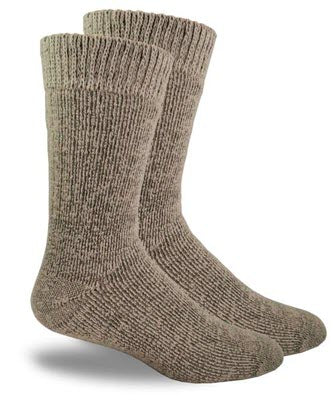
Looking for socks that can keep up with your active lifestyle? Alpaca Direct’s Adventure Alpaca Socks are a great choice. Designed with mesh instep panels and Alpaca DryFusion Technology®, they wick moisture 85% better than Merino wool. Made from 50% alpaca, 35% acrylic, 8% spandex, and 7% nylon, these socks have received high praise, earning a 4.84/5 rating from 140 reviews. They’re currently available for $89.10.
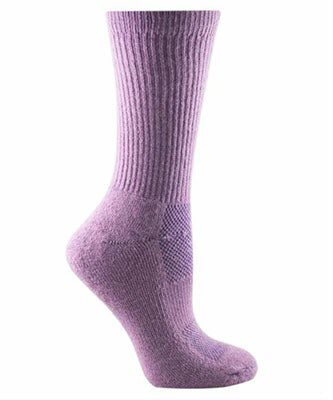
Another excellent option is the Endurance Athletic Socks, crafted for high-impact activities. These socks feature micro-mesh venting and reinforced heels and toes for durability, along with deep heel cups to prevent slipping. At $25.00, they’re made of 42% alpaca, 28% acrylic, 18% nylon, and 12% spandex, and hold a 4.47/5 rating from 19 reviews.
"Unbelievable comfort in these socks! I love them. Very warm but breathable that you don't sweat up your shoes either." – Andrew Tanchyk
To maintain their performance, follow these simple care instructions: machine wash in cold water and lay flat to dry. Avoid using a dryer, as it may cause shrinkage.
Alpaca yarn is a dream material for crafting lightweight, breathable accessories. Its hollow fiber structure helps regulate temperature naturally, making it perfect for year-round projects like scarves, hats, and even athletic socks. Plus, its lanolin-free, antimicrobial properties make it a safe option for those with sensitive skin.
Whether you’re knitting running headbands, hiking socks, or breezy summer wraps, alpaca yarn combines comfort and functionality. For inspiration and tutorials, check out Alpaca Direct’s YouTube channel: https://www.youtube.com/@AlpacaDirect.
Alpaca fiber stands out for its ability to wick moisture through its hollow structure, drawing sweat away via capillary action for quick evaporation. This helps regulate body temperature effectively - keeping you warm during chilly weather and cool when it’s hot - all while retaining insulation, even when damp.
For crafting enthusiasts, alpaca yarn offers excellent versatility. Its natural temperature-regulating and hypoallergenic qualities make it perfect for projects that can be enjoyed year-round.
These advantages are not limited to yarn. A variety of alpaca-based products benefit from these properties. To maintain their breathability, choose items containing 60–70% natural alpaca fiber and wash them in cold water without fabric softeners. Whether you’re looking for high-performance socks or premium yarn for your next creation, Alpaca Direct has a wide selection to explore.
Alpaca fiber is impressive when it comes to handling moisture. Even when damp, it continues to wick away moisture effectively. It absorbs just 8–11% of its weight in water, which means it dries quickly and helps keep you dry and comfortable. This natural characteristic makes it a great option for staying cozy in a range of conditions.
Alpaca is a fantastic option for all seasons. Its hollow fibers offer natural insulation, excellent breathability, and moisture-wicking properties. This means it keeps you cozy during winter and cool during summer, making it an ideal choice for year-round comfort.
To keep alpaca socks or yarn performing at their best, especially their moisture-wicking abilities, proper care is key. Start by gently washing them in cold water with a mild detergent that's safe for wool. Hand washing is ideal, as it minimizes the risk of damage. Be careful not to wring or twist the fibers, as this can lead to shrinkage. Once clean, lay them flat to dry to maintain their shape and softness. These steps ensure the alpaca's natural properties stay intact, keeping you cozy and comfortable.

Comments will be approved before showing up.