Your Cart is Empty


Alpaca yarn is an excellent choice for baby clothes because it’s soft, warm, hypoallergenic, and long-lasting. Babies have delicate skin, struggle with temperature regulation, and need durable clothing. Alpaca yarn addresses these needs with its smooth fibers, superior insulation, and lanolin-free composition. It’s ideal for sensitive skin, keeps babies cozy without bulk, and resists wear and tear over time.
Alpaca yarn is perfect for items like hats, booties, sweaters, and blankets. While it’s less elastic than wool, blending it with merino can improve stretch for fitted garments. Though pricier than synthetic options, its quality and longevity make it a worthwhile investment, creating heirloom-worthy pieces.
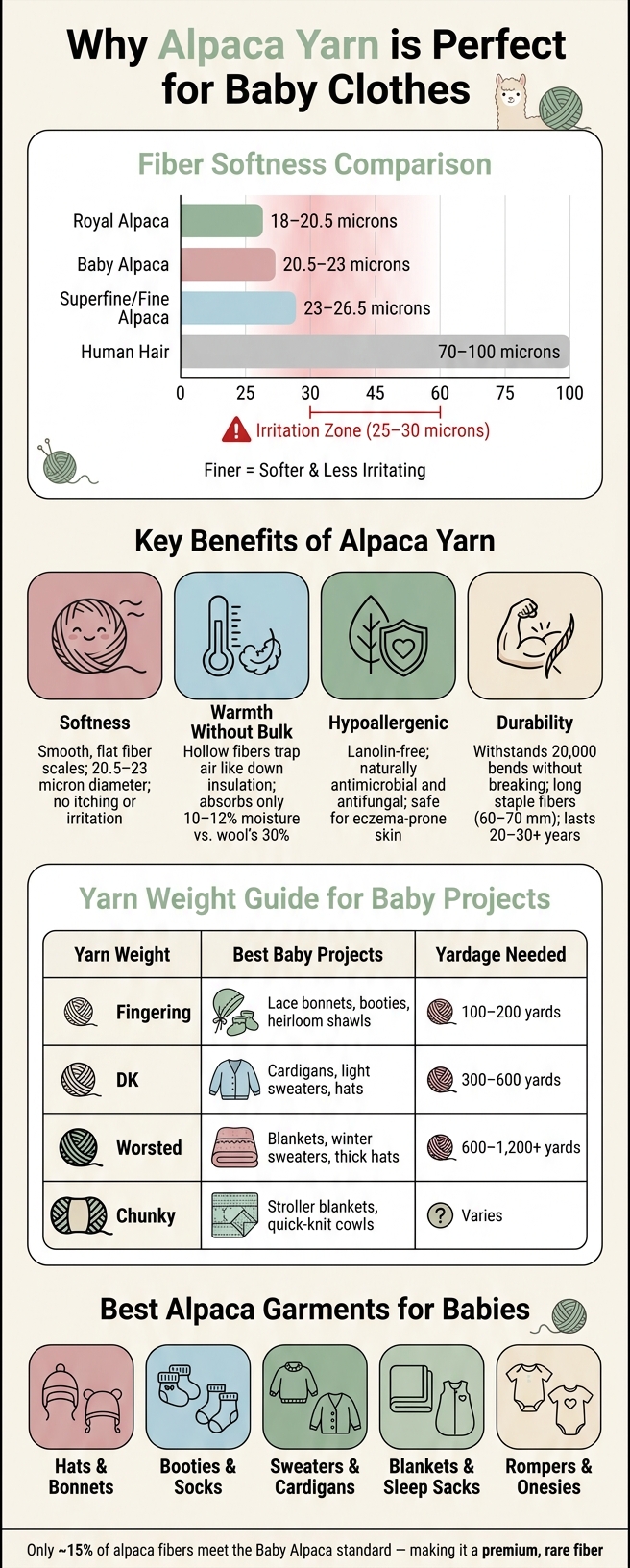
Alpaca Yarn vs. Other Fibers for Baby Clothes: Key Benefits at a Glance
A baby's skin is incredibly sensitive - much more so than an adult's - and it doesn’t take much for it to react to rough or unsuitable fabrics. Standard sheep's wool is a common offender because of its microscopic barbed scales, which can catch on the skin and cause a scratchy, prickly sensation. This discomfort can lead to fussiness, redness, or even rashes. On the other hand, synthetic fibers bring a different issue: they trap heat and moisture, creating a warm, damp environment that irritates a baby’s delicate skin. Alpaca yarn, however, provides a gentle, soothing alternative that avoids these problems entirely.
The secret to alpaca yarn’s softness lies in its unique fiber structure. Unlike sheep's wool, which has thick, barbed scales that poke and irritate, alpaca fibers have smooth, flat scales that glide against the skin. As Sierra Yarn explains:
"Unlike traditional wool, which can have barbed scales that create that scratchy, prickly sensation, alpaca has smooth, short scales. This means no itching, no irritation - just pure softness."
Another factor is the fineness of the fiber itself. Baby alpaca, a term used to describe the finest alpaca fibers (not fiber from young animals), typically measures 20.5 to 23 microns in diameter. For comparison, Royal Alpaca, the finest grade available, can be as thin as 18 microns, while the average human hair measures between 70 and 100 microns. The finer the fiber, the better it conforms to the skin, reducing the chances of irritation.
| Alpaca Grade | Micron Range | Best For |
|---|---|---|
| Royal Alpaca | 18–20.5 microns | Luxury baby items, ultimate softness |
| Baby Alpaca | 20.5–23 microns | Hats, blankets, and next-to-skin garments |
| Superfine/Fine | 23–26.5 microns | Everyday baby wear |
For baby-related projects, Baby Alpaca and Royal Alpaca are the top choices due to their ultra-soft texture and low micron counts.
Alpaca yarn’s softness brings comfort to everyday baby essentials. Take hats, for example: a newborn’s sensitive scalp can easily become irritated by rough or itchy materials. Alpaca’s smooth fibers are a perfect solution, offering comfort without irritation. Similarly, booties made with alpaca yarn benefit from its moisture-wicking properties, keeping tiny feet dry and cozy. Sweaters and cardigans are another excellent match, especially as base layers, where non-itchy textures are crucial for keeping babies comfortable and happy.
For knitters, it’s worth noting that alpaca yarn has less natural elasticity compared to wool. If you’re working on ribbed items like fitted hats, consider using an alpaca-merino blend. The merino adds elasticity, helping the garment hold its shape while maintaining that signature alpaca softness.
Beyond being soft, alpaca yarn stands out for its ability to provide warmth without adding unnecessary bulk.
Babies need to stay warm, but heavy clothing can be a problem. Thick sweaters or synthetic fabrics often restrict movement and can lead to overheating. The challenge lies in finding a way to keep babies cozy without layering on heavy, uncomfortable clothing.
Alpaca yarn addresses this issue thanks to its special fiber structure. Each fiber is hollow at its core, creating tiny air pockets that trap heat effectively. Sierra Yarn highlights this feature:
"Alpaca fibers contain microscopic air pockets that trap heat efficiently, like the natural insulation found in down jackets."
This hollow design gives alpaca an impressive warmth-to-weight ratio, meaning a lightweight alpaca sweater can offer the same warmth as a much thicker wool garment - minus the bulk. These air pockets also make alpaca breathable and thermoregulating, which is ideal for baby clothing. The fibers adapt to body temperature, keeping babies warm when it’s chilly but allowing excess heat to escape when it’s warmer. This combination ensures that alpaca garments are not only warm but also incredibly comfortable.
Another advantage of alpaca is its natural moisture-wicking properties. Unlike many other wools that can absorb up to 30% of their weight in moisture, alpaca absorbs only 10–12%. This means that even if a baby sweats or deals with a wet diaper, the fabric pulls moisture away from the skin, helping to keep them dry and comfortable.
Lightweight alpaca layers can match the warmth of heavier fabrics, making them perfect for car seat blankets, sleep sacks, and other layering pieces. As Selva Calderon of Pan American Apparel notes:
"Lighter outerwear means your little one stays comfortable and is more likely to keep that fancy Alpaca sweater on and play outside longer!"
In addition to its incredible softness and lightweight warmth, alpaca yarn is a standout choice for babies due to its hypoallergenic qualities - perfect for delicate, sensitive skin.
A baby’s skin is far more delicate and reactive than an adult’s. Many common knitting fibers, like sheep’s wool, contain lanolin - a natural wax that often causes redness, itching, or rashes in newborns. Lanolin also traps dust and microscopic allergens, which can aggravate respiratory sensitivities or conditions like eczema. Even fibers that feel soft to the touch can still irritate a baby’s sensitive skin.
Alpaca fiber avoids these problems entirely because it’s lanolin free and has a smooth, irritation-minimizing surface. As Alpaca Direct explains:
"Alpaca too, is lanolin free (lanolin holds dust and microscopic allergens that create allergies to wool), which allows for the hypoallergenic nature of the fiber."
The absence of lanolin means alpaca fibers are less likely to trap allergens, while their smooth, low-friction structure reduces skin irritation. Importantly, alpaca fibers remain below the 25–30 micron threshold, where irritation typically begins. As Kuna notes:
"Human skin begins to perceive irritation when fibers exceed the 25 to 30 micron threshold. By remaining rigorously below this limit, baby alpaca feels like a caress."
Additionally, alpaca yarn contains natural anti-microbial and anti-fungal properties thanks to the keratin in its fibers. This helps keep garments fresh and lowers the risk of skin infections - benefits that are especially valuable for babies prone to eczema.
Alpaca’s softness, warmth, and hypoallergenic nature make it ideal for garments that have direct contact with a baby’s skin. For example, under-helmet hats are a great choice since they rest against sensitive areas like the scalp and ears, where irritation can occur quickly. Similarly, snug booties and socks benefit from alpaca’s smooth fibers, which avoid the discomfort caused by coarser materials. For babies with eczema or known sensitivities, base-layer rompers and sweaters made from 100% baby alpaca provide a safe and comfortable alternative to blended fibers.
| Garment | Why Alpaca Works Well |
|---|---|
| Under-helmet hats | Smooth fibers prevent scalp irritation |
| Booties & socks | No coarse fibers to irritate tiny feet |
| Rompers & onesies | Lanolin-free fiber lowers full-body rash risk |
| Blankets & bedding | Naturally resistant to dust mites; safe for respiratory sensitivities |
For babies with extreme sensitivities, a smart approach is to knit a small swatch - like a wristband - and let the baby wear it for a day. This simple test ensures there’s no reaction before committing to a larger project. It’s a thoughtful way to combine care with creativity.
If you've ever knitted or purchased baby clothes, you know the struggle. A cozy sweater starts pilling after just a few washes, a romper loses its shape, or a cute little hat wears out faster than you'd expect. Baby clothes go through a lot - constant washing, drooling, crawling, and playing - and many fabrics just can't keep up with that level of use.
Alpaca yarn isn't just soft and warm - it’s also impressively durable, which makes it an excellent choice for baby garments. Alpaca fibers can withstand up to 20,000 bends without breaking, an incredible feature for such a fine material. Its smooth texture helps prevent pilling, so clothes stay looking fresh even after repeated use. The long staple fibers (measuring 60–70 mm) remain securely spun, reducing shedding and helping garments keep their shape. Plus, alpaca's lanolin-free nature means it resists dirt and dust, which means fewer washes - and less wear over time.
"Alpaca garments are less likely to develop those annoying little balls of fiber that plague cheaper fabrics." - Clothing Digest
While alpaca yarn is strong, it does have less natural elasticity compared to merino wool. This means that ribbed cuffs or neckbands might lose some shape over time. To counter this, blending alpaca with merino or silk can help add stretch recovery for projects where elasticity is key.
"Beautiful alpaca pieces will last longer than most any other luxury fiber, including other wools, cashmere, and silk. These attributes make... Baby Alpaca clothing a heirloom that can be passed to younger siblings and through generations." - Pan American Apparel
With proper care, alpaca garments can maintain their quality for decades.
Taking care of alpaca baby knits is simple but essential to ensure their longevity. Here’s how to keep them in top condition:
When cared for properly, high-quality alpaca baby knits can last 20 to 30 years or more, making them treasured keepsakes that can be handed down through generations.
Picking the right alpaca yarn involves considering its weight and fiber grade to create baby knits that are cozy, durable, and visually appealing.
The weight of the yarn plays a big role in how a finished piece looks, how warm it feels, and how much time it takes to complete. For baby projects, fingering, DK, and worsted weights are the most practical options.
| Yarn Weight | Ideal Baby Projects | Yardage Needed |
|---|---|---|
| Fingering | Lace bonnets, delicate booties, heirloom shawls | 100–200 yards |
| DK | Cardigans, light sweaters, hats | 300–600 yards |
| Worsted | Blankets, winter sweaters, thick hats | 600–1,200+ yards |
| Chunky | Stroller blankets, quick-knit cowls | Varies |
For baby knits, DK weight strikes a nice balance by knitting up quickly while offering softness and clear stitch definition. If you're making something that needs extra warmth, like a blanket, worsted weight is the better choice.
One thing to note: pure alpaca yarn has less elasticity than wool. This can make fitted pieces like ribbed hats or cuffed sleeves lose their shape over time. To avoid this, consider using an alpaca-merino blend. The merino adds elasticity, helping garments maintain their fit even after washing.
While yarn weight is crucial, the fiber quality is just as important for baby projects.
In addition to weight, the quality of the fiber makes a big difference. Interestingly, "baby alpaca" refers to the fineness of the fiber, not the age of the animal. Baby alpaca fibers measure between 19 and 22.9 microns, making them incredibly soft and smooth - perfect for a newborn's delicate skin.
"Baby alpaca takes this softness to the next level. With finer fibers measuring around 18–23 microns (compared to human hair at 100 microns), baby alpaca feels like touching a cloud." - Sierra Yarn
For garments that will be in direct contact with a baby's skin, baby alpaca fiber is the ideal choice. Its fineness minimizes irritation and maximizes comfort.
Only about 15% of alpaca fibers meet the "baby alpaca" standard, which is why it’s considered a premium option. If you're looking for an all-natural alternative without chemical dyes, check out eco alpaca yarns. These yarns come in the 22 natural shades of alpaca fleece, ranging from white and fawn to gray and black. Retailers like Alpaca Direct offer a variety of baby alpaca yarns, including those in natural colorways, making it easy to find the perfect match for your project.
Alpaca yarn combines a rare mix of qualities, making it an ideal choice for baby clothes. It's incredibly soft, lightweight yet warm, hypoallergenic due to its lanolin-free nature, and impressively durable. These features ensure that garments made from alpaca yarn are not only comfortable but also stand the test of time, even as babies grow quickly.
The practical advantages are just as compelling. A hand-knit alpaca blanket, for example, is more than just cozy - it’s naturally antimicrobial, moisture-wicking, and resistant to fire. This blend of comfort and functionality makes alpaca yarn a standout option for baby knitting projects.
"Baby alpaca is, in our experience, the only fibre that a dog [or sensitive skin] will consistently lean into." - Colette et Gastón
This quote highlights the unparalleled gentleness of baby alpaca fiber, making it a trusted choice for sensitive newborn skin. Its softness and reliability set it apart, ensuring garments that are both comforting and enduring.
For items like hats, booties, and sleep sacks - pieces that come into direct contact with a baby’s skin - starting with baby alpaca fiber is a smart move. Brands like Alpaca Direct offer a range of baby alpaca yarns in natural colors, allowing you to avoid chemical dyes entirely. They also provide helpful resources, such as project tutorials and technique tips, on their YouTube channel.
While alpaca yarn may cost more upfront compared to acrylic or standard wool, its long-term value is undeniable. Each piece becomes more than just baby wear - it’s an heirloom in the making. A well-crafted alpaca garment can be passed down to siblings or even future generations, making it a worthwhile investment for those special baby projects.
Alpaca yarn is a great choice for babies with eczema or sensitive skin. Its hypoallergenic fibers contain little to no lanolin, which is often a culprit behind skin irritation. Plus, the yarn's smooth and fine texture reduces the risk of itching or friction, making it especially gentle on delicate baby skin.
Alpaca fiber tends to have less elasticity compared to certain types of sheep’s wool, which means features like ribbed edges might loosen or stretch with use. That said, Huacaya alpaca fiber - known for its natural crimp and elasticity - can allow garments to stretch during wear and then bounce back to their original shape. Alpaca is highly regarded for its softness and elegant drape, so choosing the right material and caring for it properly can help preserve the fit and overall quality of baby clothes made from alpaca.
No, you shouldn’t machine-wash alpaca baby knits. Alpaca fiber is delicate and can easily felt when exposed to agitation or heat. The safest way to clean these garments is to hand wash them in cold water. Skip the fabric softener, as it can damage the fibers, and avoid wringing or tumble drying. Instead, gently press out excess water and lay the item flat to dry in the shade.
Looking for more advice on caring for handmade pieces? Check out Alpaca Direct’s tutorials and educational resources!

Comments will be approved before showing up.