
How to Label and Sort Crochet Hooks by Size

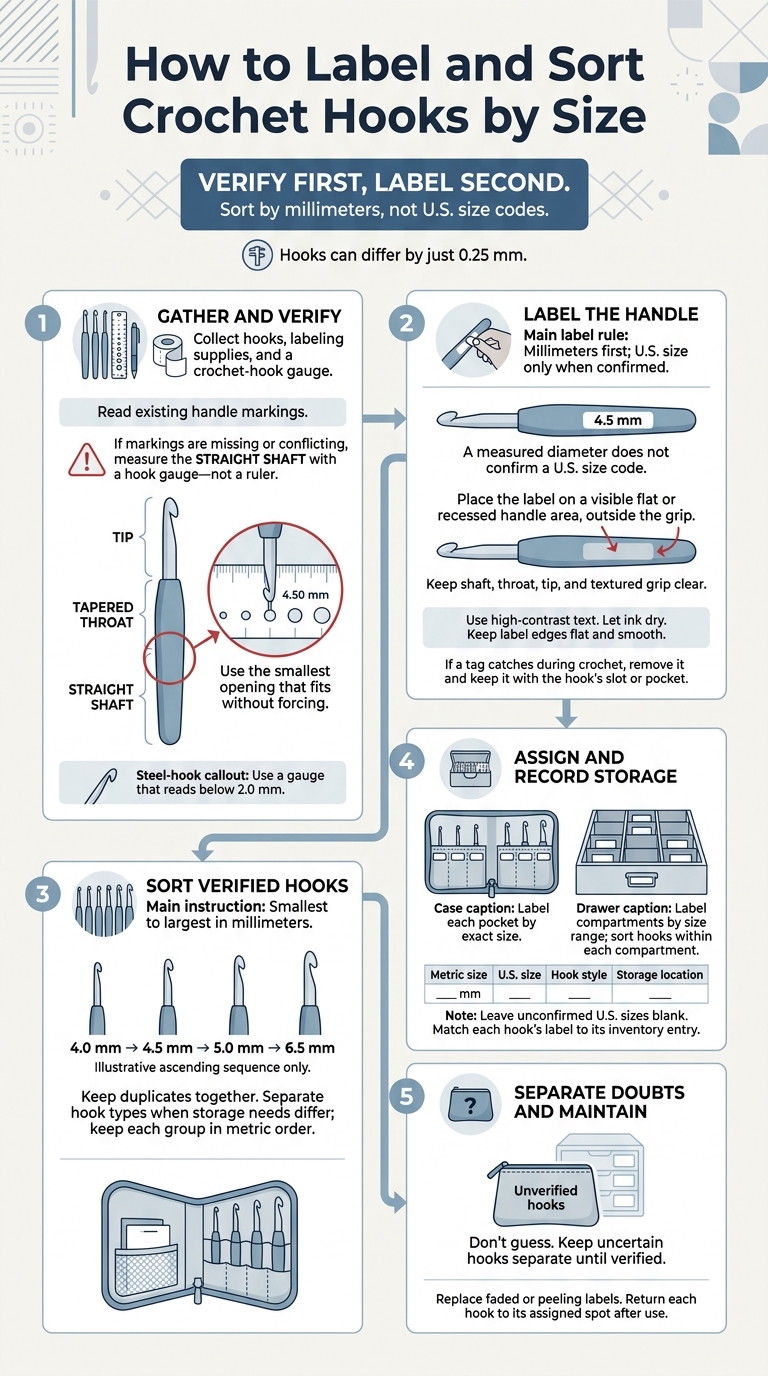
I sort crochet hooks by millimeters, not U.S. size codes: check the size, label the handle, and store hooks from smallest to largest. Hooks can differ by just 0.25 mm, so I use a hook gauge - not a ruler - when markings are missing.
Here’s my checklist:
- Gather and check: Collect every hook and labeling supplies. Use a gauge that reads below 2.0 mm for small steel hooks.
- Label clearly: Put millimeters first and add a U.S. size only when confirmed. Keep labels off the shaft, throat, tip, and grip.
- Give each hook a home: Group duplicates, label pockets by exact size or drawers by size range, and record each hook’s location.
- Keep doubts separate: I set aside unverified hooks, replace worn labels, and return each hook after use.
My rule: <u>verify first, label second</u>. A tidy case helps only when the sizes are right.
How to Label and Sort Crochet Hooks by Size
Check Hook Sizes in Millimeters
Read each hook’s size before labeling it. If you are new to the craft, you can learn to knit and crochet with our free guides. Check the handle for markings; most hooks list both U.S. and metric sizes there. Sort by millimeters, and use a conversion chart only when a hook lists both U.S. and metric sizes.
Measure Hooks With Missing Markings
If a size marking has worn off or is missing, measure the straight shaft with a crochet-hook gauge. For a hole-style gauge, use the smallest opening that fits the shaft without forcing it. Keep the handle and tapered throat out of the measurement.
Measure steel hooks the same way, but check their smaller sizes carefully.
Check Steel Hook Sizes Separately
Use a gauge that measures below 2.0 mm, since steel hooks often fall below that size.
Add Clear Size Labels
Label each hook with the size you just verified. Stick to one format: millimeters first, followed by the U.S. size only if confirmed. If the U.S. code is uncertain, use the metric size alone. A measured diameter does not confirm a U.S. size code.
Choose Labels That Fit the Handle
Test a fine-point permanent marker on a hidden spot before writing the label. Use wraparound labels only on smooth handles, and make sure every edge lies flat. For hooks you don’t want to mark permanently, choose removable writable tags. Use high-contrast text and let the ink dry completely.
Place each label on a flat or recessed spot that you can see while the hook is stored. Keep the shaft, throat, and tip clear, and avoid textured grip areas. Run a fingertip over the label to check that it feels smooth - not sharp, sticky, or loose.
If a tag catches while you crochet, remove it and store it with the hook’s slot or pocket. Once all hooks have clear labels, sort them by size as part of your knitting supply organization.
Check Labels Against Your Inventory
Before putting each hook away, match its label to your inventory. Note any manufacturer differences or unconfirmed codes. Make sure you can read the label in storage without moving neighboring hooks. Replace labels that fade, peel, or become hard to read.
Arrange the hooks from smallest to largest in their case or drawer.
Sort Hooks From Smallest to Largest
Once every hook is labeled, arrange your verified hooks from smallest to largest in millimeters, including half sizes like 4.5 mm and 6.5 mm. Keep duplicates together, or browse our selection of crochet hooks if you need to replace missing sizes. Store hook types separately when they need different storage, keeping each group in metric size order.
Record Sizes and Storage Locations
Use your inventory to link each verified hook size to its exact storage spot. Fill in the template below, and leave any unconfirmed U.S. sizes blank.
| Metric size | U.S. size | Hook style | Storage location |
|---|---|---|---|
| ___ mm | ___ | ___ | ___ |
Follow this same order on your storage labels so you can find hooks fast.
Label Case Pockets in Size Order
Label case pockets from smallest to largest, giving each pocket an exact hook size.
Label Drawer Compartments by Size Range
Label each drawer compartment with a size range. Then arrange the hooks inside from smallest to largest.
Conclusion: Check Labels and Keep Hooks in Order
Once you’ve sorted your hooks, give the setup a final check. Each verified hook should have a readable millimeter label on its handle, a confirmed U.S. designation when applicable, and a spot in ascending size order within its group.
If the markings conflict, remeasure the shaft with a hook gauge and check the metric size against a conversion chart. Don’t guess. Keep knitting needles and crochet hooks you haven’t verified in a separate bag or pouch, away from your main project tools, until you can confirm their sizes.
Return each hook to its assigned spot after use to keep the system accurate.
FAQs
How do I size a hook that falls between gauge holes?
If your crochet hook falls between standard gauge holes, use a dedicated needle and hook gauge to measure its shaft diameter in millimeters, the standard unit for hook sizing. This is especially helpful when size markings are missing or faded.
The Alpaca Direct Needle & Hook Gauge includes both standard and metric sizes, so you can sort your hooks and keep your project gauge consistent.
How can I label hooks with no flat handle space?
Label the storage spaces, not the hooks. Choose a case or tray with individual slots or dividers. Then use washi tape or adhesive labels to mark each space with the hook size in both U.S. and metric measurements.
If the size markings on your hooks have worn off, check them with an Alpaca Direct Needle & Hook Gauge before putting them in their labeled spots.
Should I separate same-size hooks by brand or style?
Sort same-size hooks by material first, rather than by brand or style. Metal hooks can nick softer wooden or bamboo hooks if they’re stored together.
Organize hooks by size, then separate materials into different compartments or individual slots in your case. This helps prevent wear and protects specialized finishes.