
Alpaca vs. Alpaca Blend Yarn for Simple Knit Scarves

For a first scarf, I’d choose an alpaca-wool blend for more spring and shape recovery - or pure alpaca for a softer drape. Neither is always softer: fiber fineness matters. I’d start with worsted-weight yarn and US size 8 (5 mm) needles, then wash and dry a swatch before choosing the scarf’s size.
Here’s what I’d check:
- Feel and warmth: Test the dry swatch against your neck. Warmth depends partly on fabric density.
- Stretch and structure: Pure alpaca can lengthen with wear. Wool adds bounce, nylon adds strength, and cotton adds weight with little spring-back.
- Stitch clarity: Firm plies help stitches show; a fuzzy halo can hide them. Garter and seed stitch are simple, reversible choices.
- Size and care: Use washed gauge to plan width and yardage. <u>Follow the yarn label</u>, support the wet scarf, dry it flat, and store it folded.
Quick Comparison
| What I’d compare | Pure alpaca (100%) | Alpaca blends |
|---|---|---|
| Softness | Depends on fiber fineness | Depends on fineness and fiber mix |
| Drape and weight | Fluid; can stretch lengthwise | Wool adds structure; cotton adds weight |
| Shape recovery | Limited spring-back | Wool often improves recovery |
| Stitch clarity | Halo may blur stitches | Depends on twist, plies, and halo |
| Strength | Depends on yarn construction | Nylon can add strength |
| Care | Generally hand-wash and dry flat | Check the label; not always machine-washable |
My deciding test: how the washed swatch feels, stretches, and holds its shape - not just what the label says.
Knitting Alpaca Scarves
Pure Alpaca vs. Alpaca Blends: How They Compare
Neither is better for every scarf. Fiber mix, percentage, and yarn construction affect how a scarf feels and wears. The comparisons below are common tendencies, not guarantees. A swatch helps you see the differences, especially after washing.
| Feature | Pure alpaca | Alpaca blends |
|---|---|---|
| Softness | Depends on fiber fineness | Depends on fiber mix and fineness |
| Stretch | Can lengthen with wear | Varies by blend |
| Recovery | Limited spring-back | Wool often adds spring |
| Drape | Fluid | Wool adds structure; cotton adds weight |
| Stitch definition | Halo can blur stitches | Firm plies and less halo improve clarity |
Softness, Warmth, and Drape
Fiber fineness matters more for softness than whether the yarn is pure alpaca. “Baby alpaca” refers to fiber fineness - usually 19–22.9 microns - not the animal’s age.
Fabric density affects warmth. Fiber mix and construction determine whether your scarf drapes lightly or feels heavy. Test a washed, fully dried swatch against your neck to check comfort. Then compare how each yarn stretches and holds its stitches.
Stretch, Shape Recovery, and Stitch Definition
Stretch is how much the fabric lengthens. Recovery is how well it springs back - a quality pure alpaca often lacks. Wool can help, though the amount of recovery depends on its percentage and the yarn’s construction.
Firm, multi-ply yarn makes stitches easier to read, while a strong halo can blur stitch texture. Knowing how the yarn behaves helps you plan your gauge and scarf size.
What Wool, Nylon, and Cotton Add
Added fibers change your scarf’s bounce, strength, and weight.
| Added fiber | Effect on a beginner scarf |
|---|---|
| Wool | Adds bounce and recovery; untreated wool can felt or shrink with unsuitable washing |
| Nylon | Adds strength; care still depends on the other fibers |
| Cotton | Adds weight with little recovery |
The fiber proportions and yarn construction determine how much you’ll notice each trait. Wool helps a scarf hold its shape, nylon adds durability, and cotton gives it a heavier drape. These differences also affect gauge, so check them in a swatch before choosing your scarf’s dimensions.
Planning Gauge, Stitches, and Scarf Size
Wash and Measure Your Gauge Swatch
Knit a large swatch in your planned stitch pattern. For worsted-weight yarn, US size 8 (5 mm) needles are a good starting point. Wash the swatch and let it dry completely before measuring. This shows how pure alpaca or a blend behaves off the needles. Count the stitches per inch across the center.
Cast-on stitches = washed stitches per inch × desired scarf width in inches. Use your swatch, finished dimensions, and yarn weight to estimate yardage. If the fabric feels too loose, try smaller needles and swatch again. Your washed gauge will help you settle on a stitch pattern with the look and structure you want.
Choose Garter Stitch or Seed Stitch
Garter stitch is the simplest reversible option: knit every row. If you can knit and purl, seed stitch adds texture. Both help you judge how clearly the yarn shows each stitch.
Swatch your chosen pattern before setting the scarf’s size, since texture affects both width and yarn use. Textured edges can add shape, but alpaca still has less spring than wool.
Plan for Lengthwise Growth
Your washed swatch helps you judge fabric density, but a long scarf may behave differently. Pure alpaca drapes well, yet it can lengthen over time - especially in larger pieces. Allow for more growth than you would with a blend that springs back better.
If the fabric feels loose or heavy, consider a shorter scarf or a lighter yarn weight rather than sticking to your planned dimensions. Once you’ve set the size, gentle care will help the fabric hold its shape.
Caring for Your Finished Scarf
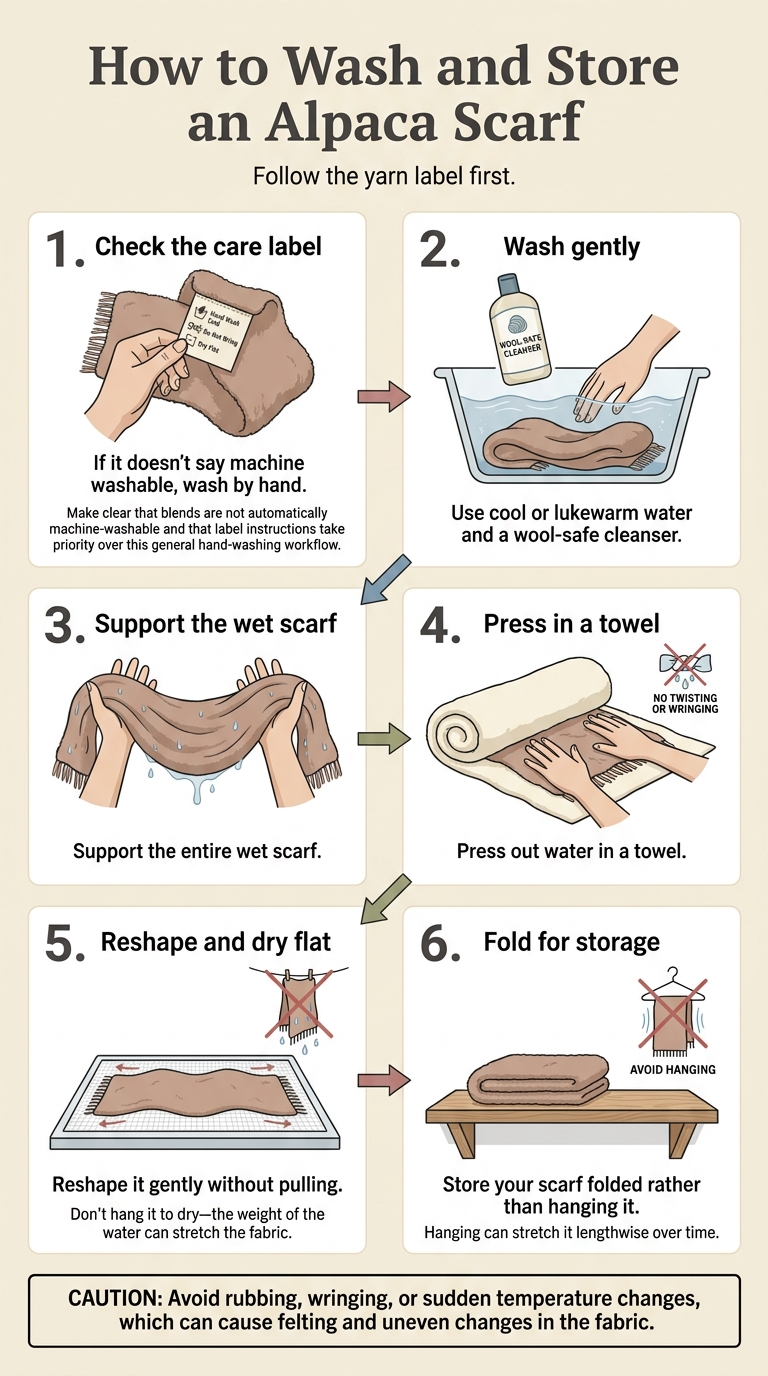
How to Wash and Store an Alpaca Scarf
Pure alpaca and alpaca blends respond differently to washing, which can change your scarf’s drape and finished size. Follow the yarn label first. If it doesn’t say machine washable, wash by hand. Pure alpaca is especially prone to stretching and felting with rough washing or drying. Gentle washing and flat drying help keep the scarf’s intended fit.
Wash Gently and Dry Flat
Use cool or lukewarm water and a wool-safe cleanser. Avoid rubbing, wringing, or sudden temperature changes, which can cause felting and uneven changes in the fabric.
Support the entire wet scarf, press out water in a towel, then lay it flat. Reshape it gently without pulling. Don’t hang it to dry - the weight of the water can stretch the fabric.
Fold for Storage
Store your scarf folded rather than hanging it. Alpaca has limited ability to spring back into shape, so hanging can stretch it lengthwise over time.
Conclusion: Choose by Feel, Recovery, and Care
Choose pure alpaca for maximum softness and drape. A wool-alpaca blend often gives beginners more bounce, makes knitting tension easier to control, and helps finished pieces recover their shape. Stitch definition and durability depend on the fiber mix and yarn construction - not just the label.
The washed swatch is the final test. Use it to decide which yarn feels best and behaves most predictably.
Visit Alpaca Direct for yarns and its YouTube channel for tutorials. Before buying, check the yardage, then make fiber content and care instructions your final two checks.
FAQs
What alpaca-to-wool ratio is best for my first scarf?
There’s no required ratio, but a 50/50 alpaca-wool blend is a good starting point for your first scarf. Pure alpaca feels very soft and drapes well, but it lacks elasticity, so it can stretch or lose shape over time. A 50/50 blend pairs alpaca’s softness with wool’s springiness and structure. That makes the yarn easier to work with as you learn to keep your tension even.
How can I test my scarf yarn for stretching?
Before starting your scarf, knit a large gauge swatch with about 10 extra stitches to help prevent the edges from curling. Block the swatch as you would the finished scarf. Then hang it with a small weight attached to mimic how the scarf will stretch under its own weight.
This gives you a preview of how the yarn will behave. Alpaca lacks wool’s elasticity, so it won’t naturally spring back into shape.
Can I reshape an alpaca scarf that has stretched?
Alpaca fibers lack natural elasticity and memory, so they won’t spring back once stretched. Gentle wet-blocking can help reshape your scarf.
Hand wash it in cool water with a mild cleanser. Gently press out excess moisture - don’t wring or agitate the fabric. Lay the scarf flat on a towel or blocking mat, shape it to your desired dimensions, and pin it if needed. Let it air dry completely before removing the pins.