Your Cart is Empty



Blocking is the key to keeping your alpaca sweater in great shape. This process smooths the fabric, evens out stitches, and sets the sweater's dimensions without damaging delicate fibers. Whether you're finishing a new project or maintaining an old favorite, blocking helps your sweater look polished and fit well. Here's a quick breakdown of the three main methods:
To maintain your sweater's shape, always store it flat, avoid hanging, and reblock after washing. Hand washing with lukewarm water and gentle detergent is essential to avoid damaging the fibers. With proper care, your alpaca sweater can last for years.
Blocking is the final step that takes a handmade alpaca sweater from "almost there" to polished perfection. It involves wetting or steaming the finished piece and pinning it to the desired size and shape. This technique works by relaxing the fibers, allowing them to settle into a uniform position as the garment dries. Knitting naturally creates uneven tension in the stitches, but when moisture is introduced, the fibers adjust and smooth out. Once the sweater dries in place, the stitches are set, giving the fabric a professional, even finish.
This method is especially effective for protein fibers like alpaca. Before blocking, the fabric might appear uneven or scrunched, but after, you'll see clean, defined patterns emerge. For wet blocking, a 20–30 minute soak is ideal to fully relax the fibers.
Blocking does more than just refine the look of your sweater - it enhances its overall quality. It can increase the dimensions by 10%–15%, improve the drape, and sharpen stitch definition. This step is critical for designs with lace or textured patterns, as it allows compressed motifs to "breathe", revealing the details you worked so hard to create.
Another key benefit is that blocking treats alpaca fibers gently. Unlike ironing, which can scorch or weaken animal fibers with direct heat, blocking relies on moisture and tension to shape the garment without damage. However, handling wet alpaca requires care. The fibers are more fragile when saturated, so always lift the sweater with full support and avoid wringing or rubbing it. Excessive mechanical action combined with water can lead to felting, which is irreversible .
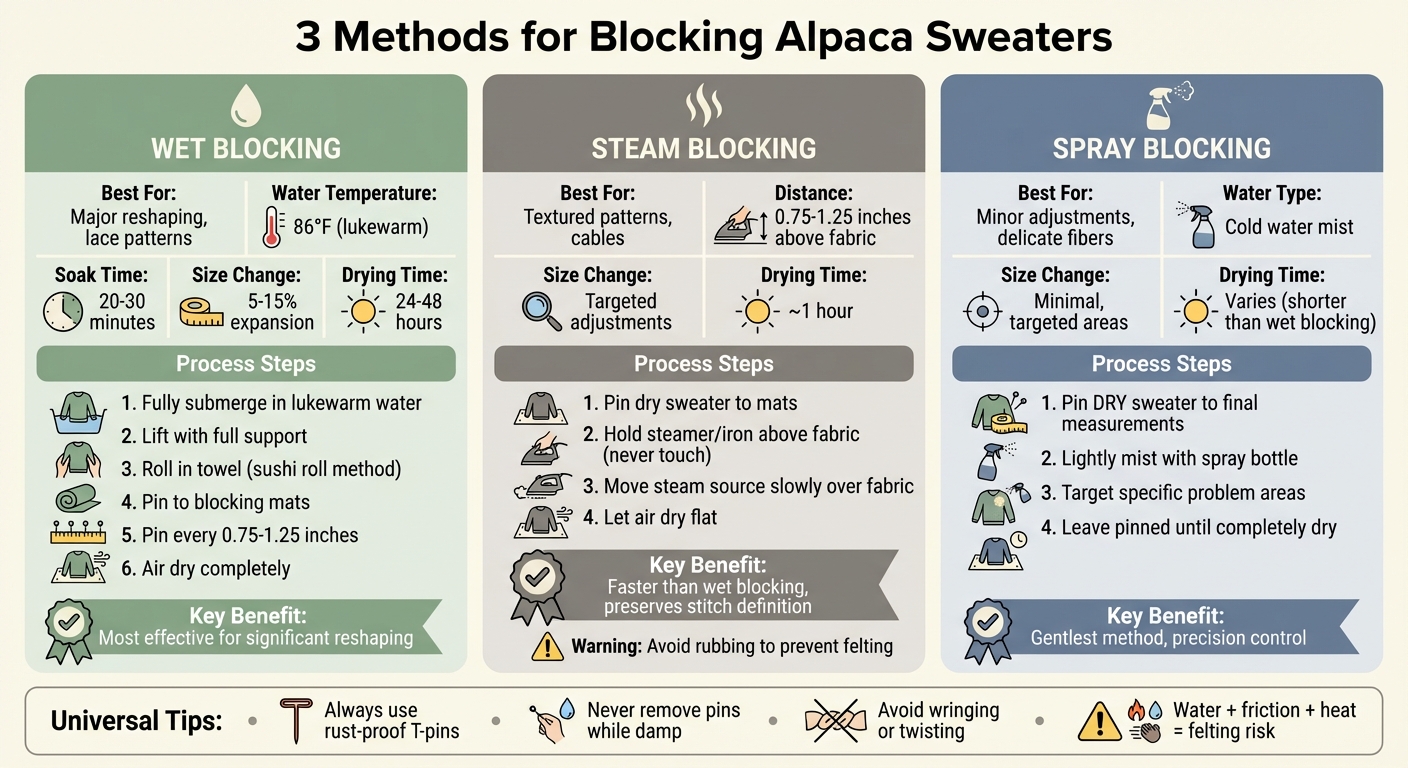
3 Alpaca Sweater Blocking Methods Comparison Guide
Wet blocking is ideal when you need to reshape your alpaca sweater significantly. Start by fully submerging the sweater in lukewarm water (about 86°F) for 20–30 minutes, being careful not to squeeze or agitate it. This method can expand your sweater's size by 5–15%, making it perfect for opening up lace patterns or fixing uneven tension.
Once soaked, gently lift the sweater with full support to avoid stretching. Lay it on a dry towel and roll it up (like sushi) to press out excess water - don’t wring it. Spread the damp sweater on blocking mats, smooth out wrinkles, and adjust the sleeves to a 45-degree angle. Use rust-proof T-pins to pin the sweater to your desired measurements, starting with the corners and then pinning along the edges every 0.75–1.25 inches. Allow it to dry completely, which can take 24 to 48 hours depending on the yarn thickness and humidity. Wet blocking ensures your sweater retains its shape and achieves a polished, smooth finish.
If time is a concern, consider a faster option for defined patterns.
Steam blocking is quicker than wet blocking and works well for textured patterns, like cables, where maintaining stitch definition is important. Hold a steamer or steam iron about 0.75–1.25 inches above the fabric - never press directly. The steam relaxes the fibers temporarily, letting you stretch or adjust sections as needed. For example, you can lengthen specific areas or tighten cuffs. Unlike wet blocking, steam-blocked pieces are typically ready to handle within an hour.
Before steaming, pin your sweater to blocking mats at the desired measurements. Slowly move the steam source over the fabric until each section is evenly dampened, then let it air dry on a flat surface. Avoid rubbing the damp alpaca, as the combination of heat, moisture, and friction can lead to felting. This method is a great way to quickly set the shape while preserving intricate textures.
For delicate adjustments, a gentler method may be better.
Spray blocking is the gentlest option, perfect for lightweight or fragile alpaca garments that only need minor tweaks. Begin by pinning your dry sweater to blocking mats at the final measurements using rust-proof T-pins. Then, lightly mist the sweater with cold water from a clean spray bottle. This method offers more precision than steam blocking and avoids the stress of a full soak, making it ideal for delicate fibers.
One major benefit is that you can target specific areas, like curling edges, without wetting the entire sweater. As with other methods, leave the sweater pinned until it’s completely dry. Removing the pins while the fabric is still damp can cause it to lose its shape. Spray blocking is a gentle way to refine the dimensions and finish of your alpaca sweater while protecting its delicate structure.
Storing your alpaca sweaters the right way is just as important as the blocking process itself to keep their shape intact over time.
Avoid hanging alpaca sweaters. Gravity can stretch the delicate fibers, leading to misshapen shoulders and sleeves that are difficult to fix. Over time, even the best-blocked sweater can lose its form if hung improperly.
Instead, fold your sweaters and store them flat in a drawer or on a shelf. This evenly supports the garment and prevents stress on any single area. If creases appear during storage, you can lightly mist the wrinkled spots with water and press them flat by hand. Alternatively, use a low-heat iron with a pressing cloth for protection.
Proper washing is key to maintaining your sweater’s shape after storage.
Hand wash your alpaca sweater in lukewarm water (50–68°F) using a gentle, rinse-free fiber wash like Soak, Eucalan, or a similar product designed for delicate knits. Avoid hot water - anything above 68°F can felt the fibers, causing irreversible damage.
When drying, don’t wring or twist the fabric. Instead, lay the sweater on a towel, roll it up gently to remove excess moisture, and avoid stretching it during the process.
"Once we overstretch or distort our knitting, it is tricky to go back, without putting it back in the water to start the process again", explains fiber enthusiast Mel.
Reblocking is an essential step to restore your sweater’s shape after washing or when it starts to look misshapen.
"Every time you wash your handknits, you will need to block them again", advises Purl Soho. Alpaca fibers naturally loosen and "bloom" when wet, which changes the garment’s dimensions. Blocking helps reset the shape, smooth out stitches, and bring back the clean, polished look.
If your sweater starts to stretch or lose its form between washes, a quick reblock can work wonders. Lightly mist the affected areas with water, lay the sweater flat on blocking mats, and use T-pins to reshape the edges. Let it dry completely before removing the pins. This targeted method is a time-saver and keeps your sweater looking fresh and well-maintained.
Getting the right tools can make all the difference when it comes to blocking your alpaca sweater. The right setup ensures your sweater keeps its shape and looks its best over time.
Interlocking foam rubber mats are a must-have for blocking. They provide a flat, secure surface that’s easy to pin into and can be adjusted to match the size of your sweater. Since they resist water, they’re perfect for wet blocking. If you don’t have these mats, you can improvise with a spare bed, a sofa cushion, or even a carpet - just cover it with a clean, dry towel.
When it comes to pins, rust-proof options are essential. Stainless steel or nickel-plated brass T-pins are ideal because they won’t stain the damp fibers. Another option is "Knit Blockers", which group multiple pins into a single plastic casing, making it faster to secure edges. Expect to pay around $6.15–$7.99 for T-pins, while blocking mats range from $5.99 for a single mat to $88.99 for a complete kit.
To take your blocking to the next level, you’ll also need precise measuring tools and the right steam equipment.
A tape measure or ruler is essential for accuracy. Blocking can stretch your sweater by 5–15%, so measuring while pinning ensures you don’t overdo it.
For applying heat, use a handheld steamer or an iron with a vertical steam setting. Keep the steamer or iron about 0.75–1.25 inches above the surface of the fabric - never let it touch the delicate alpaca fibers. Steam blocking is quicker than wet blocking and works particularly well for textured designs, like cables, where you want to preserve the pattern’s depth.
Before blocking, you’ll want to clean your sweater using a mild wool wash, such as Soak, which conditions and relaxes the fibers. This helps the fibers "bloom", meaning they expand and soften, giving your sweater a polished finish. If you don’t have a wool-specific detergent, mild soap or shampoo works too.
"Wool wash can be any mild detergent or soap used in the blocking process", says Toni Lipsey, Designer and Author at TL Yarn Crafts.
Use just a small amount of detergent and avoid creating too many suds by agitating the water. After washing, remove excess water with large bath towels. Roll the sweater inside the towels using the "sushi roll" method instead of wringing it out.
With these tools and techniques, your alpaca sweater will look its best and maintain its shape for years to come.
Blocking is more than just a finishing touch - it’s the secret to keeping your alpaca sweater looking its best and lasting for years. By taking the time to block your garment properly, you’re helping it retain its shape and fit while also protecting the delicate fibers.
Since alpaca fibers are sensitive to moisture, blocking after each wash is a smart habit. It ensures your sweater keeps its polished look and fits as intended. But the real secret to success? Gentle handling. Always dry your sweater flat, avoid hanging it when wet, and treat damp fibers with care. Experts often refer to well-cared-for alpaca garments as "immortal" because they can truly stand the test of time when treated right. Plus, with each wash, the natural fibers will bloom, enhancing the texture and overall appearance of your sweater.
When you combine the right tools, techniques, and a little extra care, your alpaca sweater will stay as luxurious and beautiful as the day you first wore it.
To properly block an alpaca sweater without causing it to stretch, start by washing it carefully. Once it's clean, reshape the sweater while it's still damp. Gently press out any excess water - don’t wring it out, as this can damage the fibers. Lay the sweater flat on a clean towel and smooth it into your preferred shape, making sure to eliminate any wrinkles. Allow it to air dry completely while keeping it flat. Avoid hanging it, as that can lead to unwanted stretching. For more guidance, you can explore tutorials from Alpaca Direct.
When it comes to blocking alpaca blends, wet blocking is the go-to method. Here's how it works:
This technique is particularly effective because natural fibers like alpaca tend to stretch when wet. This makes it easier to reshape and smooth out the garment as it dries. Just remember to handle the piece delicately to preserve its texture and structure.
To address stretched shoulders or sleeves on a sweater, start by soaking it in water. Once soaked, gently squeeze out the excess water without wringing it. Lay the sweater flat on a towel, and carefully reshape the shoulders and sleeves to their original size. Use pins or other securing tools to hold the sweater in place as it dries, ensuring it retains the adjusted shape. For step-by-step instructions, Alpaca Direct offers helpful tutorials and resources.

Comments will be approved before showing up.